 Media Produced by ASCII STARTUP
Resolving Unpaid Bills via 'Online Dispute Resolution' and Detecting Bears with Environmental DNA: The Reality of the 'Value-Up Session' Driving Rapid Growth — FY2026 1st Premium Value-Up Session Report —
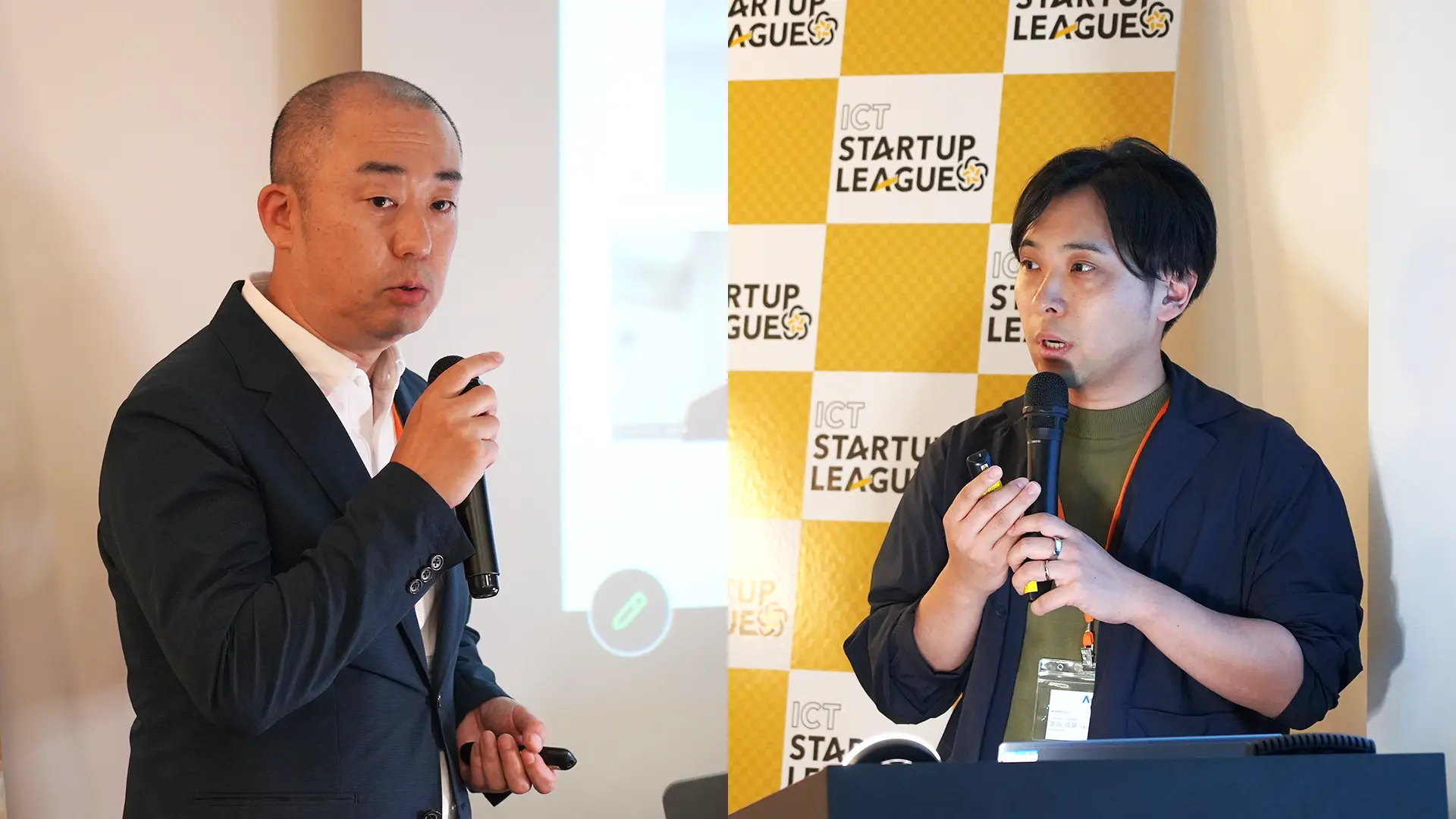
The "ICT Startup League" is a program where the public and private sectors unite to strongly support the development of next-generation startups. In the Value-Up Session, a part of this support where experts and selected companies engage in direct discussions, intensive exchanges took place to brush up their businesses. In this article, we closely follow this highly energetic session and provide a fixed-point observation of the trajectory these selected companies take to achieve further rapid growth.
It is said that only 20% of people in Japan have access to lawyers or courts. AtoJ Inc. is leveraging technology to solve the legal troubles, such as "unpaid bills," faced by the remaining 80%. Another company, Fishpass Inc., analyzes environmental DNA simply by collecting a single glass of water to detect everything from bear sightings to viruses.
On June 30, 2026, these two companies, each with their unique strengths, took the stage at the ICT Startup League's Value-Up Session to discuss the current state of their businesses and their strategies for their next moves.
Prior to the start of this session, Mr. Shoji Okamoto, President and CEO of Mirai Works Inc., the operational implementing body of the ICT Startup League, explained the hands-on support structure for FY2026. Starting in FY2026, rather than acting merely as advisors, a new role of "Caddie" has been introduced. These companions act as "partners who fight alongside" management, sharing their struggles and actively supporting business growth execution.
 Shoji Okamoto, President and CEO of Mirai Works Inc.
This session featured heated discussions with experts from the Committee and the Judges. We report on the front lines of how entirely new technologies and approaches are attempting to solve social issues and create massive business opportunities.
Resolving Unpaid Bills Like a Chat: Challenging the "20% Justice" Barrier with the Japanese-version ODR — AtoJ Inc.
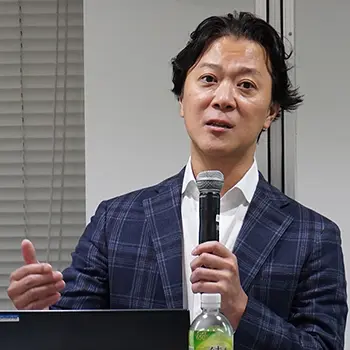
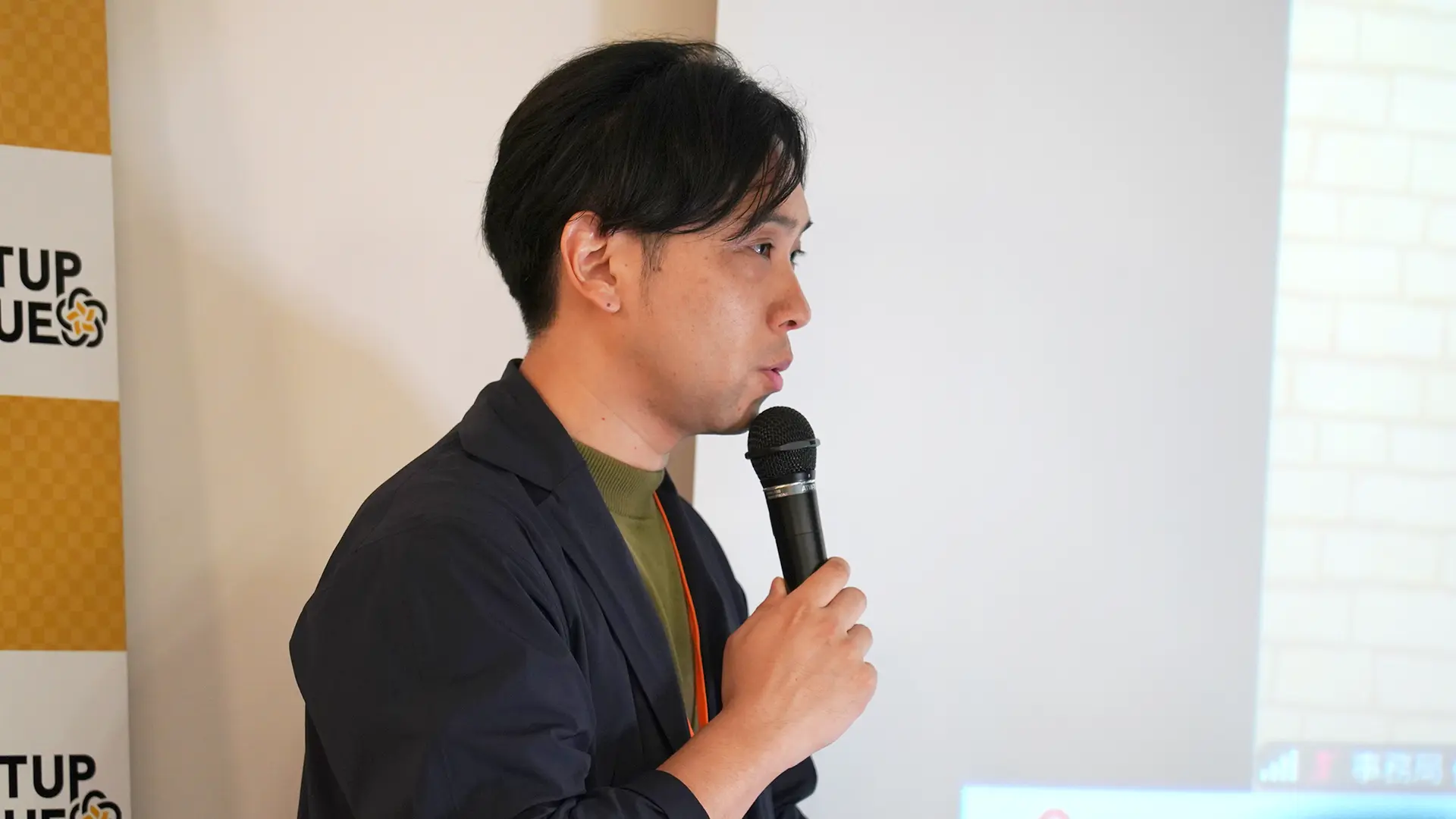 Nobuo Tomita, Co-Founder and CEO of AtoJ Inc.
The first to take the stage was AtoJ Inc., which operates a Japanese-version ODR (Online Dispute Resolution) platform. As a legal tech startup, the company provides a venue for resolving disputes through "dialogue" empowered by technology. On the day of the event, Nobuo Tomita, Co-founder, CEO, and a licensed attorney, took the stage to introduce the company's initiatives.
Breaking the "20% Justice" Barrier: Trouble Resolution That Feels Like a Chat
Under the Japanese judicial system, it is said that only 20% of people have access to lawyers or the courts. A serious issue remains where the remaining 80% abandon legal remedies when faced with trouble due to cost and effort. In response to this challenge, AtoJ Inc. provides a platform for conducting mediation from a neutral and fair standpoint, acting as a certification body of the Ministry of Justice.
Currently, the company is focusing on the issue of "unpaid child support and accounts receivable." While over 1 trillion yen in unpaid funds exists in society, traditional collection operations often turned into one-sided demands, leading to deteriorating relationships and significant psychological burdens.
With the company's service, users simply input names, amounts, and contact information, then tap choices to enable "dialogue" in a chat room. By having a third party (the platform) intermediate, it eliminates the awkwardness between the parties involved and is an innovative approach that leads to amicable settlements while maintaining a flat relationship.
Handling Over 40,000 Cases: Previous Feedback Led Directly to Adoption by a Major Financial Institution
The company's growth speed is remarkable. The number of cases handled, which was 1,900 before being selected for the ICT Startup League, rapidly increased to 35,000 during the support period and has now surpassed 40,000. It has been adopted by over 150 companies, with more than 200 million yen returned to creditors and over 10,000 cases resolved.
Behind this explosive growth is the significant contribution of sharp feedback received at the previous Value-Up Session. Following the evaluation committee's advice that they "should approach companies holding massive bundles of debt," the company advanced its cultivation of the financial sector. As a result, a proof of concept was greenlit at a major credit card company, "Life Card," and operations have begun on a large-scale frontline burdened with tens of thousands of issues each month.
Furthermore, they successfully researched and developed a new feature allowing users to easily send notices to the other party. This makes it possible to seamlessly cover everything from the initial notice of non-payment to negotiations. For one adopting company, this has produced dramatic results, with monthly sales surging fivefold from 100,000 yen to 500,000 yen.
Leveraging AI and Co-creation with Financial Professionals (Caddies)
This fiscal year, they are embarking on AI research and development aimed at further scaling. Anticipating the handling of hundreds of thousands of cases monthly, they determined that AI adoption is essential to streamline customer support while ensuring the care and attentiveness required to empathize with the parties involved.
Additionally, starting this fiscal year, experts in new business launches and sales organization restructuring/transformation across various sectors like SaaS/AI and IT infrastructure will join the team as "Caddies" (companions). The Caddie shared their strategy and enthusiasm for the future: "As a platform incorporating non-payment responses into the daily business workflow on the business side, we will organize the value that resonates with management, accounting, and frontline staff, respectively, and link pricing with business growth mechanisms."
Feedback from Experts: Strengthening Governance and a Brand Strategy Focused on "Anti-Counterfeiting"
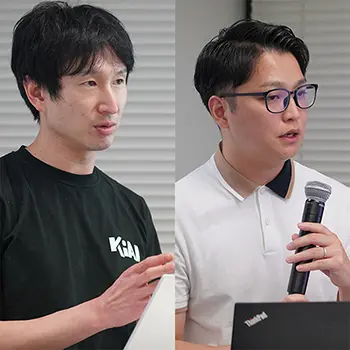
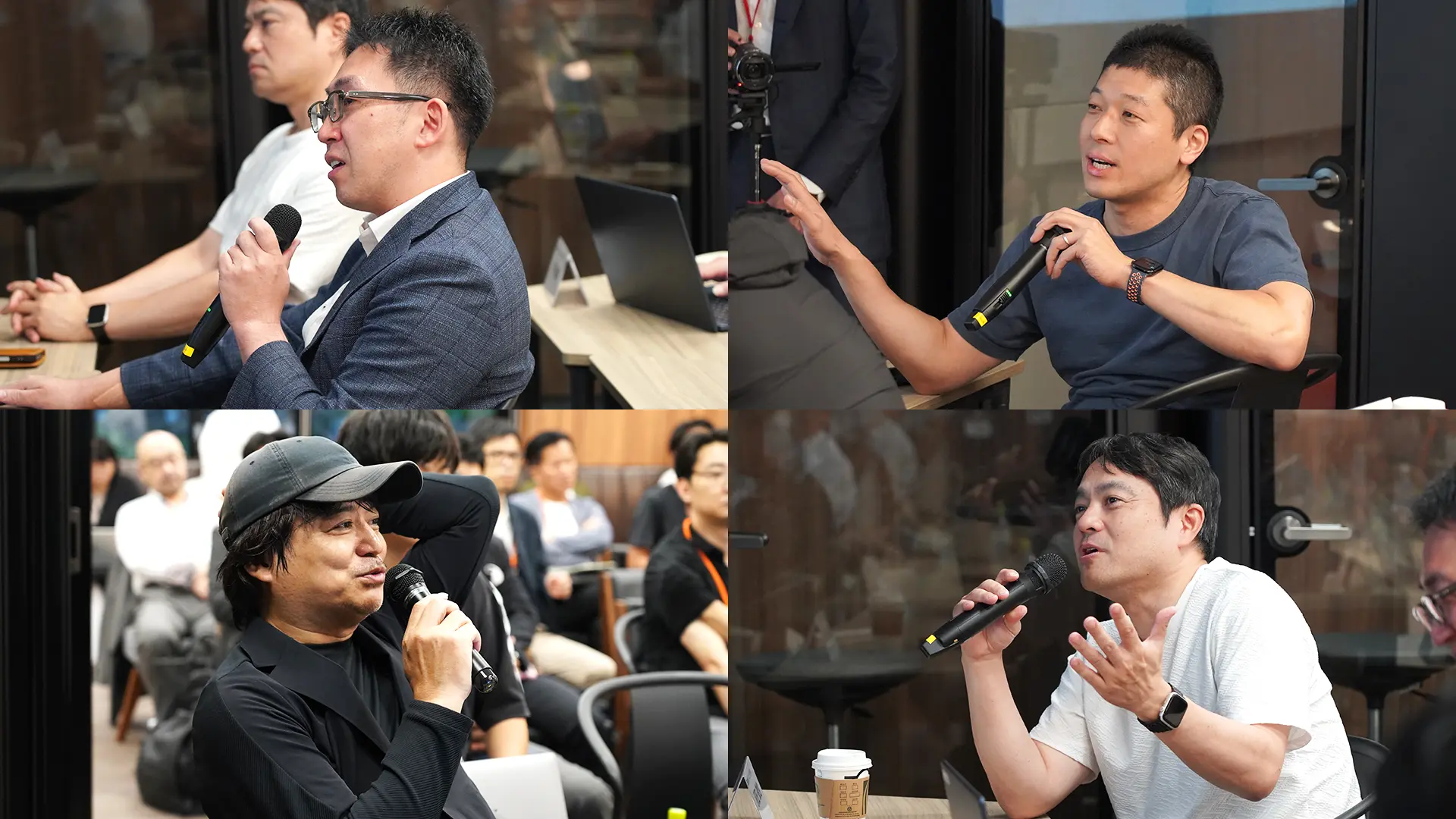 Hiroyuki Kobayashi (Top Left: Judges), Masaru Nagura (Top Right: Committee), Hideharu Taira (Bottom Left: Judges), Toshiya Haida (Bottom Right: Judges)
Following Mr. Tomita's presentation, experts pointed out the importance of strengthening governance in line with business expansion. They called for mechanisms that raise barriers to entry as the organization grows, such as building firewalls (legal boundaries) to ensure platform operations are not deemed "unauthorized legal practice" (where individuals without a legal license intervene in legal acts for compensation).
Concerns for the future were also raised, noting that "once the system becomes widespread as a social infrastructure, 'fake notification emails' impersonating the real thing will inevitably appear." In response, committee members advised, "It is essential to adopt a brand strategy where you establish a universally recognized trademark so that only legitimate operators can use it, and to secure official endorsements (credentials) from the national or local governments early on."
"Can It Be Used to Detect Bears?" Regional Revitalization and Public Health Pioneered by Environmental DNA — Fishpass Inc.
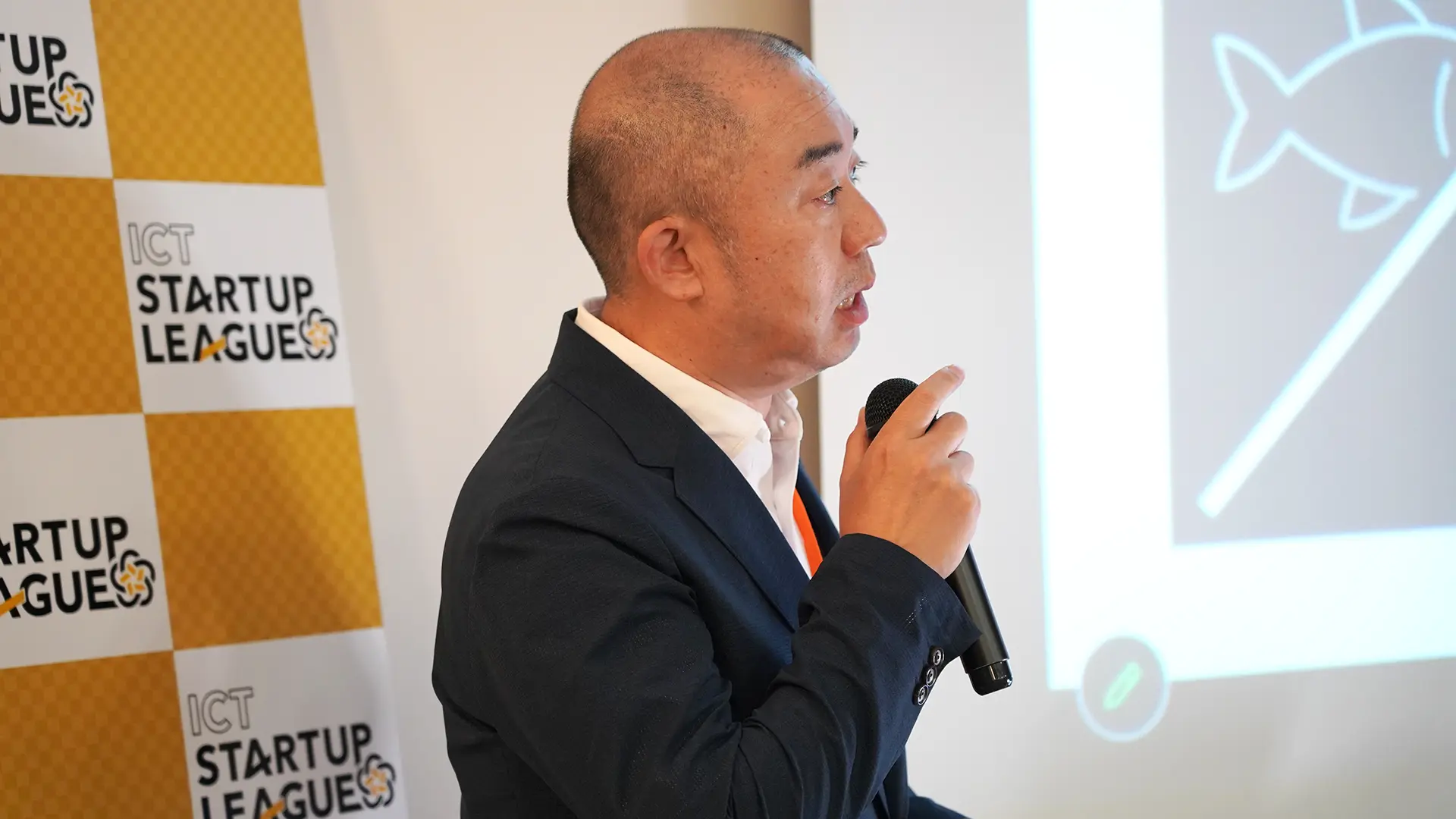 Shigehiro Nishimura, Representative Director of Fishpass Inc.
Next to take the stage was Shigehiro Nishimura, Representative Director of Fishpass Inc., based in Fukui Prefecture. The company is a frontrunner in applying "environmental DNA"—a technology that visualizes biological traces from environmental samples like water and air—to business.
Accelerating Media Response and Municipal Collaboration via Application to "Bear Detection"
Environmental DNA is a technology that quantifies and visualizes the natural environment and biological ecology that were previously unknown. Initially, the company utilized this technology in fishery and forest research fields. However, during a Value-Up Session half a year ago, an expert committee member asked, "Could this technology be used for detecting bears?"—a single remark that dramatically changed the direction of the business.
The company immediately developed environmental DNA capabilities to detect bears and conducted a proof of concept in Akita Prefecture. This perfectly linked with recent serious social issues such as "bears swimming in irrigation canals," and was extensively covered by the media. "It went so viral that my local barber told me, 'I saw you on TV the other day,'" Mr. Nishimura said with a laugh.
Today, collaborations with local municipalities are rapidly expanding, including environmental restoration projects in Fukushima Prefecture and wild boar countermeasures in Fukuoka City. Furthermore, they have signed outsourcing agreements with major corporations, achieving steady enhancements in business value.
Entering the Public Health Domain and Realizing "DNA Extraction from the Air"
In FY2026, Fishpass aims to leap forward in its business domains.
The first is expanding into the "Public Health" domain. Triggered by an inquiry from a medical faculty at a national university, a project is underway to detect "infectious viruses"—believed to be migrating north via wild animals—using environmental DNA. A Caddie added that this technology could also be applied to countermeasures for infections transmitted by ticks. They aim to build a "preventive healthcare model" that detects viruses in advance from water and issues alerts to municipalities to prompt vaccine preparation.
The second is the development of technology to "collect environmental DNA from the air." Through joint research with Hokkaido University, they are advancing the practical application of a technique that uses static electricity to capture environmental DNA in the air. Once completed, this will enable highly sensitive detection of living organisms and viruses in any space—not just near water bodies, but in cities and stores as well.
Creating a Path for Asian Expansion and Monetization with Caddies
While possibilities are expanding, they also face challenges typical of ventures, noting a "lack of personnel to organize and drive forward the scattered business domains."
To assist with this, a Caddie with management experience in France and Thailand, and an expert in promoting new businesses grounded in practical AI and deep tech operations, will work alongside them. The Caddie declared, "We will consolidate our broadly expanded scope and create criteria by weighing social impact against profitability to determine who spends how much on what risk." They plan to formulate strategies for Asian expansion leveraging genuine local insights and provide practical support to alleviate the region-specific shortage of talent.
Feedback from Experts: Transitioning to a "Data Business" Instead of Stopping at One-off Surveys
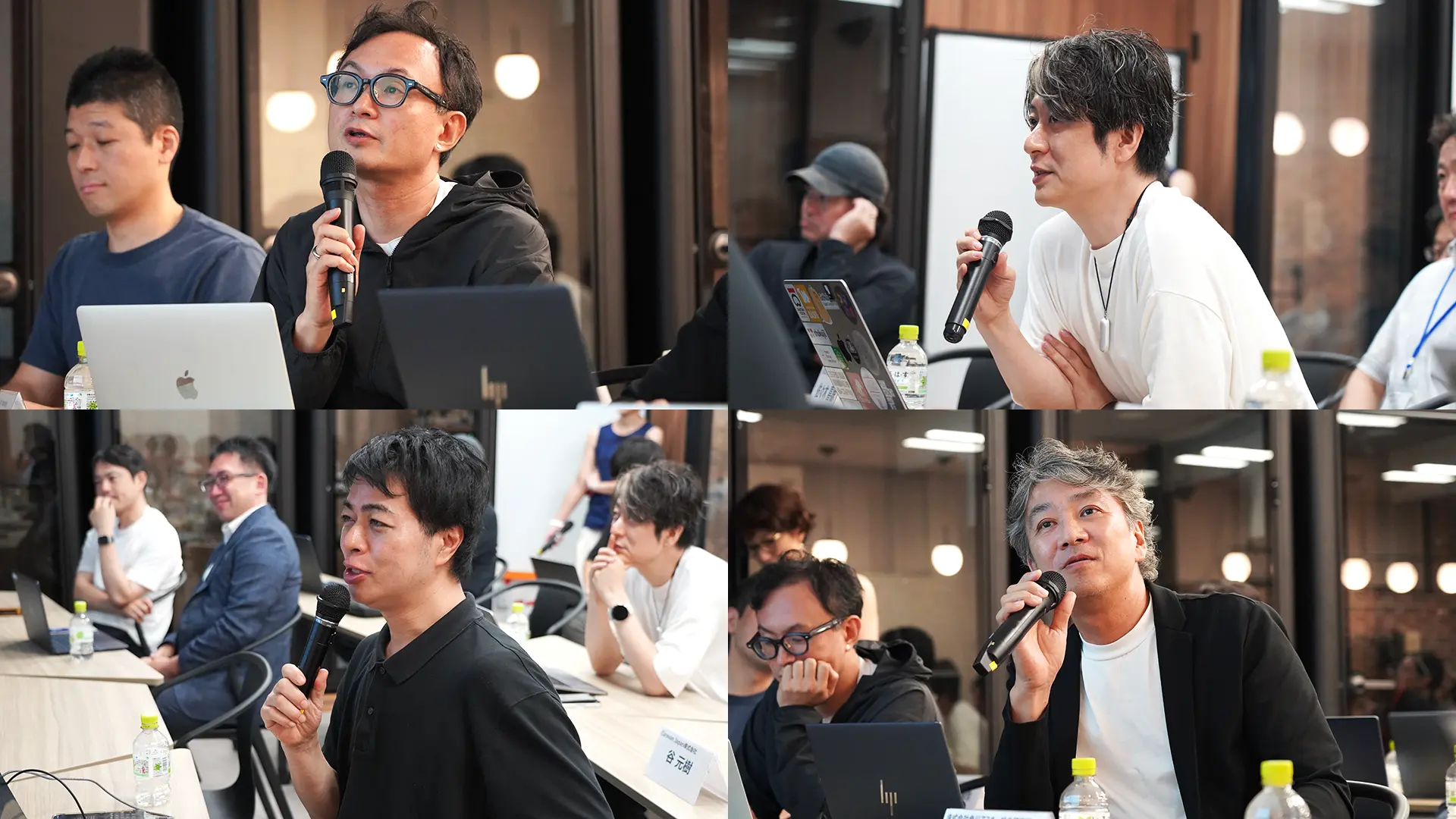 Tomoe Makino (Top Left: Judges), Yoshinori Sasaki (Top Right: Committee), Hidetoshi Takano (Bottom Left: Judges), Masakazu Kakinuki (Bottom Right: Committee)
Committee members offered development-focused opinions: "Since you are utilizing subsidies, you should invest in the development of highly advanced technology itself—such as a system that links detection results to smartphones for breaking news alerts to residents—rather than merely deploying marketing."
Furthermore, regarding the business model, a proposal was made: "Instead of ending with one-off survey contracts from municipalities or companies, shouldn't you elevate this into a 'platform business' that comprehensively acquires nationwide data and offers the analyzed data via subscription?" Regarding overseas expansion, highly practical ideas were shared, such as, "If expanding into Southeast Asia, it would be wise to target areas requiring strict environmental assessments, such as around large-scale power plants."
Conclusion: Moving Toward the Ultimate, Fully Utilizable Ecosystem Supporting Startup Leaps
 Tadashi Fukuda, Chair of the ICT Startup League Committee
At the end of the session, Tadashi Fukuda, Chair of the ICT Startup League Committee, and others delivered their concluding remarks.
Mr. Fukuda emphasized the importance of creating an environment where startups can grow safely, stating, "We, the supporters, need to build a solid framework, including considerations for governance, such as the risk of discussing technical details related to patents in an open forum." He also sent passionate encouragement: "Successful startups have the power to make seemingly unreasonable demands and involve those around them. We want you to fully exploit us supporters by making concrete requests like, 'I want you to introduce me to this person' or 'I need people because I want to build this system.'"
AtoJ Inc. is transforming the negative social legacy of "unpaid bills" into flat discussions via technology, while Fishpass Inc. is trying to visualize the hidden risks of biological organisms and change the concept of public health. Although their approaches are completely different, both initiatives hold the potential to upgrade our society.
Under the hands-on support system of the ICT Startup League, what kind of evolution will they achieve in the future? We will continue to keep a close eye on their movements.
■ ICT Startup League
This is a support program launched in FY2023, sparked by the Ministry of Internal Affairs and Communications' "Startup Creation-type Exploratory Research and Development Support Project."
The ICT Startup League supports startups through four pillars.
① R&D Funding / Hands-on Support
Up to 20 million yen in R&D funding is provided in the form of subsidies. In terms of hands-on support, the Judges members who were involved in selecting the League members stay by their side post-selection to accelerate growth. For companies the committee members deemed "absolute must-selects," a unique "Oshikatsu" (enthusiastic backing) style support system has been established, where the evaluators themselves continuously provide advice on business plans and offer growth opportunities.
② Discovery and Cultivation
We will provide venues for learning and networking to promote the business growth of League members.
We are also working on discovering aspiring entrepreneurs to broaden the ecosystem's base.
③ Competition & Co-creation
Serving as a positive competitive arena akin to a sports league, startups learn together and engage in friendly rivalry to secure the exact amount of funding they truly need (up to 20 million yen). Through various opportunities such as sessions by the Judges, we also provide a venue for co-creation where League members can collaborate to scale their businesses.
④ Dissemination
We broadcast the initiatives of League members in collaboration with the media! By getting the word out about their businesses to as many people as possible, we aim to expand new matchmaking and opportunity platforms.
■ Related Websites
ICT Startup League
/
AtoJ Inc. (Official Website)
/
AtoJ Inc. (LEAGUE MEMBER)
/
Fishpass Inc. (Official Website)
/
Fishpass Inc. (LEAGUE MEMBER)
Other League Reports








For more details on STARTUP LEAGUE's startup support, please see here.