 Media Produced by ASCII STARTUP
From the Realities of Capital Policy to Enhancing Public Racing with Sports AI and Taking Bonsai AI Global: A Report on the First "League Academy" of FY2026 — FY2026 1st League Academy Report —
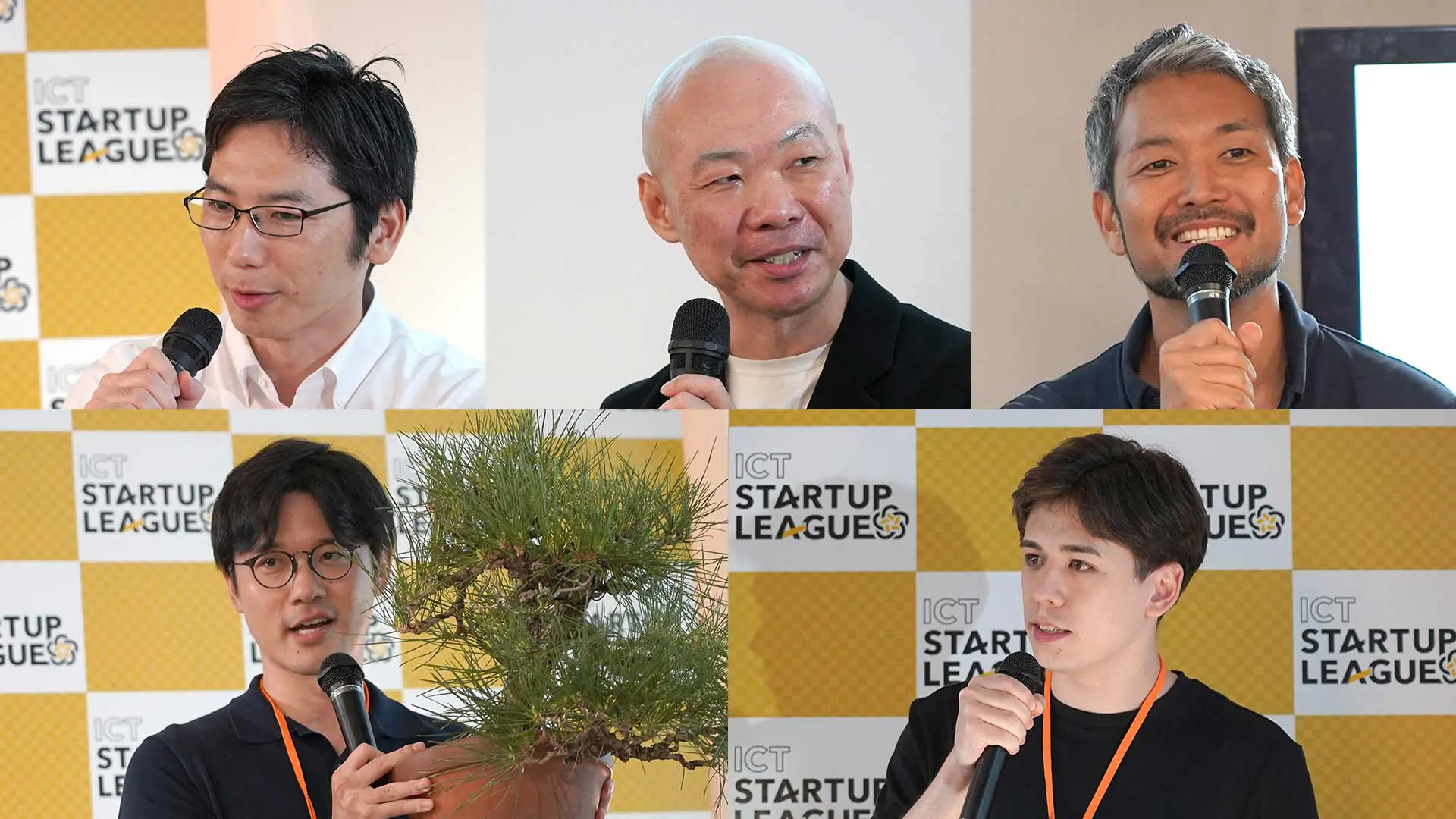
On August 7, 2026, the ICT Startup League hosted "League Academy," a program designed to support the further business growth of selected startups. The program aims to provide practical, ready-to-use knowledge to solve challenges faced by startup management teams. The first session of FY2026 featured a panel discussion with industry experts on the theme "Capital Policies in Startups and Common Pitfalls."
In the "Value-Up Session" that followed the panel discussion, Playbox Inc., which is challenging the enhancement of public racing sports with proprietary video analysis technology, and JinShari, which is deploying a globally compatible bonsai growth management system using multimodal AI, took the stage. A lively debate questioning the fundamentals of their business models took place between the startups and the experts.
This article provides a detailed report on the first panel discussion of FY2026 and the heated Value-Up Session.
Part 1: Panel Discussion - "Learning Practical Knowledge Directly Linked to Management"
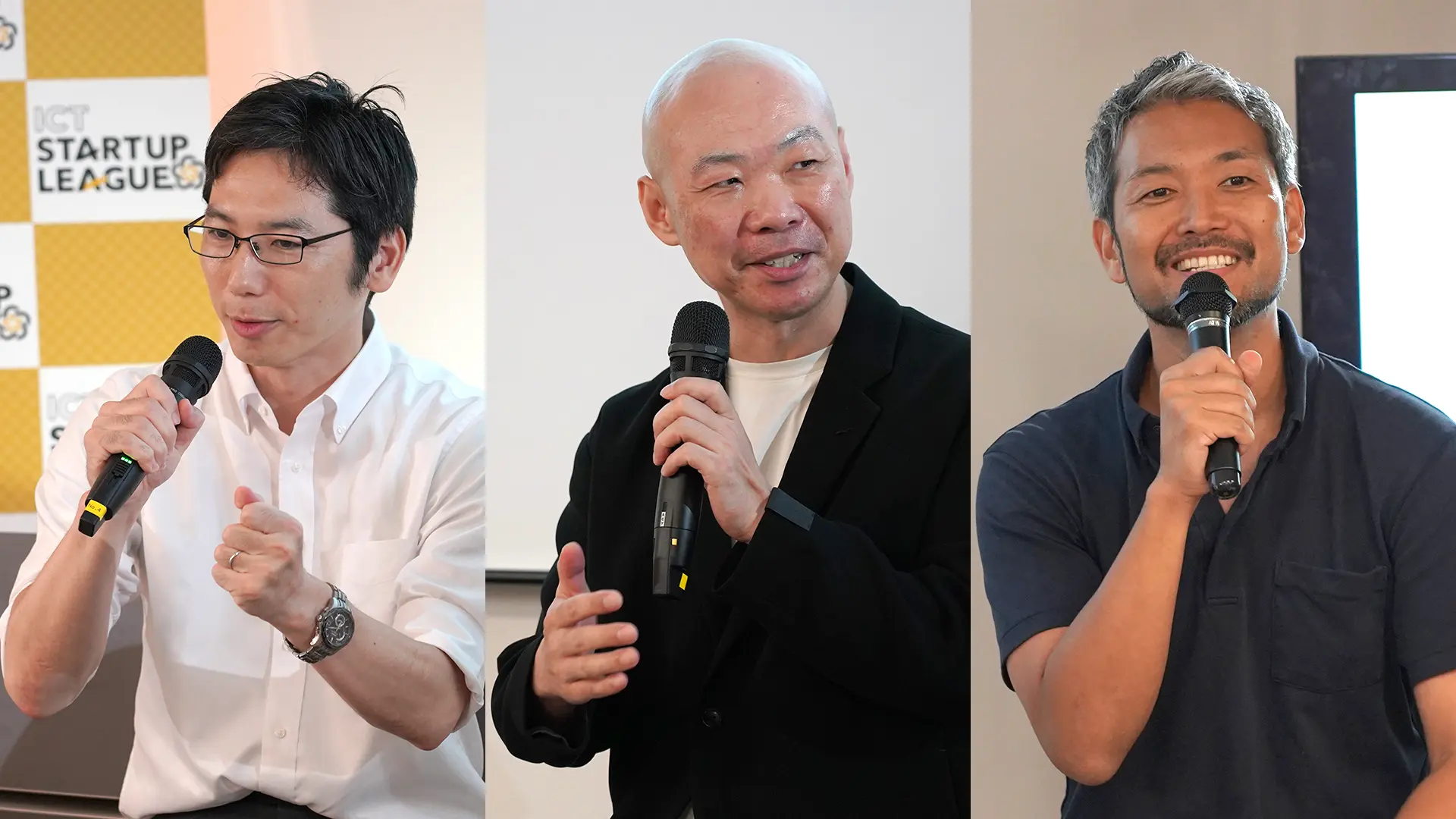 Shin Ito (Left: Bridge Consulting Group Inc.), Toshihito Goto (Center: FiNX Inc.), Jun Kikukawa (M&A LABORATORIES Inc.)
The theme for the first panel discussion of this fiscal year was "Capital Policies in Startups and Common Pitfalls," featuring three speakers: Shin Ito of Bridge Consulting Group Inc., Toshihito Goto of FiNX Inc., and Jun Kikukawa of M&A LABORATORIES Inc.
Shoji Okamoto, President and CEO of Mirai Works Inc., the implementing agency who also served as the facilitator, shared his own past experience of setting up a company by splitting voting rights 50/50 with a co-founder—a textbook example of "a mistake you must never make"—which later caused significant hardships. This underscored just how crucial a proper understanding of capital policy is for entrepreneurs.
The Role Required of a CFO and Their Relationship with the CEO
In the panel discussion, opinions were first exchanged on "what is required of a CFO." Ito, who has a background in an auditing firm, pointed out that CFOs are expected to handle a wide range of areas beyond just accounting, including legal, HR, general affairs, and even how to drive business growth. He noted that the ability to build a team by involving external experts and internal members is essential, even in areas outside their own expertise.
Goto stated that from the perspective of organizational management, two things are overwhelmingly important: "not rejecting the president" and "not looking down on subordinates." He emphasized that the CFO's role is to consider the funding and governance needed to realize the president's vision, and if this relationship of trust breaks down, the organization will cease to function.
Kikukawa agreed, adding that the CFO's role is to thoroughly support the realization of the founding president's goals within the bounds of accounting standards and legal compliance. He explained that even if a goal seems impossible at first glance, it is important to figure out how it can be achieved and to support the president's decision-making.
Evaluating CFO Hires and the CEO's Financial Knowledge
Regarding the hiring of an excellent CFO, Ito responded that "the feeling and compatibility of whether you can work together is the most important factor." Since it is difficult to judge this through interviews alone, he recommended taking the step of initially working together on a contract basis to assess compatibility rather than rushing to hire. Kikukawa also stated that to mitigate the impact of a mismatch, starting out as an outsourced contractor before promoting them to a full-time employee is an effective approach.
Furthermore, Goto gave a presentation on the theme "Startup CEOs Should Also Learn Finance." He introduced the concept of "time machine management," which involves importing diverse fundraising methods pioneered overseas into Japan. He concluded that while the CEO does not need to possess all specialized knowledge from the start, it is essential to have an attitude of understanding explanations from external experts and ultimately making decisions based on their own conviction.
Q&A with the Speakers: Involvement in the Business and Preparing for M&A
In response to a participant's question, "To what extent should a CFO be involved in business operations?", Kikukawa answered, "Since you cannot make decisions without raising the resolution of the business, you should thoroughly involve business leaders to achieve that clarity." Ito also said, "Since increasing corporate value is the CFO's role, you should not draw lines about what you shouldn't do, but rather work diligently to ensure the business succeeds."
When asked, "How far in advance should we prepare if anticipating an M&A?", the consensus was that a preparation period of at least six months to a year is necessary to build evidence, such as the probability of growth, that will convince buyers. They advised that artificially rushing to build a structure—such as suddenly hiring a key person—will be seen through by buyers, so it is important to create a naturally organized state.
Part 1 Panel Discussion Summary
In the Part 1 panel discussion, practical insights based on actual experiences regarding "capital policies" and "the role of the CFO"—factors that dictate startup growth—were shared. A CFO is not merely a financial expert; they must deeply understand the CEO's vision and act as a partner driving business growth together. At the same time, it was demonstrated that the CEO must also learn the basics of finance, correctly evaluate the opinions of external experts, and take the stance of making the final decisions.
Additionally, specific, immediately actionable steps were presented, such as utilizing contract periods to prevent mismatches when hiring a CFO, and systematically building an organization on a six-month to one-year timeline in anticipation of an M&A. The session reaffirmed that establishing a robust management structure and capital policy is essential for startups to achieve rapid growth.
Part 2: Value-Up Session
With the excitement of the League Academy still lingering, the Part 2 Value-Up Session commenced. This time, two selected startups tackling social issues and operational efficiency through completely different approaches took the stage.
Tackling Video and Data Utilization in Public Racing with Unmanned AI Cameras: Playbox Inc.
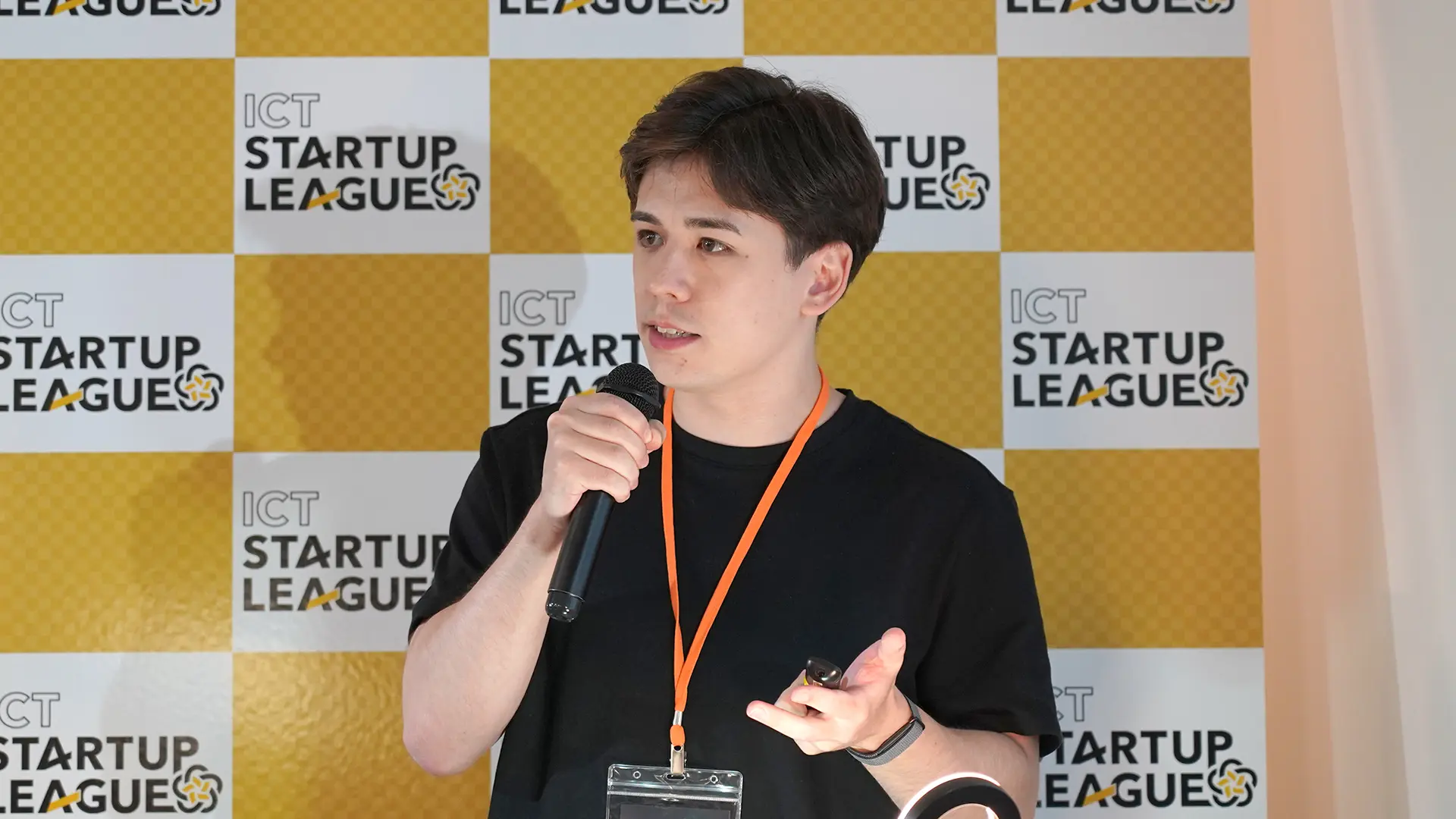 Scott Atom, CEO, Playbox Inc.
As the first presenter of the Value-Up Session, Scott Atom from Playbox Inc., which develops business in the sports domain using proprietary video analysis technology, took the stage. The company is supported by a technical expert who has led large-scale service development and IT strategies, acting as their "caddie" (mentor).
Innovating Video and Data Acquisition with an Unmanned AI Camera Infrastructure
Currently, sports viewing styles are shifting significantly from traditional broadcasting to personalized online streaming. There is a growing demand for immersive footage from the perspective of specific athletes and detailed data analysis, which are becoming new revenue sources for competition organizers.
However, acquiring high-quality video and data requires numerous camera operators and specialized equipment, leading to challenges such as licensing fees and costs amounting to tens of millions of yen for large-scale tournaments. Playbox is addressing this issue by building an infrastructure that permanently installs unmanned AI cameras. By allowing AI to autonomously track and film subjects, they realize significant cost reductions alongside simultaneous high-quality video and data acquisition. Ultimately, they aim to offer new viewing experiences, such as AI live commentary and animated broadcasts.
Expansion into the Public Racing Market and Business Model
The market that the company currently targets as having the highest potential is the "public racing" sector. Public racing in Japan has unique market characteristics where the online betting ratio exceeds 90%, making the value of video and data extremely high.
At present, tracking systems for public racing are only introduced in a few venues by major existing IT vendors at a cost of billions of yen. By using internally developed AI cameras, Playbox aims to deploy systems of equal or greater capability at a low cost, eliminating the need for large-scale equipment installation such as sensors.
For their monetization strategy, they envision a B2B model receiving initial system installation fees and annual usage fees from competition organizers. Furthermore, they plan to create a new revenue pillar by distributing the detailed video and data acquired to streaming platforms.
Feedback from Experts: Regulatory Barriers and the Need for New Value Creation
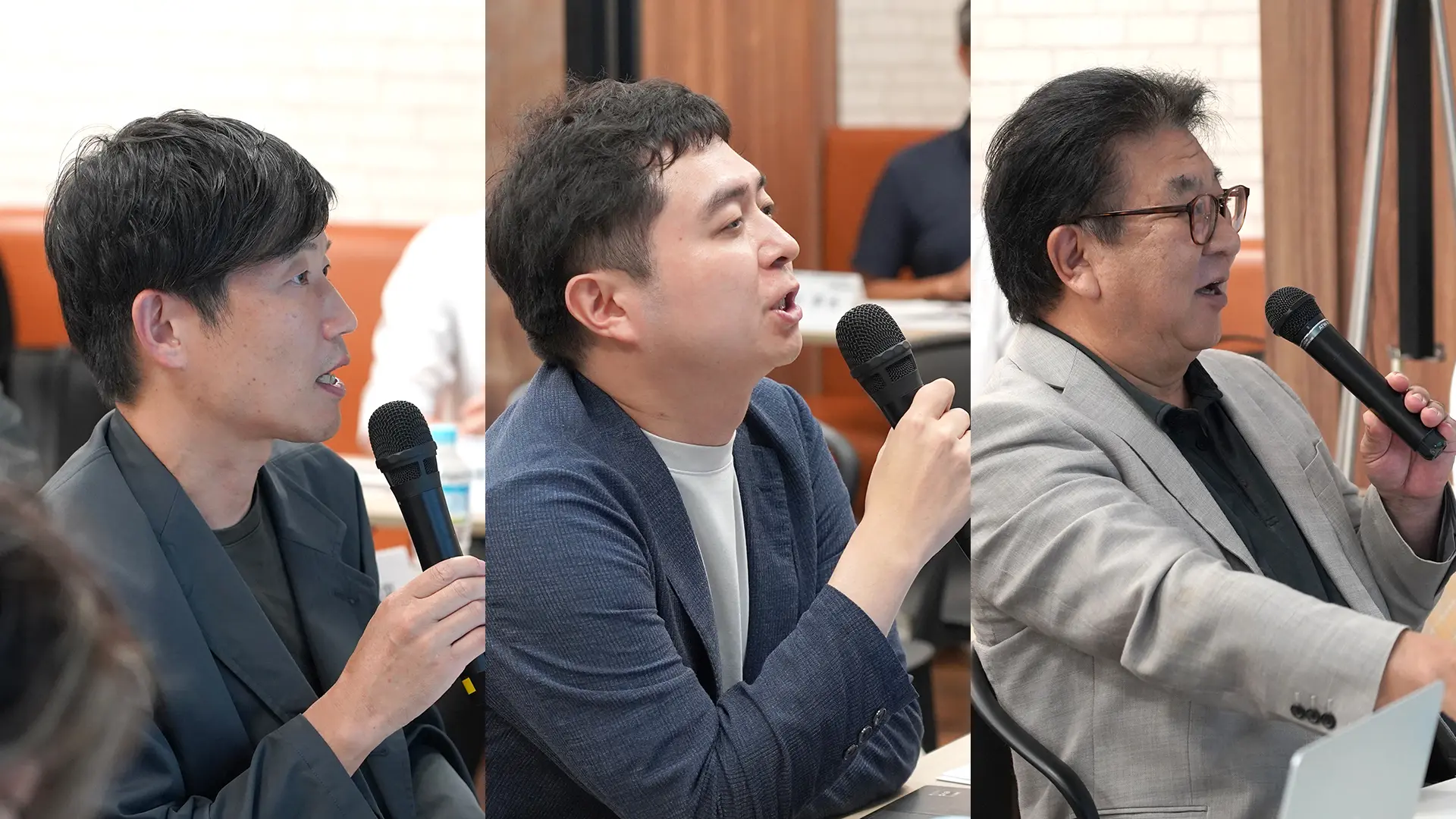 Eiji Nakagawa (Left: Selection & Evaluation Committee), Toshihiro Suzuki (Center: Selection & Evaluation Committee), Tadashi Fukuda (Right: Operating Committee)
During the post-presentation discussion, a wealth of strict yet realistic advice was offered regarding the highly specialized public racing market.
First, when asked where their greatest competitive advantage (moat) lies in the business, the startup cited two points: their proprietary AI technology that autonomously moves cameras for highly accurate real-time tracking, and their first-mover advantage in infrastructure—once physical equipment is installed, it becomes difficult for competitors to enter.
In response, the experts pointed out the risk that if cameras are introduced to competition organizers, the rights and control over the footage might be seized by the organizers. They expressed the opinion that unless the company can present AI-specific added value—such as real-time condition analysis—rather than just filming video, it will be difficult to maintain negotiating power as a business.
Furthermore, strong points were raised regarding the high political and institutional barriers to entering Japan's public racing market. It was explained that public racing is subject to strict, siloed regulations by various ministries, making it practically impossible for a single private enterprise to develop video rights and data businesses on its own. Therefore, rather than clinging to independent entry, it was advised that setting up a joint venture (JV) with existing massive relevant organizations or companies in public racing, along with more political maneuvering and strong partnerships, is absolutely essential.
Additionally, an analysis showed that what public racing organizers currently seek most is not just an increase in gambling revenue, but the cultivation of new markets, such as "acquiring female and younger fans." Specific ideas were proposed that if they can use AI technology to animate races or generate new entertainment content—providing novel value beyond the realm of gambling—organizers would surely show strong interest.
Other opinions suggested that they should also consider pivoting to markets with lower barriers to entry and more guaranteed demand, such as security cameras or traffic volume surveys, rather than just sports and public racing. At the end of the session, a request was made that, instead of just verbally explaining the technical precision, presenting actual demo footage or POC (Proof of Concept) results would enable more concrete discussions.
JinShari: Preserving Japanese Traditional Culture with a Globally Compatible Bonsai Growth Management System Using Multimodal AI
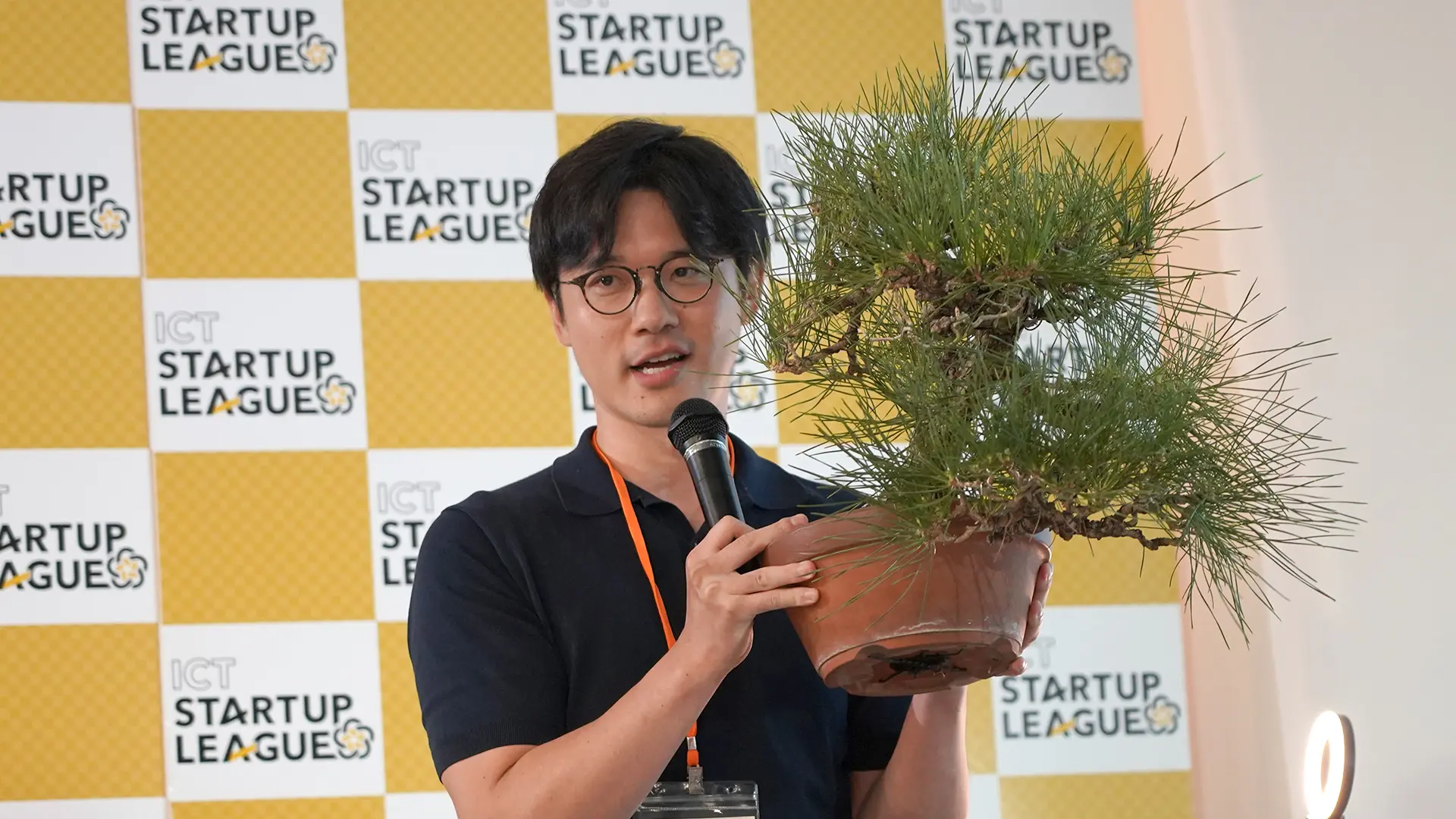 Tomoki Katsumura, JinShari
Next, Tomoki Katsumura from JinShari, which operates a globally compatible bonsai growth management system using multimodal AI, took the stage. JinShari is accompanied by a "caddie"—an expert with UI/UX expertise and a Small and Medium Enterprise Management Consultant who has supported corporate AI utilization.
Bonsai Enthusiasm Overseas and the Discovery of Unarticulated Needs
Bonsai is currently experiencing a massive boom worldwide. The team has traveled to various countries including Germany, the Czech Republic, the US, Malaysia, and the Philippines to directly interview local bonsai communities. Most recently, utilizing support from the ICT Startup League, they exhibited at "JAPAN EXPO" held in Malaysia and engaged in direct dialogue with local enthusiasts.
As a result, they discovered a massive latent need: while many people overseas hold a strong admiration for bonsai through Japanese pop culture like manga and movies, they hesitate to start because they "have absolutely no idea how to grow them." To create a world where anyone can easily enjoy bonsai while accurately conveying the philosophy and aesthetics of this traditional Japanese culture, JinShari has begun developing an AI-powered growth management service.
AI Technology Overcoming Climate Differences and Three Core Features
The system JinShari is developing consists mainly of three features.
The first is an AI chatbot trained on data from specialized bonsai magazines. It provides highly accurate advice for specialized bonsai-related questions that standard generative AIs struggle to answer. The second is a task proposal feature tailored to the climate conditions of the user's location. For bonsai, the timing for watering and pruning differs entirely depending on the climate of the growing environment, such as Japan, Europe, or Southeast Asia. JinShari's system determines the user's location and automatically proposes an optimized growth schedule for that environment. The third is a pest and disease image diagnosis feature. By simply taking a photo of a bonsai with a smartphone, the AI identifies the type of disease or pest and guides the user on proper treatment methods.
Currently, while advancing the development of these core features, they are simultaneously running global promotions, such as hosting a seminar on JinShari's initiatives at the "World Bonsai Convention" (a global bonsai event held every four years) in Malaysia in late August 2026.
Building a Business Model and Marketing Barriers
Three consultation points were raised regarding future business expansion.
The first point is the business model. While fundamentally based on a model that collects service fees directly from individual enthusiasts scattered globally, advertising costs are surging for a B2C model targeting individuals. Therefore, they are considering whether a B2B2C model involving local bonsai vendors would be more effective.
The second point is the expansion of the business domain. Currently, they specialize in the "growth support" service area, but they expressed struggles over whether they should eventually expand into the "sales and distribution" of bonsai itself.
The third point is the marketing strategy. To broaden the base of bonsai enthusiasts, the challenge is how to capture not only hardcore hobbyists but also casual demographics interested in pop culture.
Feedback from Experts: Building a Global Platform and Defining the "Way"
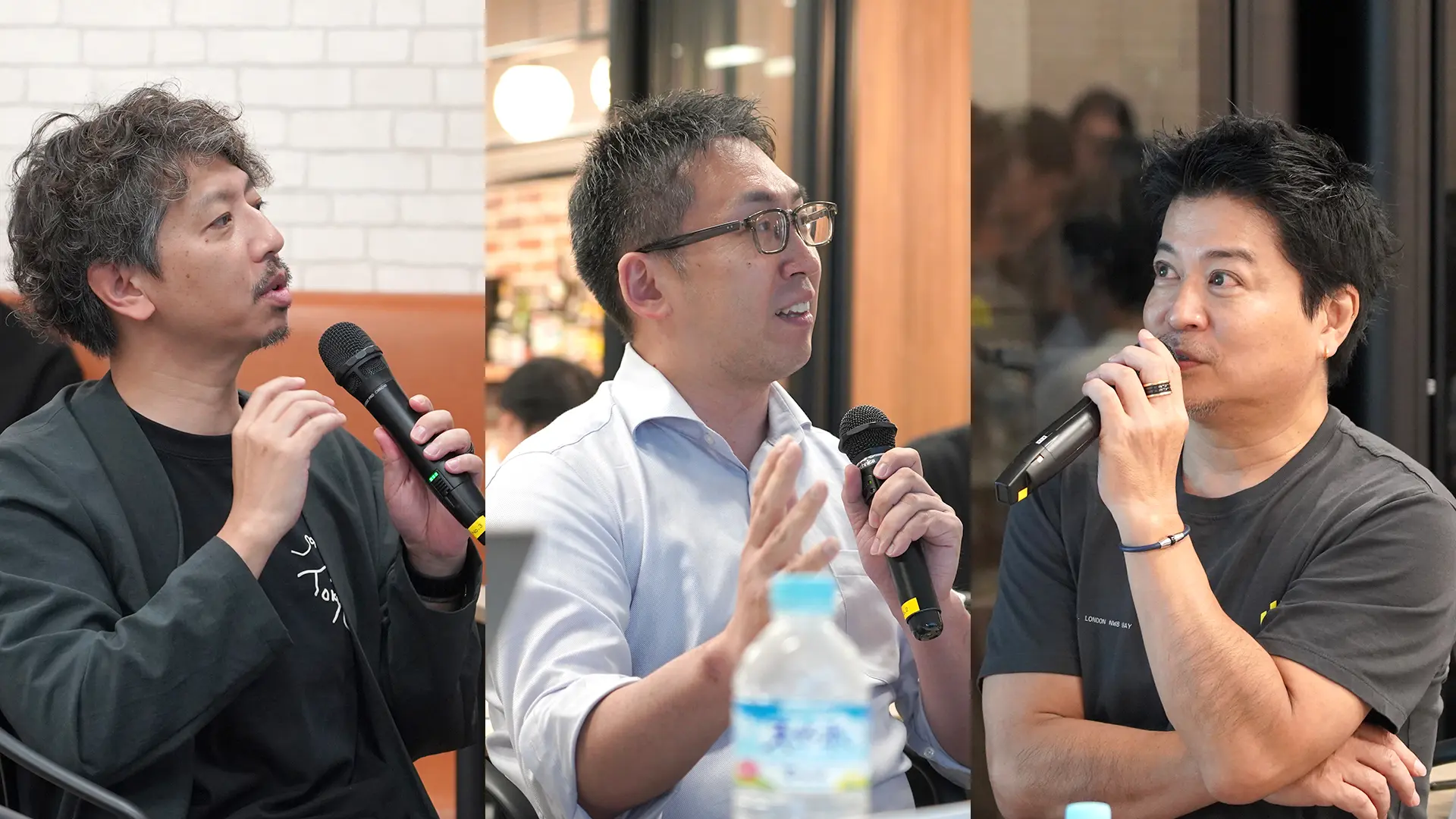 Shunpei Tatebayashi (Left: Selection & Evaluation Committee), Hiroyuki Kobayashi (Right: Selection & Evaluation Committee), Hideharu Taira (Right: Selection & Evaluation Committee)
The experts expressed extremely high and large-scale expectations for the company's initiatives.
One expert focused on the fact that the value of a bonsai fluctuates significantly over time. They pointed out that the "process of growing itself"—where a bonsai bought for 10,000 yen grows into a beautiful shape under proper AI management to become worth 100,000 yen—could become a form of investment or entertainment. It was proposed that they should build a massive "World Bonsai Platform" that records subtle daily changes using AI and cameras, sharing them with users worldwide. Furthermore, dynamic business expansion was recommended, capturing the global bonsai community in one swoop by establishing authority through supervision by nations or famous magazines.
Another expert compared "Judo" in Japan with "JUDO" overseas as an important perspective when deploying Japanese traditional culture globally. As bonsai spreads overseas, fusing with local cultures and values is inevitable; however, it was pointed out that rather than simply pandering to the audience, it is essential to first clearly define "Bonsaido" (the Way of Bonsai) as a universally shared set of fundamental rules and philosophies. They called for a two-tiered structure: creating this common foundation (framework) and then using AI to localize individual elements such as climate and aesthetics for each country.
Furthermore, the industry characteristic that most bonsai are propagated through techniques like "cuttings" rather than seeds was also discussed. Precisely because they are clones with identical genetics, the subsequent process of "how they are grown" (growth management) determines the primary value of the bonsai. This reaffirmed the strength of their business model, as the importance of AI-driven growth management support becomes even more pronounced.
Taking all this in, Katsumura expressed a powerful determination: while seeking mechanisms to scale the business, he will drive the project forward without ever wavering from his underlying strong desire and philosophy to "protect and pass down Japanese culture."
Conclusion: Balancing the Pursuit of Technology and Business Growth
 Tadashi Fukuda (Left: Chair of the ICT Startup League Operating Committee), Tsukasa Sato (Right: Ministry of Internal Affairs and Communications)
As the session drew to a close, a summary was delivered. Mr. Fukuda, Head of the Operating Committee, reminded the participants that the ICT Startup League's subsidies are not merely marketing funds, but capital for the development of innovative ICT technologies. He strongly emphasized the importance for startups not to use public interest alone as a pretext, but to build business models that change the world with unprecedented technologies, generate solid profits, and contribute to economic development.
Additionally, Mr. Sato from the Ministry of Internal Affairs and Communications revealed that this program is a pioneering model drawing attention from other ministries. He expressed his expectations that participants clearly define "who will pay" and "how it will make money" in their businesses, keeping a strong focus on business growth.
Playbox Inc., attempting to revolutionize the video infrastructure of public racing, and JinShari, aiming for the global expansion of bonsai culture through the power of AI. With practical feedback and hands-on support from dedicated caddies, we will continue to closely watch how both companies increase the resolution of their businesses and scale up moving forward.
■ ICT Startup League
Launched in FY2023, triggered by the "Startup Creation Emerging R&D Support Program" by the Ministry of Internal Affairs and Communications.
The ICT Startup League supports startups through four pillars:
① R&D Funding / Hands-on Support
Up to 20 million yen in R&D funding is provided in the form of subsidies. For hands-on support, the Selection and Evaluation Committee members who participated in selecting the league members continue to stay close and promote growth even after selection. For companies the committee members evaluated as "absolutely wanting to select," a highly dedicated championing support system has been established, where the committee members themselves continuously provide advice on business plans and offer growth opportunities.
② Discovery & Nurturing
We provide opportunities for learning and networking to promote the business growth of league members.
We also expand the base by discovering individuals aiming to start businesses in the future.
③ Competition & Co-creation
It serves as an arena for positive competition similar to a sports league, structured so that startups learn together, engage in friendly rivalry, and win the funds they truly need (up to 20 million yen). Furthermore, we provide a place for co-creation where league members can collaborate and expand their businesses through various opportunities, including sessions held by the Selection and Evaluation Committee members.
④ Dissemination (PR)
We disseminate the initiatives of league members in cooperation with the media! By letting many people know about their businesses, we aim to expand new matchmaking and opportunities.
■ Related Websites
ICT Startup League
/
Playbox Inc. (Official Website)
/
Playbox Inc. (LEAGUE MEMBER)
/
JinShari (Official Website)
/
JinShari (LEAGUE MEMBER)
Other League Reports




For more details on STARTUP LEAGUE's startup support, please see here.