 Media Produced by ASCII STARTUP
From AI-Era Business Development to Hyperspectral Infrastructure Diagnostics and Hands-on Co-parenting Support: Inside the 5th "League Academy" and Its Sessions — FY2026 5th League Academy Report —
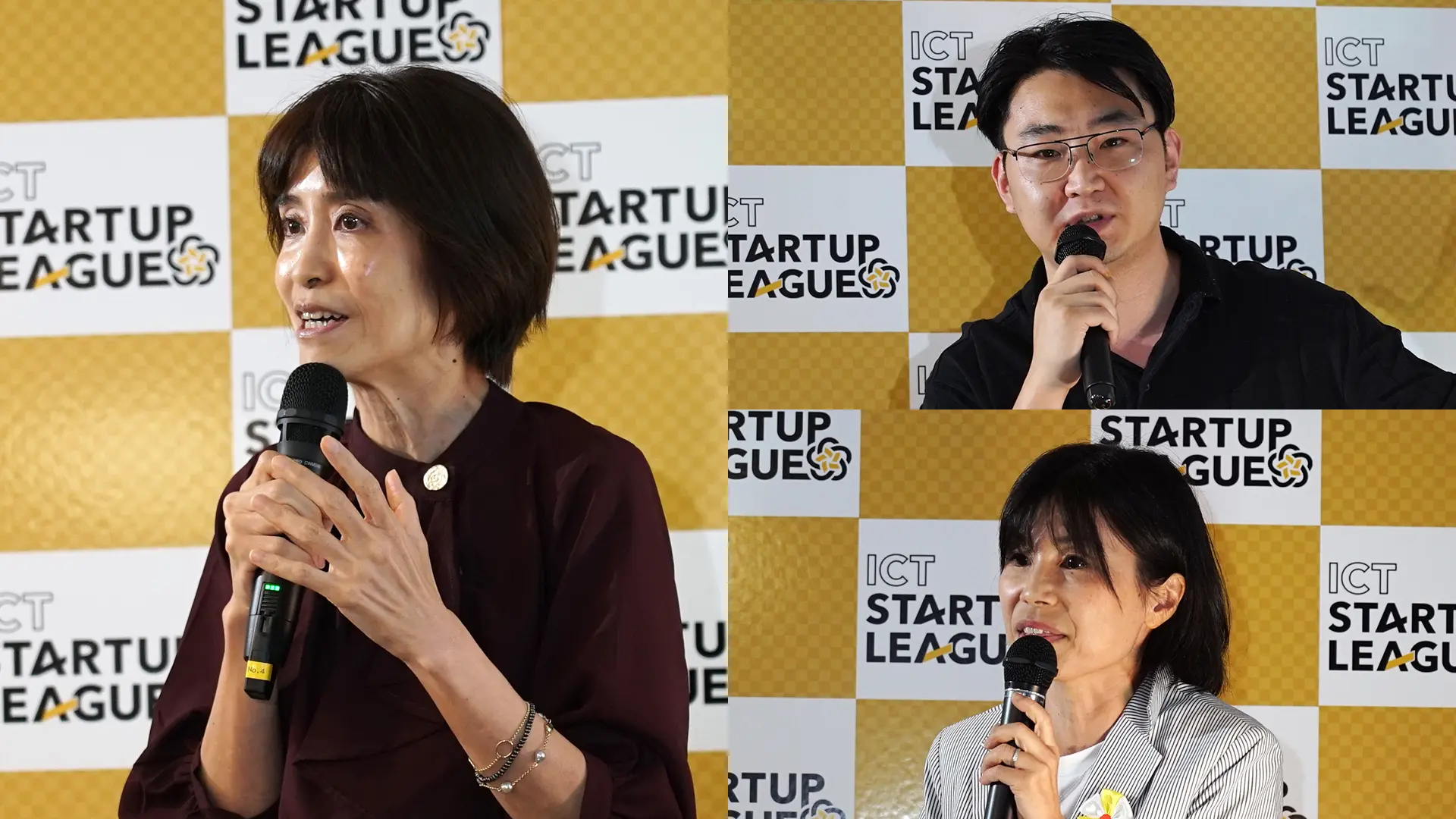
On October 2, 2026, the 5th "League Academy" was held within the ICT Startup League to provide multifaceted support for the business growth of selected startups. This program aims to equip entrepreneurs with practical knowledge and strategies they can apply in their operations.
The League Academy is broadly divided into two parts. In the first part's keynote, Ms. Noriko Harada, Representative Director and CEO of AI CROSS Inc., took the stage under the theme, "The First Step to Building Business Growth on an ICT Platform." The subsequent second part, the "Value-up Session," featured two companies—In-Spector Inc., which develops infrastructure diagnostics using hyperspectral imaging, and Rimusubi Inc., which supports post-divorce co-parenting—engaging in lively discussions with experts.
This article provides a detailed report summarizing the key points on platform businesses and survival strategies in the AI era from the first part's keynote, along with the substantive discussions between experts and selected startups during the second part's Value-up Session.
Part 1: Keynote "The First Step to Building Business Growth on an ICT Platform"
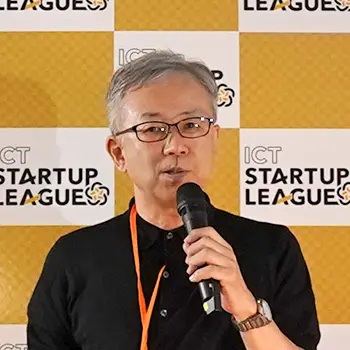
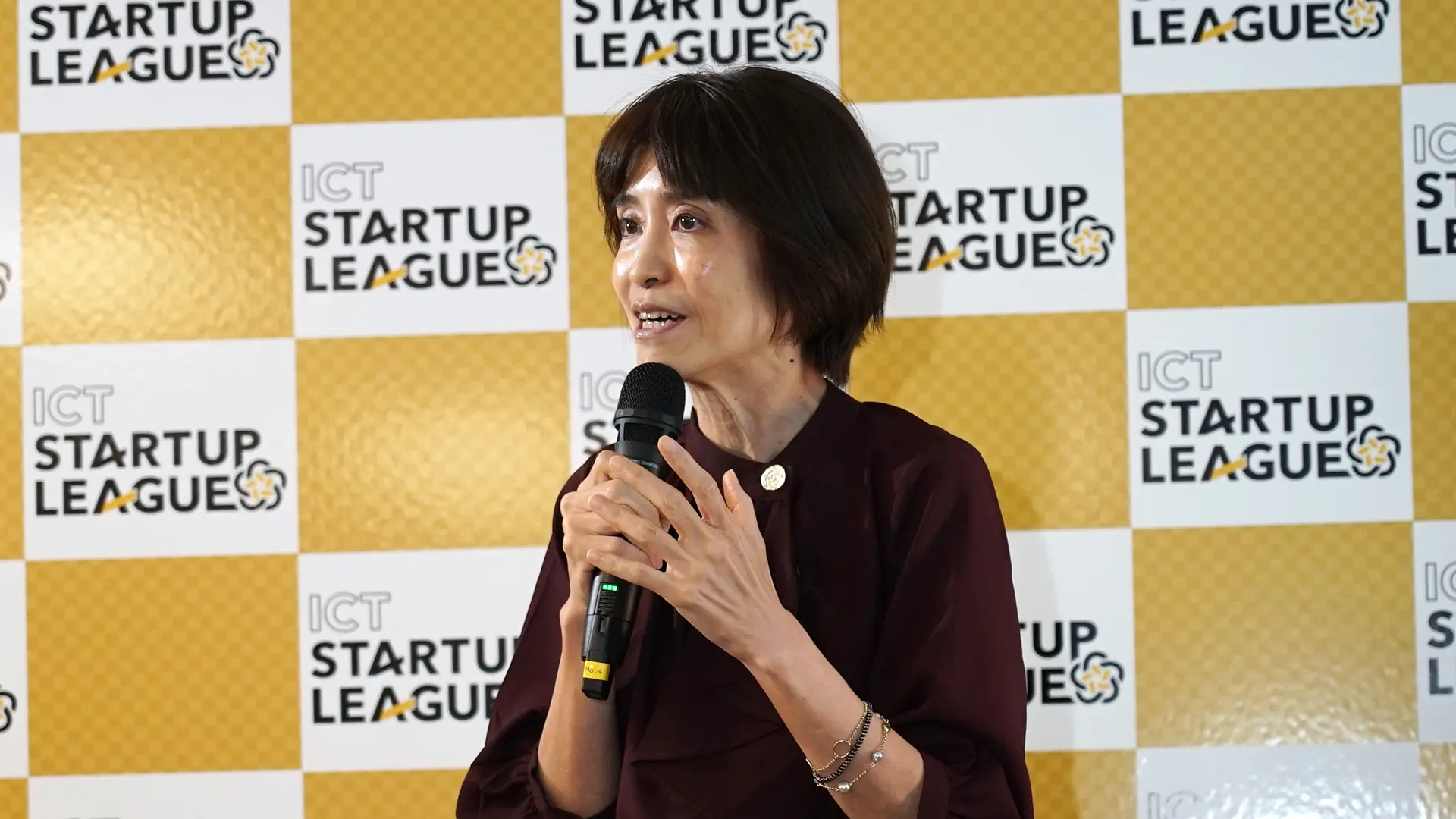 Ms. Noriko Harada, Representative Director and CEO, AI CROSS Inc.
The first half of the session began with a keynote by Ms. Noriko Harada, CEO of AI CROSS Inc. She spoke about her experiences as a minority abroad, her transition from the wine business to the IT industry, the success of her SMS delivery platform, and how business development should look in the AI era.
Original Experiences and "Time Machine Management" that Led to SMS Platform Success
Ms. Harada shared that moving around internationally from a young age and constantly fighting as a minority formed the foundation of her entrepreneurial spirit. Drawing from her work experience in the US, she adopted a "Time Machine Management" perspective and focused on the SMS (Short Message Service) business, which was rapidly spreading overseas. Convinced of its growth potential in the Japanese market, she launched an SMS delivery platform business.
At the time, SMS business use was not yet common in Japan. However, by clearing strict requirements and connection standards with telecom carriers, she built high barriers to entry and pioneered a blue ocean. She noted that this initial gritty infrastructure building and her sincere attitude toward complying with legal regulations like communication secrecy earned trust from major corporations, forming her current solid business foundation.
Platform Strategy in the AI Era: Combining RCS and Generative AI
Next, she mentioned the potential of "RCS (Rich Communication Services)" as an axis for future business expansion. RCS is a next-generation messaging service that evolves traditional text-based SMS, allowing for the transmission of rich content like images and videos. By combining RCS with generative AI, Ms. Harada envisioned that optimal messages could be automatically generated and delivered based on customer attributes and behavioral history, dramatically increasing the platform's value.
Startup Survival Tactics in the AI Era: Original Experiences and the "Power to Follow Through"
In the latter half of the keynote, the discussion shifted to how startups should compete today, where AI evolution has drastically lowered product development hurdles. Ms. Harada pointed out that in an era where anyone can easily create services, surviving long-term with a single product is difficult. She emphasized that agility to continuously release new services—even if short-lived—by accurately capturing market needs, an attitude of thoroughly addressing fine-grained customer pain points, and above all, the entrepreneur's strong conviction to "absolutely follow through," will be the core sources of competitive advantage.
[Part 1 Keynote Summary]
Part 1's keynote showcased Ms. Harada's strategy of building infrastructure from a "Time Machine Management" perspective rooted in her experiences, continuously updating the business by incorporating AI technologies. It also stressed that in an AI era where technology commoditization is advancing, an entrepreneur's original experiences and convictions, along with a dedication to thoroughly addressing fine-grained customer pain points, are crucial. For the participating entrepreneurs, it was a highly practical session for considering where to anchor their businesses and how to grow them.
Part 2: Value-up Session - Business Prospects and Feedback for Presenting Startups
Following the Part 1 keynote, the "Value-up Session" was held in Part 2. Two selected startups tackling entirely different domains—infrastructure diagnostics using advanced technology and solving social family issues—took the stage for multifaceted discussions with experts.
Changing the Common Sense of Infrastructure Diagnostics with Hyperspectral Imaging: In-Spector Inc.
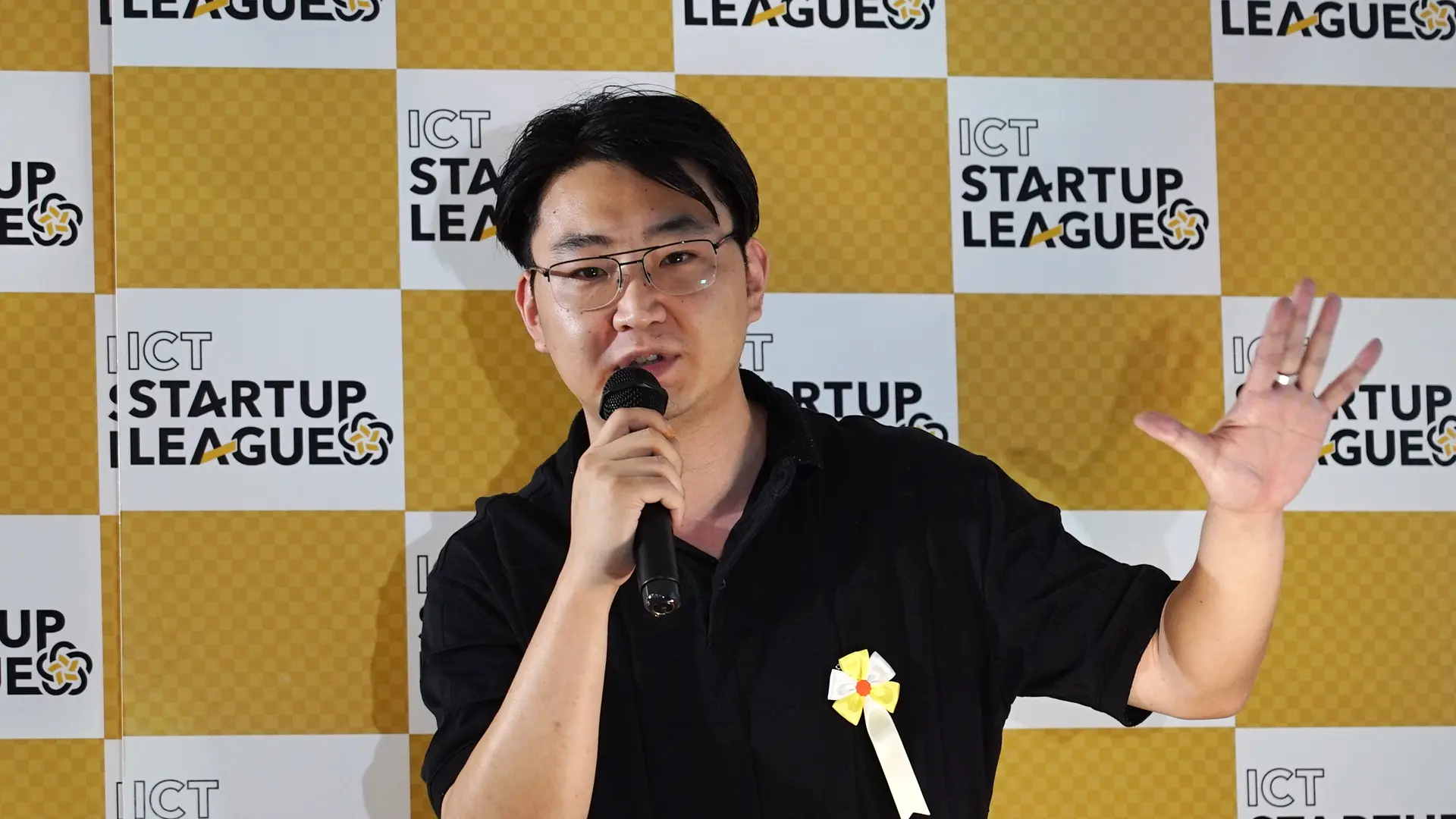 Mr. Jaewon Lee, Founder of In-Spector Inc.
Taking the stage first was Mr. Jaewon Lee, Founder of In-Spector Inc., which operates an infrastructure diagnostic service using hyperspectral imaging. The company is guided by a dedicated mentor (caddy) who is a licensed lawyer well-versed in startup business strategy support.
Innovative Infrastructure Diagnostics Technology Using Hyperspectral Images
In-Spector Inc. is developing a service that diagnoses concrete structure degradation using a special camera and analysis technology that captures light wavelengths invisible to the human eye (hyperspectral). Conventional infrastructure inspections rely heavily on analog methods like visual checks and hammer-sounding tests, but utilizing their technology enables highly accurate, efficient, and objective diagnostics. Mr. Lee shared his vision of using this technology to "visualize the invisible" and change the common sense of infrastructure maintenance.
The Wall of "Precedent-ism" in B2B Sales
Despite possessing innovative technology, the company currently faces a major wall in B2B sales activities for business expansion. Due to the nature of ensuring social safety, the infrastructure industry is highly conservative, presenting high hurdles to gaining understanding for new technologies and introducing unprecedented systems. He candidly shared their current reality: while they approach major measurement equipment manufacturers and general contractors and progress to Proof of Concept (PoC) stages, advancing beyond that point has proven difficult.
Hurdles to Official Contracts and Exploring New Targets
The "high initial cost" was also raised as a concrete hurdle toward practical application. Because the hyperspectral camera (sensor) itself is expensive, proposing a model predicated on clients purchasing the equipment rarely leads to official contracts—a business model challenge. To break through this situation, Mr. Lee is parallelly exploring new industries outside of infrastructure, such as facility construction and materials companies, and sought advice from experts on optimal target markets and sales strategies for scaling the business.
Interaction with Experts: Target Pivots and "Personalized" Sales Strategies
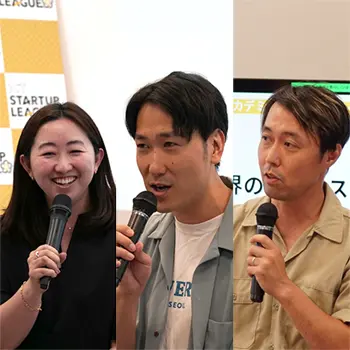
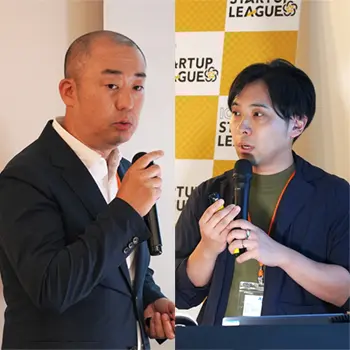
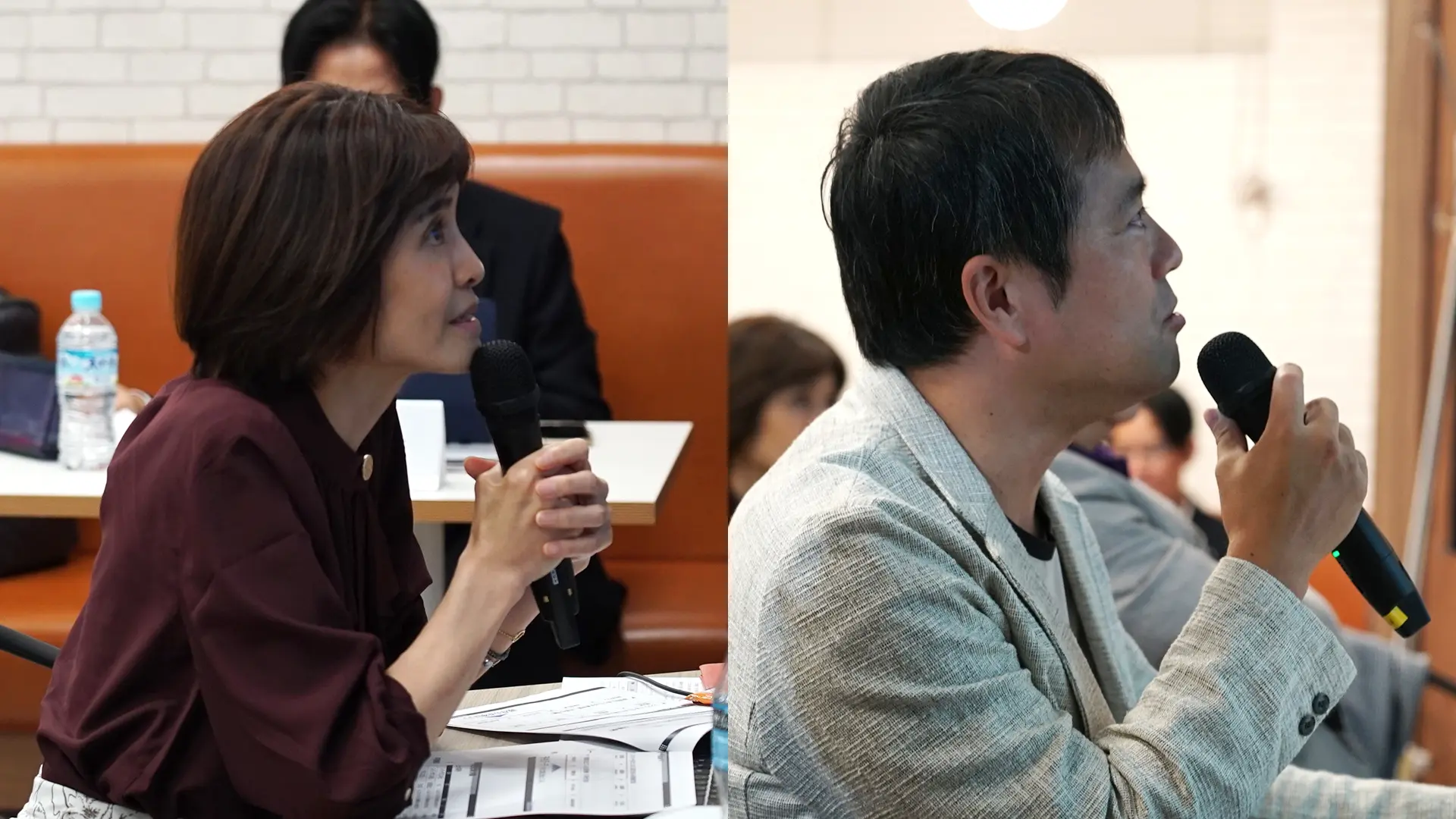 Ms. Noriko Harada (Left: AI CROSS Inc.), Mr. Toshiya Haida (Right: Selection and Evaluation Committee Member)
In response to the company's challenges, experts provided feedback urging a fundamental review of how the technology is "sold" and "presented."
First, it was pointed out that unless a clear service package is presented—stating "whose problems, what kind of problems, and at what cost they can be solved"—rather than relying on a technology-first explanation, it will not resonate with customers. If expensive sensor costs are a bottleneck, they were advised to consider a model providing the diagnostic results themselves as a service, rather than selling the equipment.
Furthermore, a strong pivot toward markets with more pressing issues was proposed, rather than fixating on approaching major infrastructure companies. Specifically, the large-scale repair market for condominiums, which has become a social issue nationwide. With management associations struggling with opaque repair plans and cost validity, objectively diagnosing "whether repairs are truly needed now" could unearth massive latent needs. To persuade others of the technology's usefulness, he was advised that the strongest sales tool would be the entrepreneur personally validating it as a "personal matter" and conveying its effects with passion.
Protecting Children from Conflict with a Hands-on Co-parenting Support System: Rimusubi Inc.
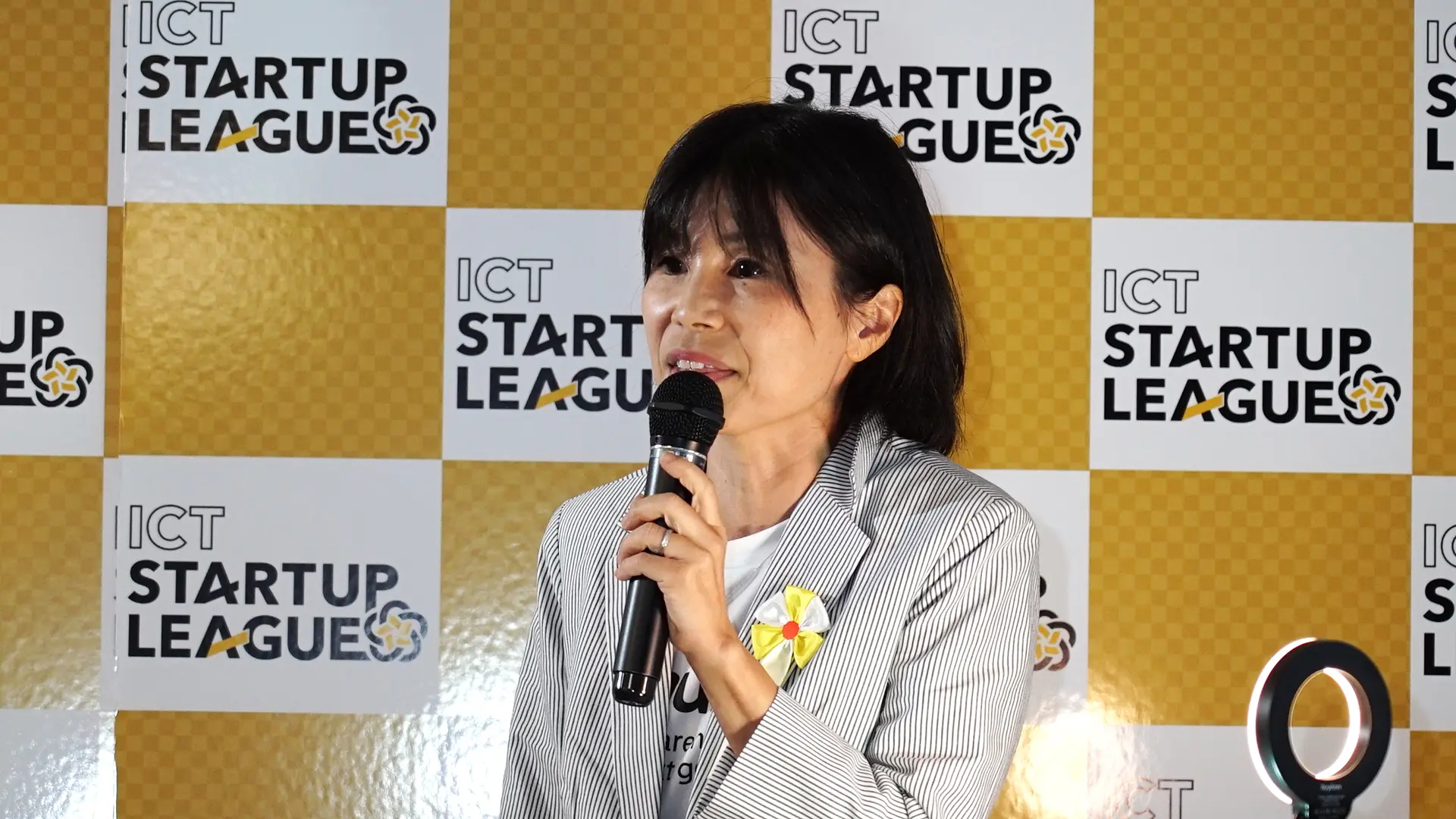 Ms. Satoko Shibahashi, President & CEO of Rimusubi Inc.
Next on stage was Ms. Satoko Shibahashi, President & CEO of Rimusubi Inc., which supports "co-parenting" where post-divorce parents cooperate in raising children. The company is guided by a mentor with broad experience from business launch to management.
Extensive Hands-on Support Track Record Sustaining Post-Divorce "Co-parenting"
Ms. Shibahashi spoke of her long track record of co-parenting support aimed at solving the social issue where children get caught up in conflicts due to parental divorce, leading to severed parent-child relationships. The company has provided meticulous human support to over 10,000 families, including accompanying child handovers and visitations, and mediating communications between parents. They are highly regarded across various fields as a pioneer in easing emotional conflicts between parents and building environments where they can remain involved with their children as "two parents" even after divorce.
Rapid Surge in Needs Due to Legal Revisions and Human Resource Challenges
Currently, driven by movements toward legal revisions introducing joint custody, the need for the company's parent-child interaction support is soaring nationwide. Staff are already deployed across 28 prefectures to handle cases, but requests for support continue to grow, and their current human-resource-reliant support structure is reaching its limits. While aiming to establish a system capable of covering all 47 prefectures within this fiscal year, she explained the urgent reality of needing to streamline operations to prevent human error and deliver support to more families.
"Co-parenting Management App" Development Concept Utilizing AI
To break through this challenge, Ms. Shibahashi announced a concept for developing a "Co-parenting Management App" that digitizes the on-the-ground "battlefield" know-how accumulated over the years to monitor parental interactions on a system. Rather than just a scheduling tool, this app envisions a function where AI detects and intervenes against aggressive messages that spawn emotional conflicts, preventing disputes before they occur. Having transitioned from a general incorporated association to a stock company to aim for full-scale business scaling, she sought advice on marketing strategies, fundraising, and ideal partnerships.
Interaction with Experts: Redefining Strengths and Cultivating Synergistic Partnerships
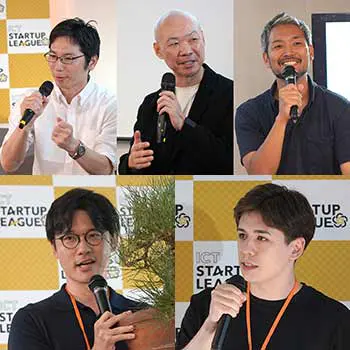
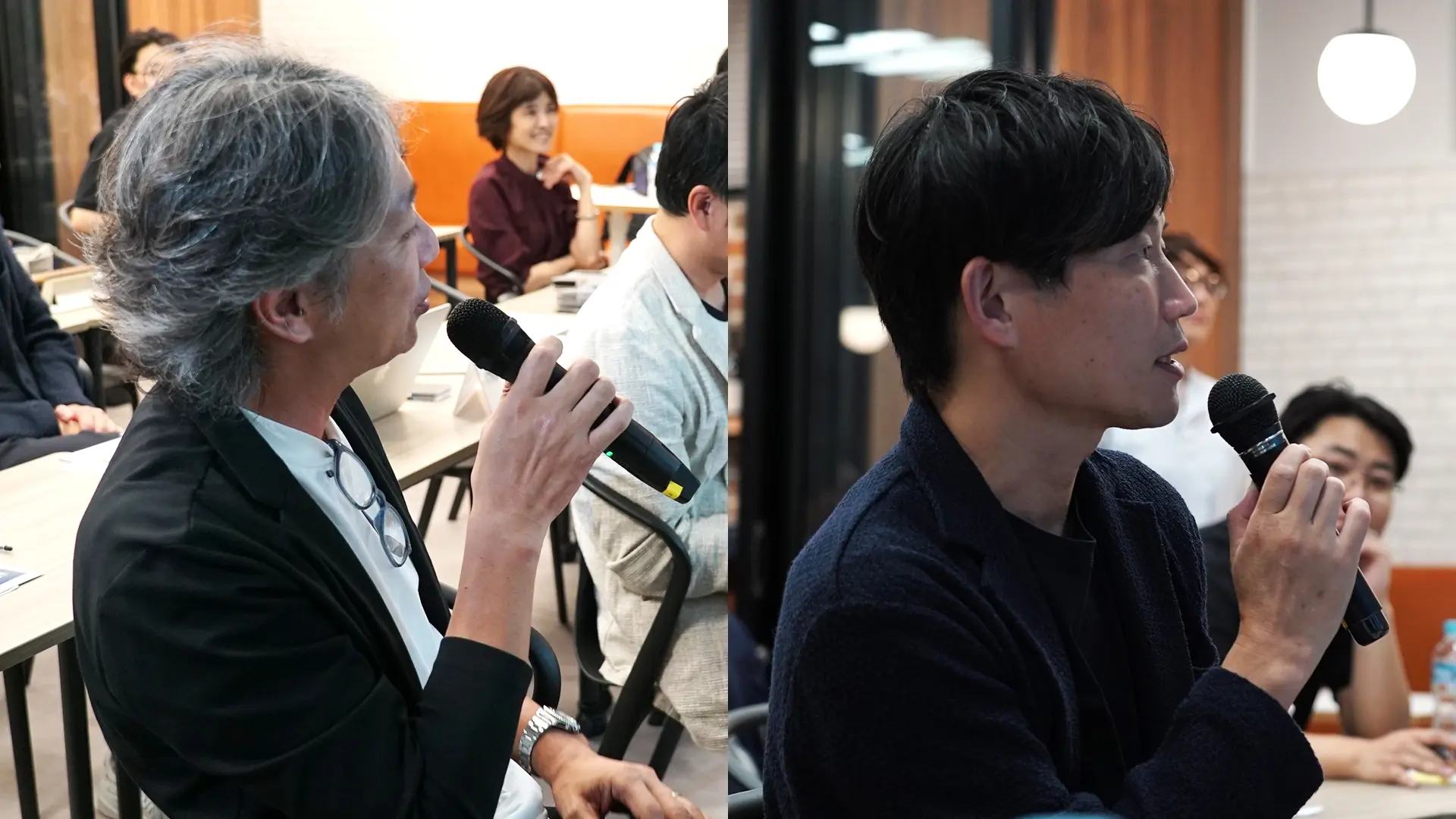 Mr. Masakazu Kakinuki (Left: Steering Committee), Mr. Eiji Nakagawa (Right: Selection and Evaluation Committee Member)
Experts offered high praise for the company's past activities and provided practical advice to elevate the business to the next level.
Regarding app development, they were urged to elevate it beyond a mere communication tool into a system capable of handling complex family issues, including building relationships with new post-divorce partners. Additionally, it was pointed out that the company's greatest strength is not "system development capabilities" but the "know-how to resolve disputes" cultivated grittily across over 10,000 on-the-ground cases. Therefore, rather than building a system from scratch in-house, the most efficient strategy advised was to collaborate with platformers or companies possessing communication infrastructure that already have many users, and implement their know-how there.
Furthermore, for securing support personnel for national expansion, an approach was proposed to coordinate with networks tackling similar social family issues, such as "Children's Cafeterias (Kodomo Shokudo)," to mutually complement resources. To broadly raise awareness of their activities' social significance, a marketing method was also suggested: broadcasting real stories from the support frontlines as content like manga or short dramas to win public empathy and dedicated fans (oshi).
Conclusion: The Importance of Original Experiences and Proposals that Meet the Other Party's Needs
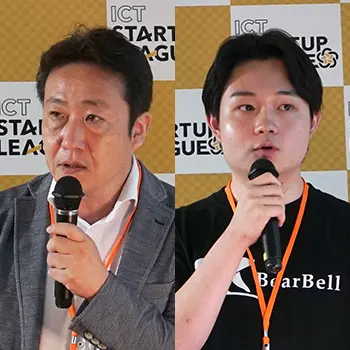
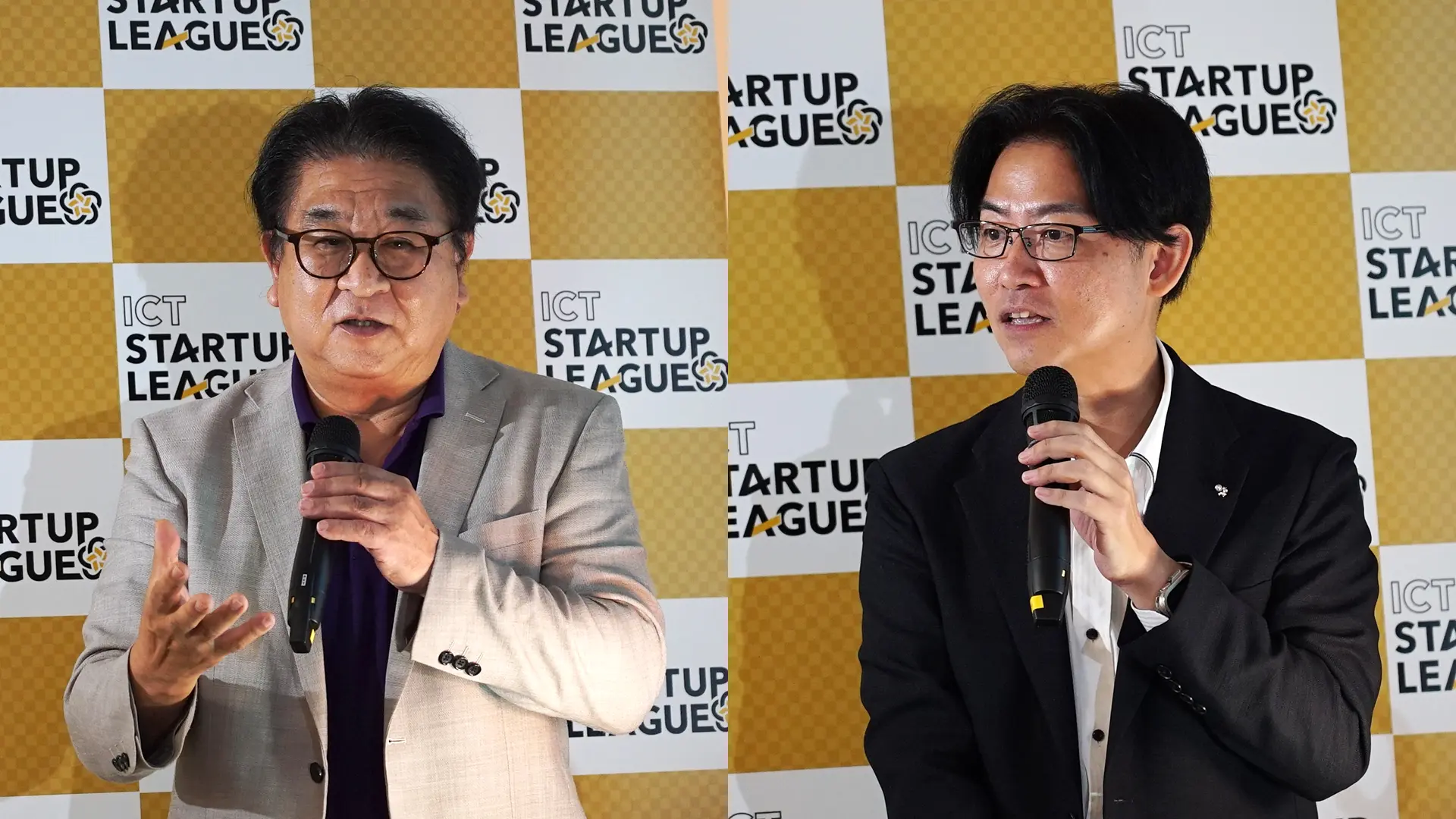 Mr. Tadashi Fukuda (Left: ICT Startup League Steering Committee Chair), Mr. Kunio Noma (Right: Ministry of Internal Affairs and Communications)
At the end of the session, remarks were made by Steering Committee Chair Mr. Fukuda and Mr. Noma from the Ministry of Internal Affairs and Communications (MIC).
Reflecting on Ms. Harada's keynote and the Value-up Session discussions, Mr. Fukuda reiterated, "A business that you are deeply in love with, practice yourself, and can speak about in the first person possesses the strongest sales power and persuasiveness." He discussed the importance of thoroughly thinking through how to refine the philosophy and original experience (Why) behind why you are doing it, rather than just selling the technology or product features (What), and connecting that to the pressing needs of the other party.
Mr. Noma from the MIC also shared his impression that "The entrepreneur's original experience and the passion born from it become a massive driving force for advancing the business." He offered encouragement to attendees, stating that a customer-centric approach of "drawing out what the other party truly wants and matching it with your own service" is indispensable for moving a business forward.
In-Spector Inc., challenging the construction of new infrastructure for the AI era, and Rimusubi Inc., protecting family bonds through technology. Receiving practical feedback from experts, we will continue to closely watch how both companies refine their businesses and achieve growth moving forward.
■ ICT Startup League
This support program launched in FY2023, triggered by the MIC's "Startup Creation-type Exploratory R&D Support Project."
The ICT Startup League supports startups through four pillars.
1. R&D Funds / Hands-on Support
Up to 20 million yen in R&D funding is provided in the form of subsidies. For hands-on support, Selection and Evaluation Committee members who participated in selecting league members stay close after selection to promote growth. For companies the committee members evaluated as "must select," a dedicated championing system has been built where the evaluators themselves continuously provide advice on business plans and growth opportunities.
2. Discovery & Nurturing
We provide spaces for learning and encounters that stimulate the business growth of League members.
We also discover aspiring entrepreneurs, aiming to broaden the base.
3. Competition & Co-creation
It serves as a positive competitive arena like a sports league, structured so that startups can win the funds they truly need (up to 20 million yen) while learning and engaging in friendly rivalry together. It also provides a co-creation space where League members can collaborate to expand their businesses through various opportunities, such as sessions by the Selection and Evaluation Committee.
4. Dissemination
We broadcast League members' initiatives in collaboration with the media! By letting many people know about the businesses, we aim to expand new matchmaking and opportunities.
■ Related Websites
ICT Startup League
/
In-Spector Inc. (Official Site)
/
In-Spector Inc. (LEAGUE MEMBER)
/
Rimusubi Inc. (Official Site)
/
Rimusubi Inc. (LEAGUE MEMBER)
Other League Reports
For more details on STARTUP LEAGUE's startup support, please see here.