 Media Produced by ASCII STARTUP
From a Platformer's Global Survival Strategy to a Freezing Platform Revolutionizing Fruit Distribution: Inside the 6th 'League Academy' and Sessions ― FY2026 6th League Academy Report ―
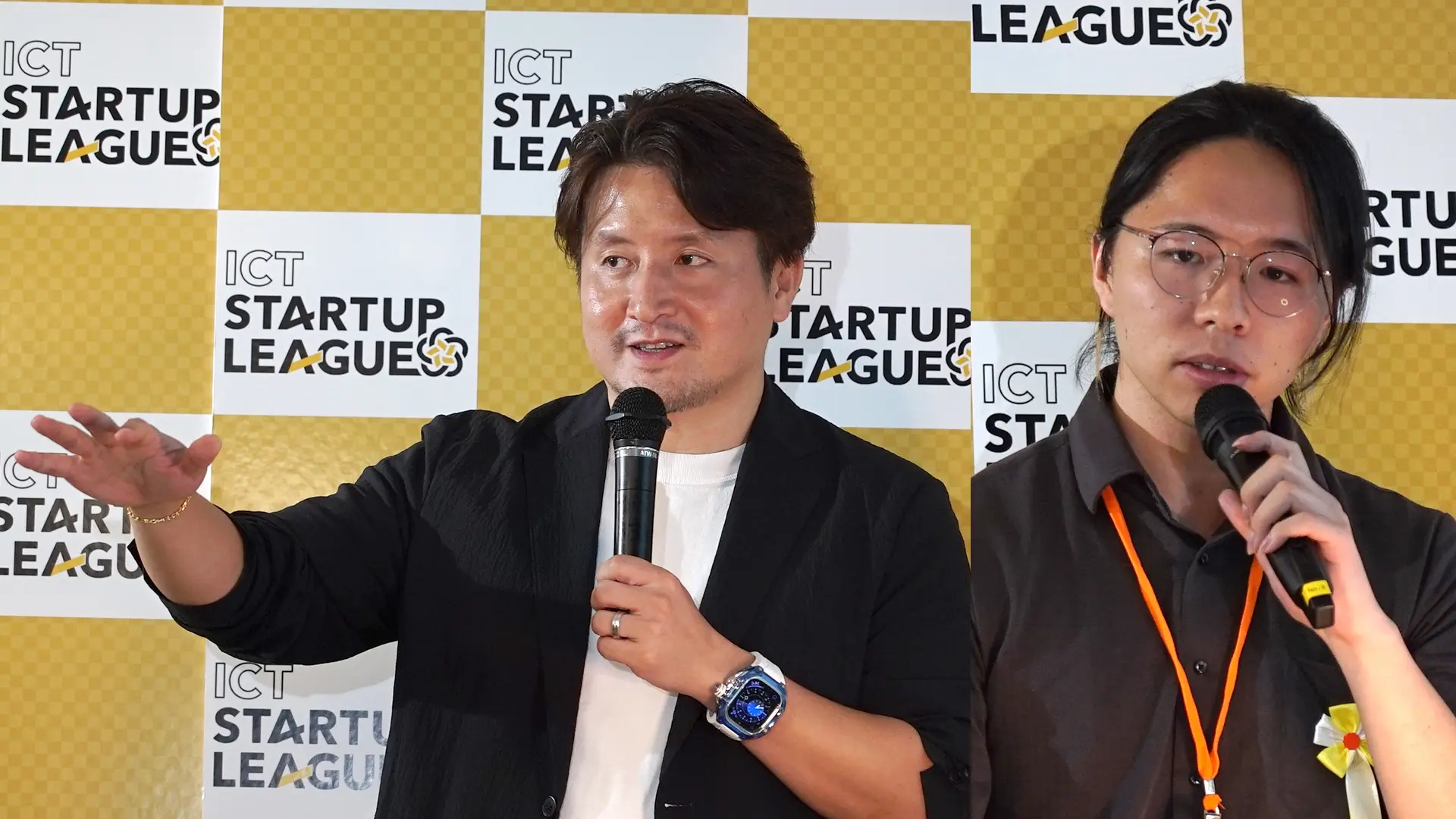
On October 21, 2026, the ICT Startup League hosted the "League Academy," designed to provide multifaceted support for the business growth of selected startups. The program aims to equip entrepreneurs with practical knowledge and strategies they can apply in real-world business scenarios.
The League Academy was broadly structured into two parts. The first part featured a keynote presentation titled "Survival Strategies for Global Expansion Learned from a Platformer's Real-Life Experiences," delivered by Yusuke Inagaki, Representative Director and CEO of Uzabase, Inc. Following this, the second part hosted a "Value-Up Session" featuring Gominux Co., Ltd., a startup taking on the challenge of building a revolutionary distribution infrastructure using proprietary freezing technology, where they presented their business outlook.
This article provides a detailed report covering the raw lessons on business growth aimed at the global market from the Part 1 keynote, the selected startup's innovative business vision from the Part 2 Value-Up Session, and the event's overall concluding remarks.
Part 1: Keynote "Survival Strategies for Global Expansion Learned from a Platformer's Real-Life Experiences"
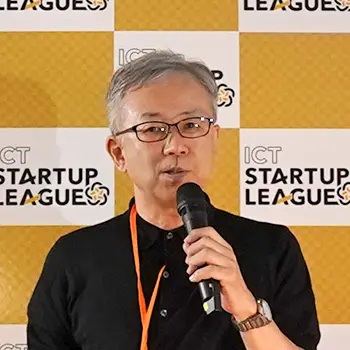
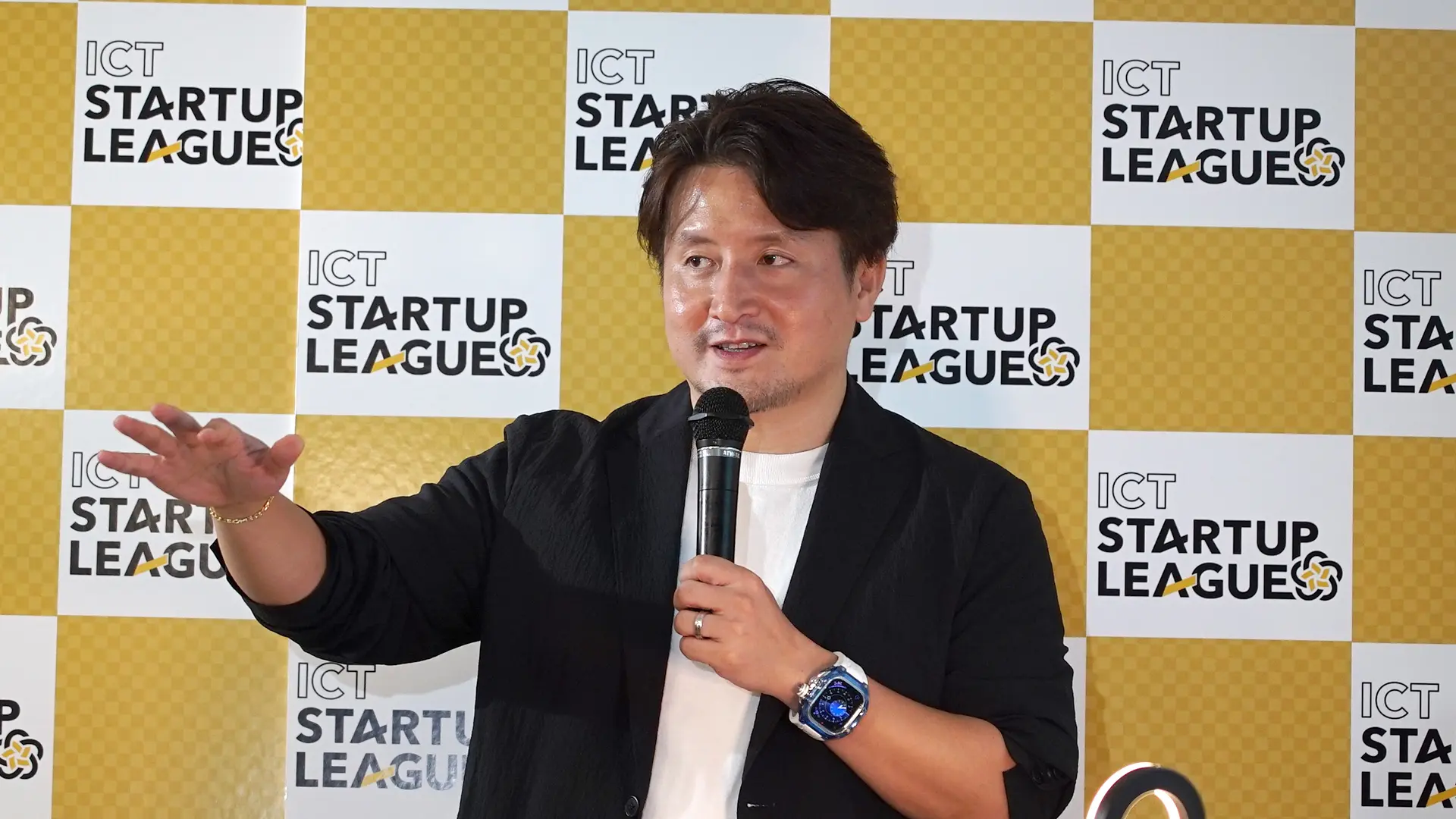 Yusuke Inagaki, Representative Director and CEO of Uzabase, Inc.
The first half of the session kicked off with a keynote by Yusuke Inagaki, Representative Director and CEO of Uzabase, Inc. After working at ABeam Consulting, Inagaki founded Uzabase in 2008. In this lecture, he spoke passionately about the company's trajectory—from its founding to its IPO, and the subsequent decision to go private—while sharing candid lessons learned during their global expansion.
Overcoming Early Hurdles and the Importance of "Mission and Value-Driven Management"
Inagaki first elaborated on the struggles of the company's early days, which began in a single apartment room in Shinagawa. For the first entire year, they generated zero revenue. In that confined space, they faced severe troubles, including intense clashes between co-founders and the catastrophic loss of their database. However, through exhaustive dialogue, they navigated these crises and managed to put the business on track.
Later, as the organization expanded, they hit the infamous "50-person wall," facing an organizational breakdown brought on by internal communication failures. To overcome this hurdle, Inagaki and his team articulated their mission and values in writing for the first time. He noted that aligning team members' understanding (protocols) through language became a major turning point for building a highly resilient organization thereafter.
The Setback in Global Expansion and the Decision to "Go Private"
He then spoke about a significant setback experienced during their full-scale global expansion following their 2016 IPO. Taking a bold gamble, they acquired the U.S. media outlet "Quartz" for roughly 10 billion yen. However, due to the pandemic and other factors, advertising revenue—their primary income source—plummeted. Saddled with massive losses, they were forced to withdraw, a move that led to the departure of one of the original co-founders.
Amidst stagnating stock prices, Inagaki made the heavy decision to undergo a Management Buyout (TOB) to take the company private. This decision was driven by his desire to protect the remaining team members and rebuild the business, pushed forward by powerful advice from an outside director who emphasized that "improving customer value should be the top priority." Through this series of trials, he learned a harsh yet crucial business lesson: "Venturing into completely disconnected territories will end in failure."
Renewed Growth Through Integration and Data Strategies in the AI Era
Finally, Inagaki touched upon the company's renewed growth trajectory post-privatization and their strategies for the upcoming AI era. By integrating scattered brands and subsidiaries into a unified management structure, profits have grown significantly compared to when the company was public. Currently, they are pursuing a reliable global expansion that "avoids disconnected territories," leveraging their core strengths by bringing Japanese data overseas and vice versa.
Furthermore, he emphasized that in today’s AI-driven landscape, the greatest competitive advantage lies not in competing with public information that AI can easily generate, but rather in acquiring "unique data that AI cannot create." He concluded his session by sending a powerful message of encouragement to the participating entrepreneurs.
[Part 1 Keynote Summary]
The Part 1 keynote highlighted the foundational importance of a company's mission and values, alongside raw, real-world lessons regarding the "disconnected territory risk" associated with diversification and global expansion. Inagaki's journey—overcoming painful failures and rebuilding the business through the massive decision to go private—served as a highly practical and inspiring guide for entrepreneurs looking to scale up and challenge overseas markets.
Part 2: Value-Up Session - Business Outlook of the Featured Startup
Following the keynote, Part 2 featured the "Value-Up Session." This segment showcased a selected startup taking on the challenge of solving social issues using proprietary technology.
Building a New Food Distribution Platform with Proprietary Freezing Technology: Gominux Co., Ltd.
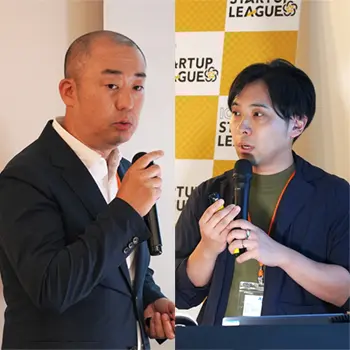
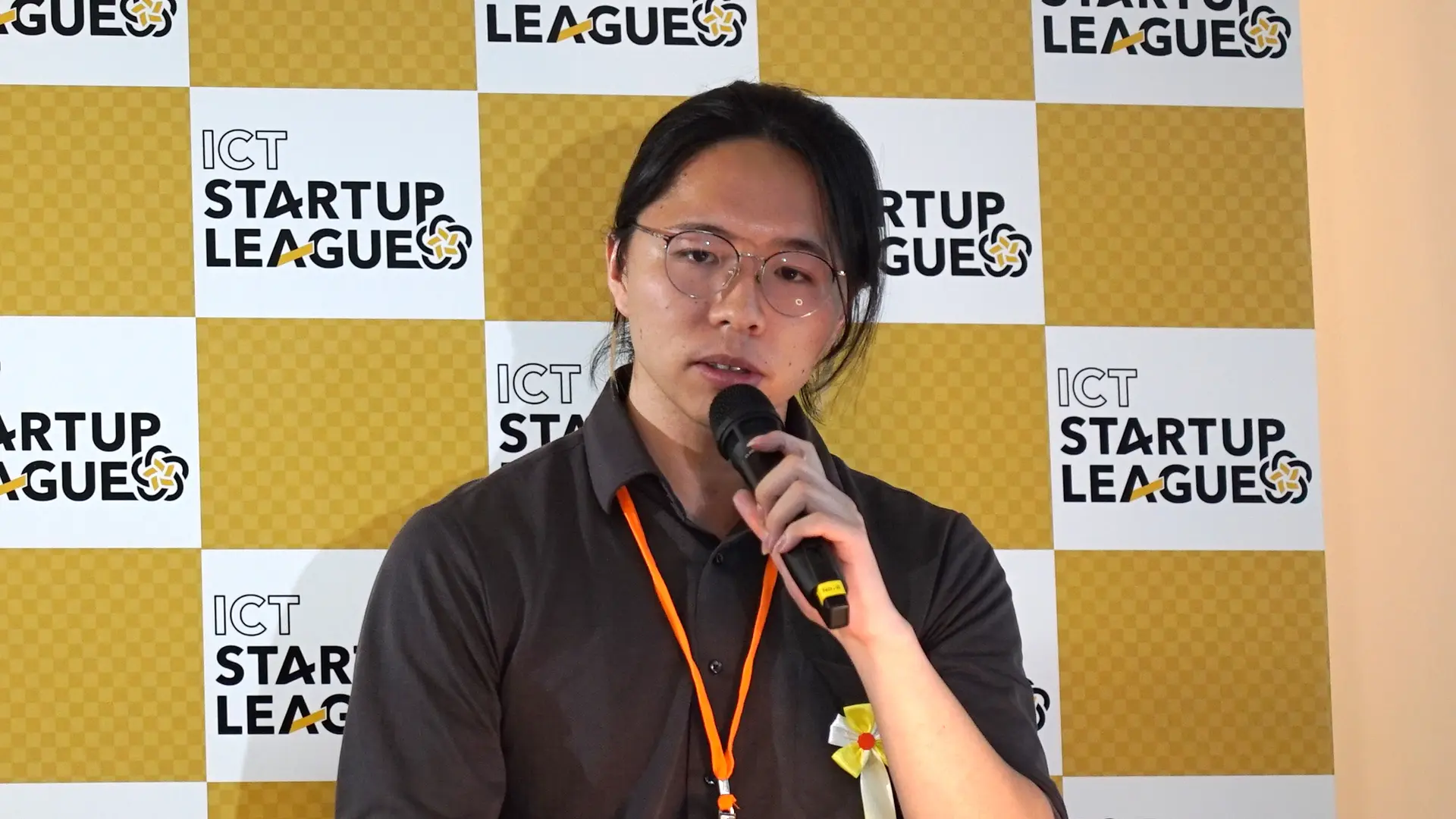 Keita Nakajima, Representative Director / CEO of Gominux Co., Ltd.
Taking the stage for the Value-Up Session was Keita Nakajima, Representative Director and CEO of Gominux Co., Ltd., a company aiming to build a revolutionary distribution infrastructure using their unique freezing technology.
Challenges in Global Fruit Distribution and the Potential of Freezing Processing
Nakajima first explained the current challenges plaguing global fresh produce distribution. Exporting fruits and vegetables requires strict compliance with plant quarantines for pests and residual pesticide standards, which vary depending on the item and destination. The company recognized that freezing processing can eliminate pests inside fruits, which may alter how the produce is handled under quarantine regulations. They are actively exploring the potential of this method to expand overseas sales channels while fully maintaining quality.
A Unique "Novel Freezing Technology" that Maintains Freshness and Quality After Thawing
A major hurdle in realizing this vision has been the "quality degradation" caused by conventional freezing techniques. Typically, freezing and thawing damage cellular structures, causing moisture (drip) to leak out and ruining both color and texture. Consequently, most frozen fruit is sold strictly "for processing." However, by utilizing the company's specially developed "Freezing Box," they can successfully suppress drip and tissue breakdown after thawing. Furthermore, the technology operates at a temperature equivalent to standard home freezers (-18°C), and the box itself requires no power supply. He highlighted its key strengths: it utilizes existing freezers and boasts simple operability. He did note, however, that total power consumption across all processes, including the freezer itself, requires separate comparative testing.
Business Outlook for Building a Frozen Food Distribution Platform
The company envisions going beyond merely providing technology and materials. Their ultimate goal is to build a "Frozen Food Distribution Infrastructure (Platform)" centered on their proprietary technology. In the first phase, they will launch a contract business for freezing and storage targeting wholesalers, farmers, and frozen food businesses. In the second phase, they plan to start selling their proprietary freezing boxes, eventually aiming to build a platform that connects domestic and international production areas with end markets. A patent application for their core materials technology was officially completed on October 23, 2026. The company revealed its strategy to expand the business, eyeing applications not just for fruits, but also for meat, fish, and even medical vaccine transport.
Interaction with Experts: High Value-Added via ICT and Refining the Business Model
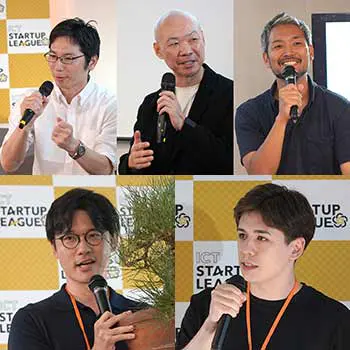
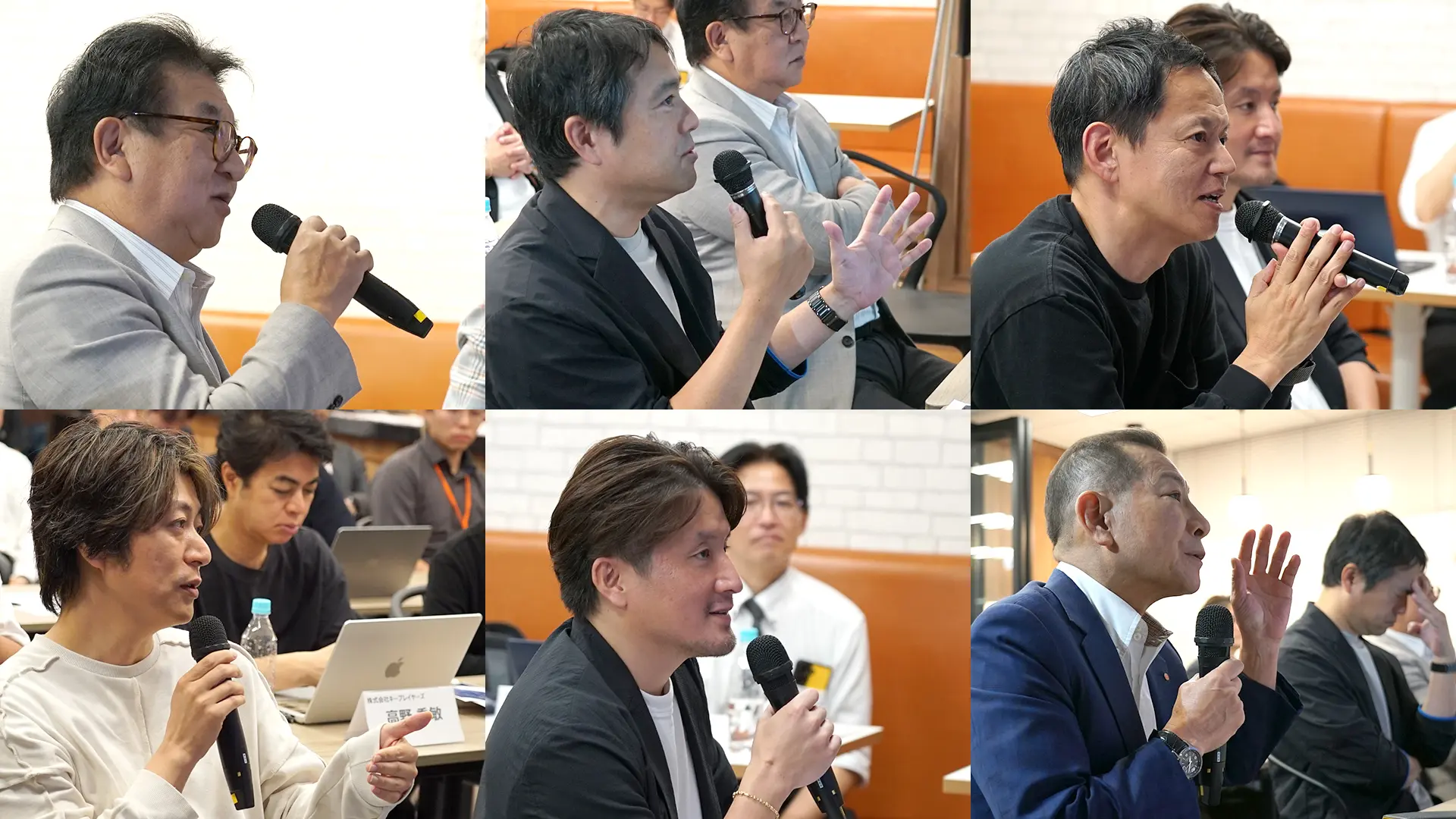 Tadashi Fukuda (Top Left: Steering Committee), Toshiya Haida (Top Center: Selection & Evaluation Committee), Isao Tanimoto (Top Right: Selection & Evaluation Committee), Yoshinori Sasaki (Bottom Left: Steering Committee), Yusuke Inagaki (Bottom Center: Uzabase, Inc.), Katsunori Ueda (Bottom Right: Steering Committee)
In response to Nakajima’s presentation, the panel of experts offered specific questions regarding the business model and technology, along with fundamental advice tailored for an ICT startup. Regarding monetization, the roadmap starts with contract freezing and storage, transitioning to selling the freezing materials (boxes) in phase two. Ultimately, the vision is to build a platform connecting domestic and international markets while adapting to specific conditions per item and destination. Discussions also covered concerns regarding cellular degradation from freezing and parasites (such as Anisakis). Since parasite control requires precise management of both temperature and processing time, the need to confirm the appropriate processing conditions was heavily emphasized.
Meanwhile, keeping in mind that this is the "ICT Startup League," the experts delivered tough but highly expectant feedback. They suggested that instead of solely relying on rapid freezing technology, the company should focus on identifying "ingredients whose value actually increases (e.g., tastes better) when frozen rather than raw." Furthermore, they advised that without integrating ICT elements—such as utilizing IoT sensors to determine the optimal freezing timing—to create data-backed value, it will fall short of becoming a platform business capable of moving society. In response, Nakajima and his companion supporter acknowledged the inherent limits of materials technology alone and renewed their commitment to deepening its integration with information and communication technology, such as IoT-based temperature control.
Summary: Organizational Penetration and the Significance of Creating New Value with Technology
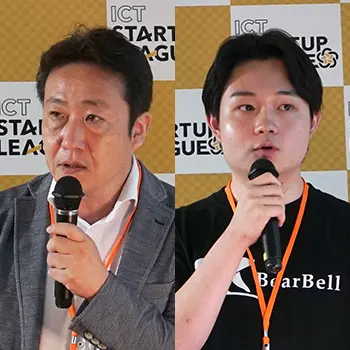
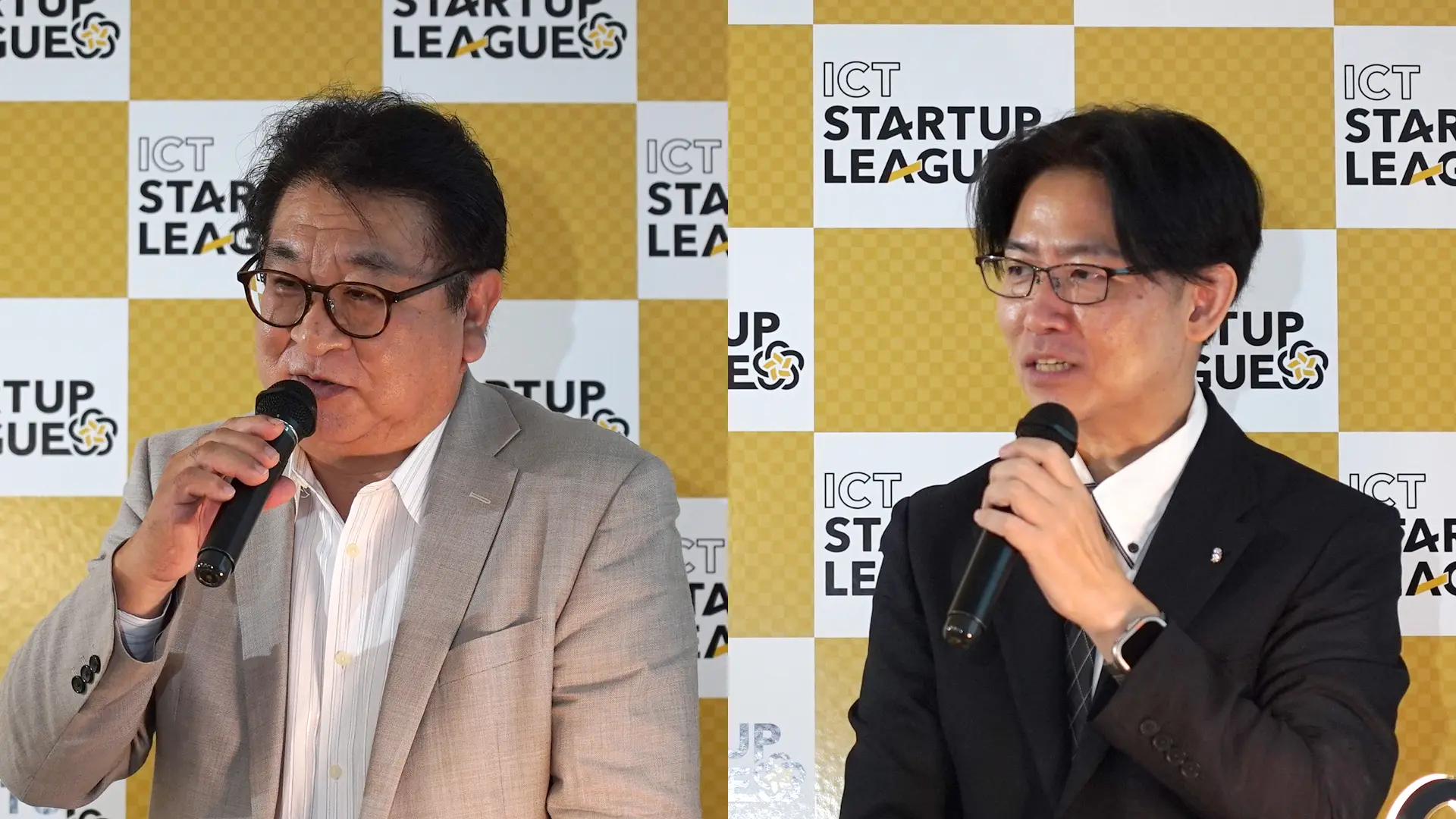 Tadashi Fukuda (Left: Head of ICT Startup League Steering Committee), Kunio Noma (Right: Ministry of Internal Affairs and Communications)
At the end of the session, concluding remarks were delivered by Tadashi Fukuda, Head of the Steering Committee, and a representative from the Ministry of Internal Affairs and Communications (MIC).
Fukuda touched upon the "mission and values" discussion from Part 1, praising the commendable perseverance of continuing the business through relentless dialogue despite intense clashes among co-founders. He also pointed out that when expanding a business overseas, "translating the protocol" to align with the counterpart's culture and background is absolutely essential. He emphasized the critical importance of not just showcasing technological prowess, but creating new value by combining unique ICT elements—asking how using that technology can elevate existing customer value (for example, making food taste even better by freezing it).
Kunio Noma from the MIC also shared his impressions, stating that this session brought the vital importance of "organizational strength" and "mission/value-driven management" into sharp relief. He summarized that the true foundation of corporate growth lies in how well top-level ideals penetrate the entire organization and how teams can steadily move toward a shared goal without ever ceasing dialogue. He expressed his sincere hope that the participating entrepreneurs would leverage these lessons to fuel their own companies' growth.
Between real-world lessons from a platformer's global expansion and the social implementation of innovative technology meant to solve societal issues, we will continue to keep a close eye on how these selected startups will leap forward in the future, fueled by the practical knowledge gained from both sessions.
■ ICT Startup League
This support program was launched in FY2023, sparked by the Ministry of Internal Affairs and Communications' "Startup Creation Sprout Research and Development Support Project."
The ICT Startup League supports startups through four main pillars:
1. R&D Funding / Hands-on Support
A maximum of 20 million yen in R&D funding is provided in the form of subsidies. For hands-on support, the Selection and Evaluation Committee members who judged the league members continue to work closely with them post-selection to accelerate their growth. For companies the committee firmly believed "must be selected," a dedicated championing system is in place, where the committee members themselves provide ongoing support, including advice on business plans and offering distinct growth opportunities.
2. Discovery & Nurturing
We provide essential opportunities for learning and networking to spur the business growth of league members.
Additionally, we aim to broaden the startup ecosystem's horizon by proactively discovering individuals aspiring to start their own businesses.
3. Competition & Co-creation
Designed as a positive competitive arena akin to a sports league, startups learn together and push each other to secure the actual funding they need (up to 20 million yen). It also serves as a co-creation space where league members can collaborate to expand their businesses through various opportunities, including exclusive sessions with the evaluation committee.
4. Broadcasting
We broadcast the initiatives of league members in collaboration with the media! By letting a wider audience know about their businesses, we aim to drastically expand opportunities for new matching and business chances.
■ Related Websites
ICT Startup League
/
Gominux Co., Ltd. (Official Website)
Other League Reports

For more details on STARTUP LEAGUE's startup support, please see here.