 Media Produced by ASCII STARTUP
Communication infrastructure utilizing hydropower and visualization of bear sighting information. The reality of the "Value-Up Session" exploring next-level business growth — 2026 3rd Premium Value-Up Session Report —
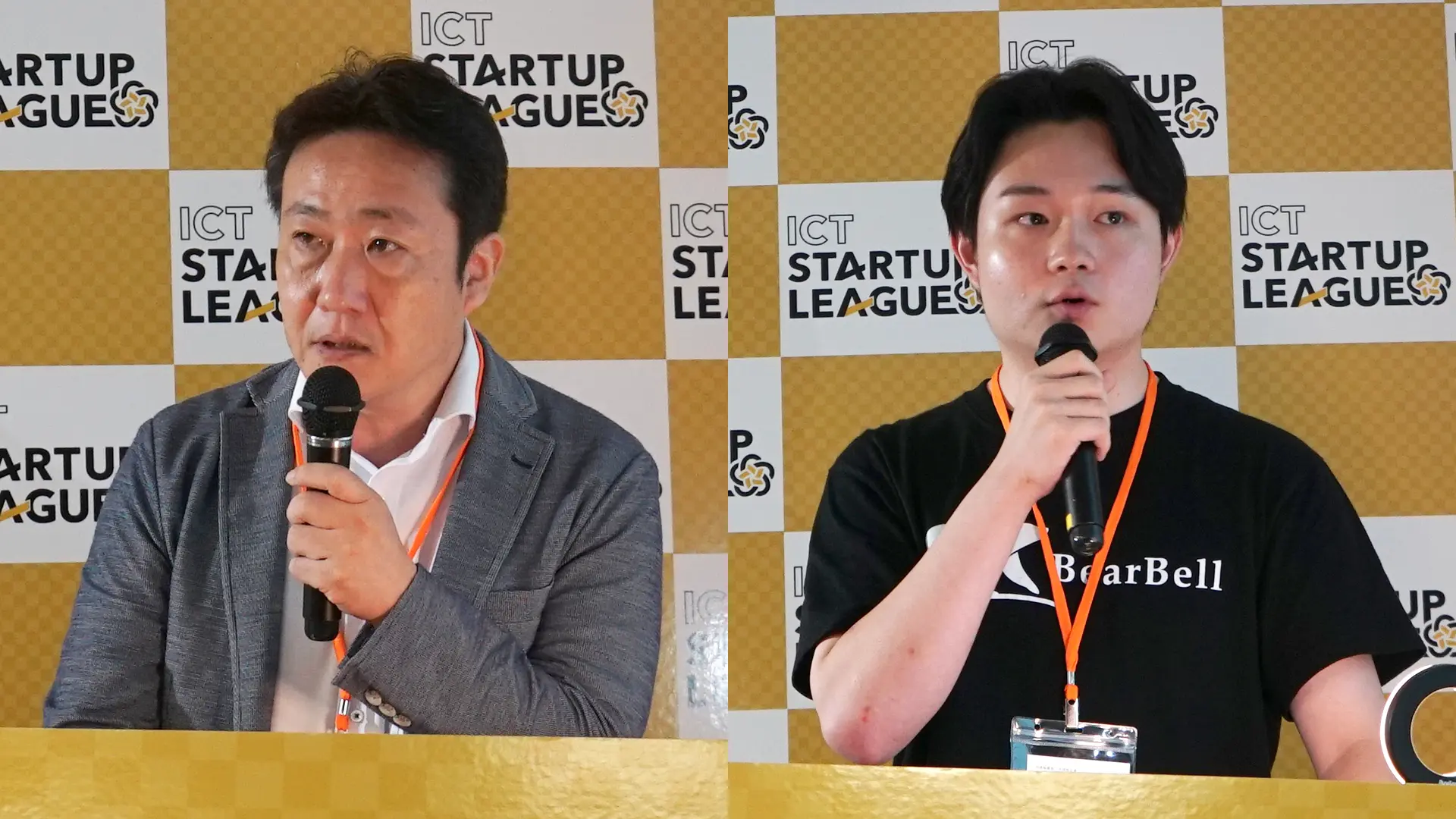
Hydro Venus Co., Ltd. utilizes hydropower generation devices operating in rivers and oceans as network hubs. Another company, BearBell Inc. is developing a platform that centralizes wild animal sighting information, drastically reducing the time it takes to share this information from 3 days to just 5 seconds.
The "Value-Up Session" is a practical training ground where experts and companies selected for the ICT Startup League engage in direct discussions to refine their businesses. In this third session of FY2026, two companies with unique solutions took the stage once again. The League employs a system where dedicated "caddies"—who go beyond being mere advisors to act as hands-on partners running alongside management to execute business growth—are assigned to support the startups.
This article reports on the sessions where fundamental business models were debated between the selected companies and experts, tracing the path these startups took to discover their next moves.
Platforming Hydropower to Build Communication Infrastructure: Hydro Venus Co., Ltd.
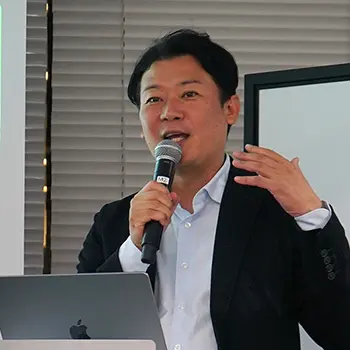
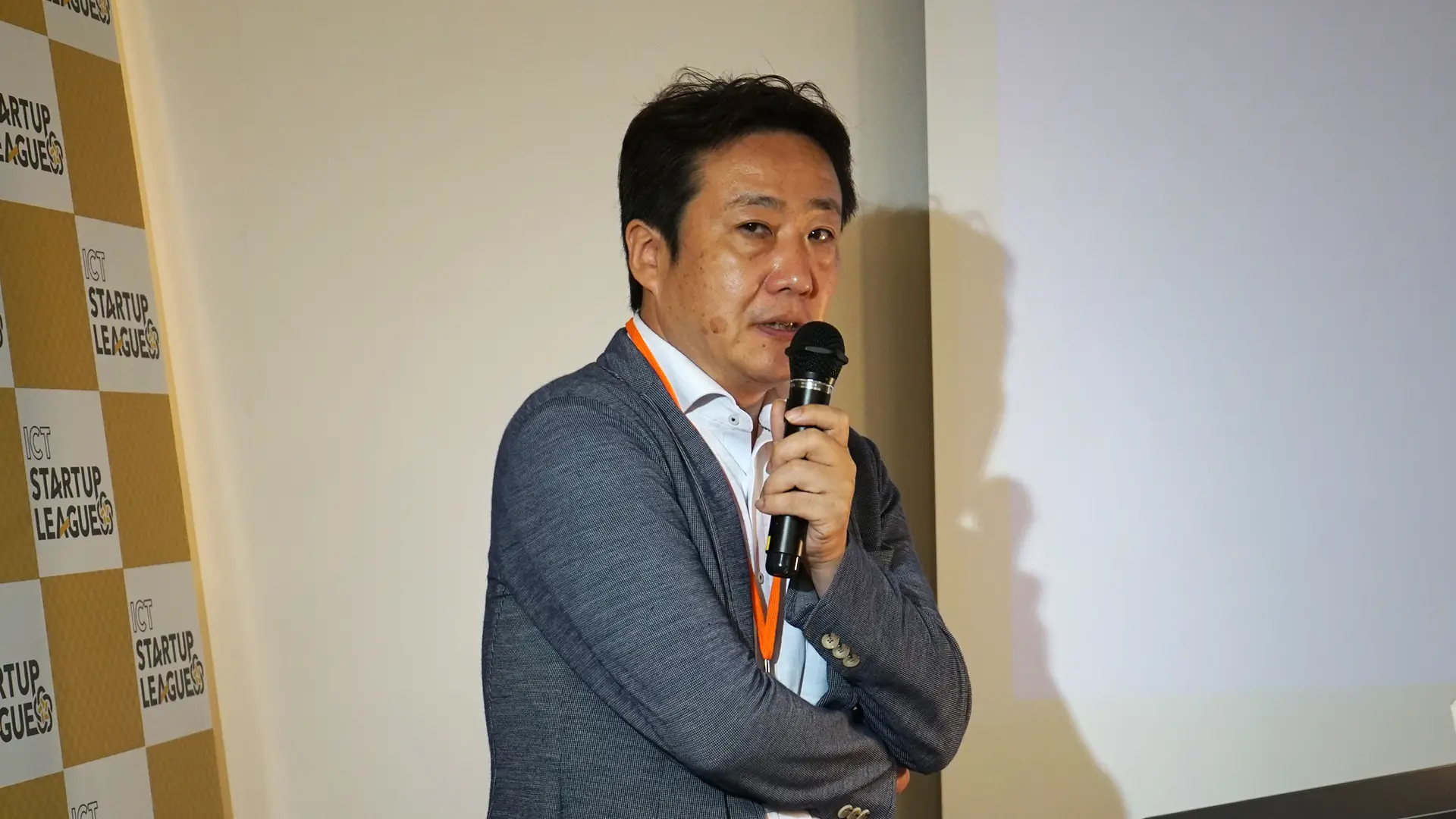 Mr. Koji Ueda, Representative Director of Hydro Venus Co., Ltd.
The first to take the stage was Mr. Ueda, representative of Hydro Venus Co., Ltd. The company aims to build a foundation for wireless communication and data collection, using hydropower generation devices deployed in rivers and oceans as a platform.
Transforming Hydropower Devices into Communication Network Hubs
They are developing hydropower devices that operate simply by being thrown into a river or ocean and are designed to resist getting tangled in debris. Mr. Ueda explained that their goal is to use these devices not just as power sources, but as data collection platforms (network hubs) combining wireless communication and AI.
Currently, they are conducting demonstration tests anticipating demand in fields such as agriculture, disaster prevention, remote area communication, and marine applications. In the future, they also expect these devices to be utilized as power sources in defense-related areas, such as for underwater marine drones.
The Wall of Public-Private Partnerships and the Difficulty of Approach
Toward commercialization, the company faces challenges such as the difficulty of approaching major telecommunications companies and the hurdles of coordinating across the differing budgets and jurisdictions of various government ministries. Because water management and disaster prevention fall under different jurisdictions and span multiple fields, it is currently difficult to approach the appropriate contact points.
Furthermore, the disaster prevention field requires official endorsement, making the hurdle for introduction quite high. As a result, they are also exploring implementation for more everyday, accessible uses.
A Shortage of Talent to Drive the Organization
To propel the business forward, securing talent to act as a right-hand partner alongside management has become an urgent task. Currently, Mr. Ueda himself is focused heavily on development tasks, creating a need for personnel to complement other business operations.
To address this challenge, an expert—a former mechanical researcher with experience in business development—is currently accompanying them as a "caddy". Moving forward, the company indicated a policy of prioritizing markets and building a logical framework for their sales plans.
Feedback from Experts: Perspectives on Profitability and Overseas Expansion
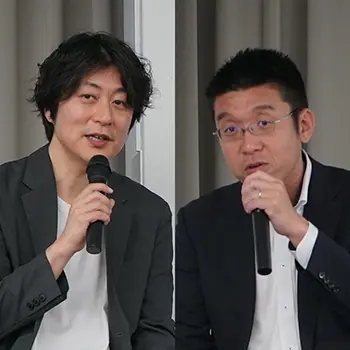
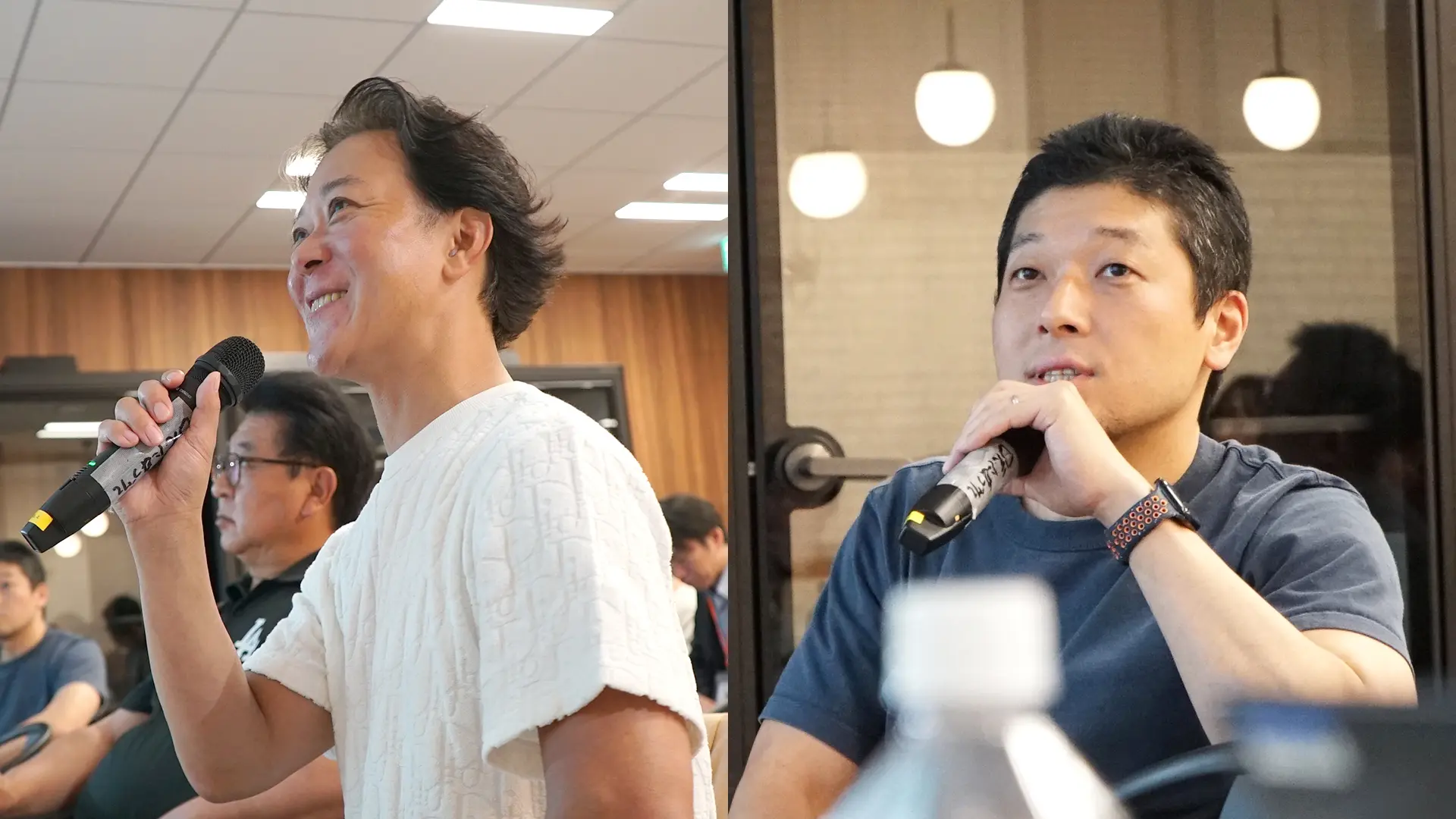 Mr. Shoji Okamoto (Left: Steering Committee), Mr. Masaru Nagura (Right: Steering Committee)
The experts pointed out that, as a prerequisite for requesting introductions to companies and government agencies, it is necessary to clarify the business plan to demonstrate "how much profit partner companies can make." Since it is difficult to secure introductions without presenting benefits for the other party as well as themselves, they were urged to outline a clear path to monetization. It was also shared that for fundraising, documents proving the probability of the business—such as selection for national projects or contracts with major companies—are essential. Furthermore, toward the program's midterm review, the importance of regularly reporting evidence of steady research and development progress was emphasized.
As a perspective for opening up new markets, an offer was made to introduce a defense contact regarding the use of power sources for marine drones, provided that concrete benefits could be clearly presented. Additionally, experts cited the market in Asian countries (such as Nepal), where regulations are fewer and demand for micro-hydropower is high, advising that overseas expansion should be considered from the early stages. Regarding the talent acquisition challenge, it was suggested that management actively utilize business SNS to leverage connections with top talent and make direct approaches.
A Platform to Reduce Bear Sighting Information from "3 Days to 5 Seconds" and Visualize Risks: BearBell Co., Ltd.
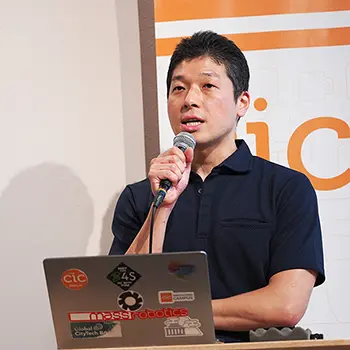
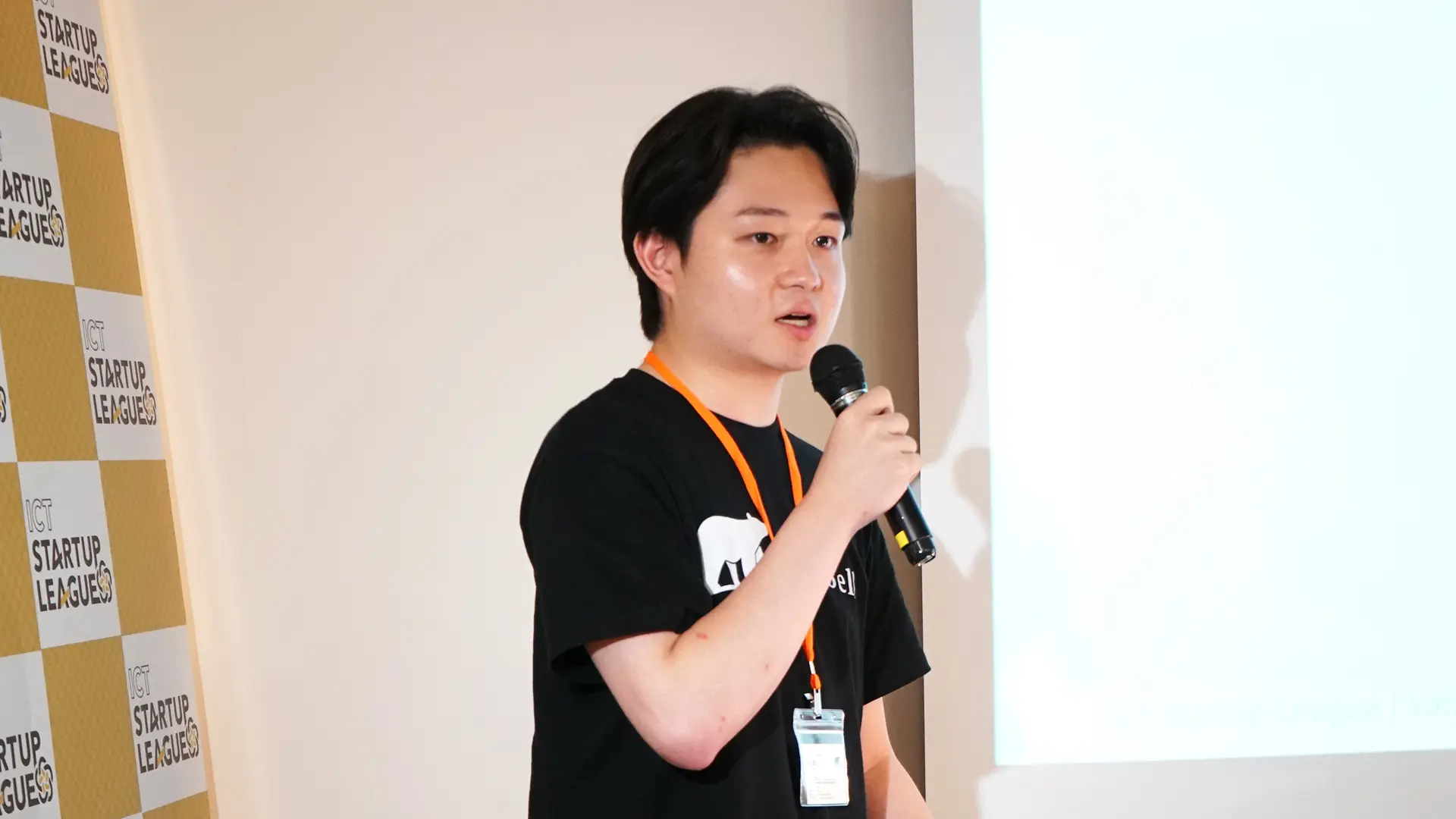 Mr. Yudai Hattori, Representative Director / Co-founder of BearBell Co., Ltd.
Next to take the stage was Mr. Hattori from BearBell Inc. a company providing a service that shares wild animal sighting information on maps. An expert with experience in finance and startup support is accompanying the company as their caddy.
Integrating Scattered Information for Rapid Sighting Sharing
In response to the current situation of bear damage centered in Akita Prefecture, the company is developing a system that centralizes scattered information from government bodies and individuals. The system incorporates AI-based reliability scoring of information and integration with existing security cameras.
This automates the verification of information and drastically reduces the time it takes to share sighting data from the traditional "3 days" to just "5 seconds". The goal is to efficiently prevent primary and secondary damage.
Response to the Resident App and Expansion to Diverse Targets
The system's output is aimed at three targets: residents, businesses, and government agencies. The application for residents, released on July 13, received media coverage and recorded 10,000 downloads within just 10 days of its release.
For businesses, they are proposing risk visualization and operational optimization targeted at infrastructure companies and the like. For government agencies, they are providing a system that reduces the burden on contact points responsible for information collection and verification.
Challenges in Resource Allocation and Collaboration
Future challenges cited include collaboration with government agencies in other regions (such as Tokyo and Toyama Prefecture) and integration with fixed-point cameras from the Ministry of Land, Infrastructure, Transport and Tourism. Moreover, connecting to news agencies' alert systems and securing specialized personnel within Akita Prefecture have become urgent priorities.
Furthermore, as the three services for residents, businesses, and government mutually influence each other, it is difficult to advance them simultaneously. Thus, deciding on a policy of where to concentrate resources under the current organizational structure was also presented as a significant challenge.
Feedback from Experts: Presenting Concrete Business Cases
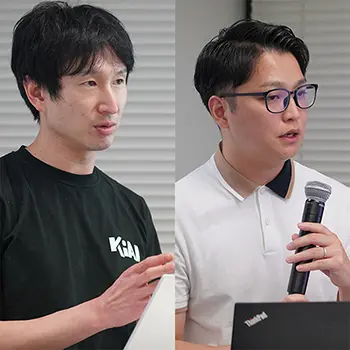
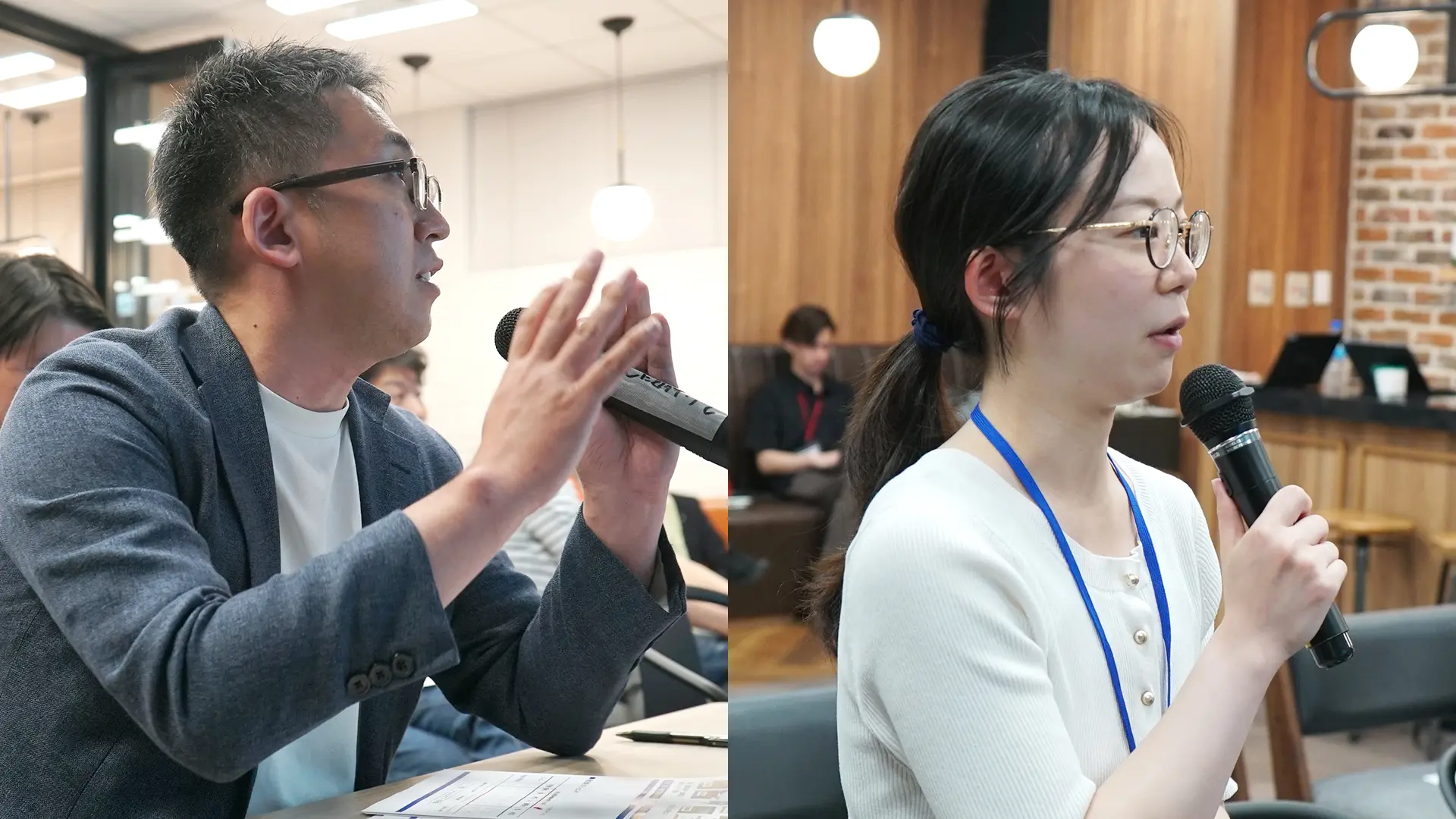 Mr. Hiroyuki Kobayashi (Left: Selection Evaluation Committee Member), Ms. Chiaki Miura (Right: Support Organization, The Akita Bank, Ltd.)
Experts requested the creation of concrete business cases and simulations to show target companies exactly how much lost profit caused by bear sightings could be mitigated using their service. It was pointed out that simply detecting and analyzing information is hard to monetize, and it only becomes a viable business when proposed as a package with concrete solutions, such as rerouting deliveries. They advised that the company should graphically demonstrate its superiority over other solutions and provide high-resolution explanations of the business, specifically clarifying who will pay for it.
Additionally, regarding business expansion, a perspective was offered that the seeds of business might lie in the service for "residents (private sector)", which is currently generating the best response. It was also pointed out that before asking for introductions to other institutions, the company needs to outline the process of what approaches they have made themselves and why they were rejected. They were advised to take action first and consult based on those results. The importance of driving the business forward with a sense of speed—by finding many people in need, not just transport operators, and building a portfolio—was heavily emphasized.
Summary: Balancing Technological Pursuit with Business Growth
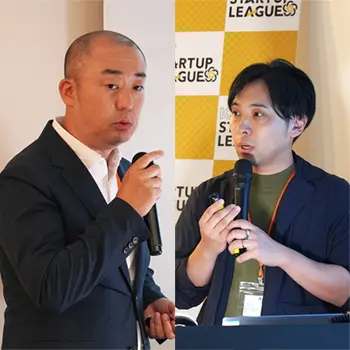
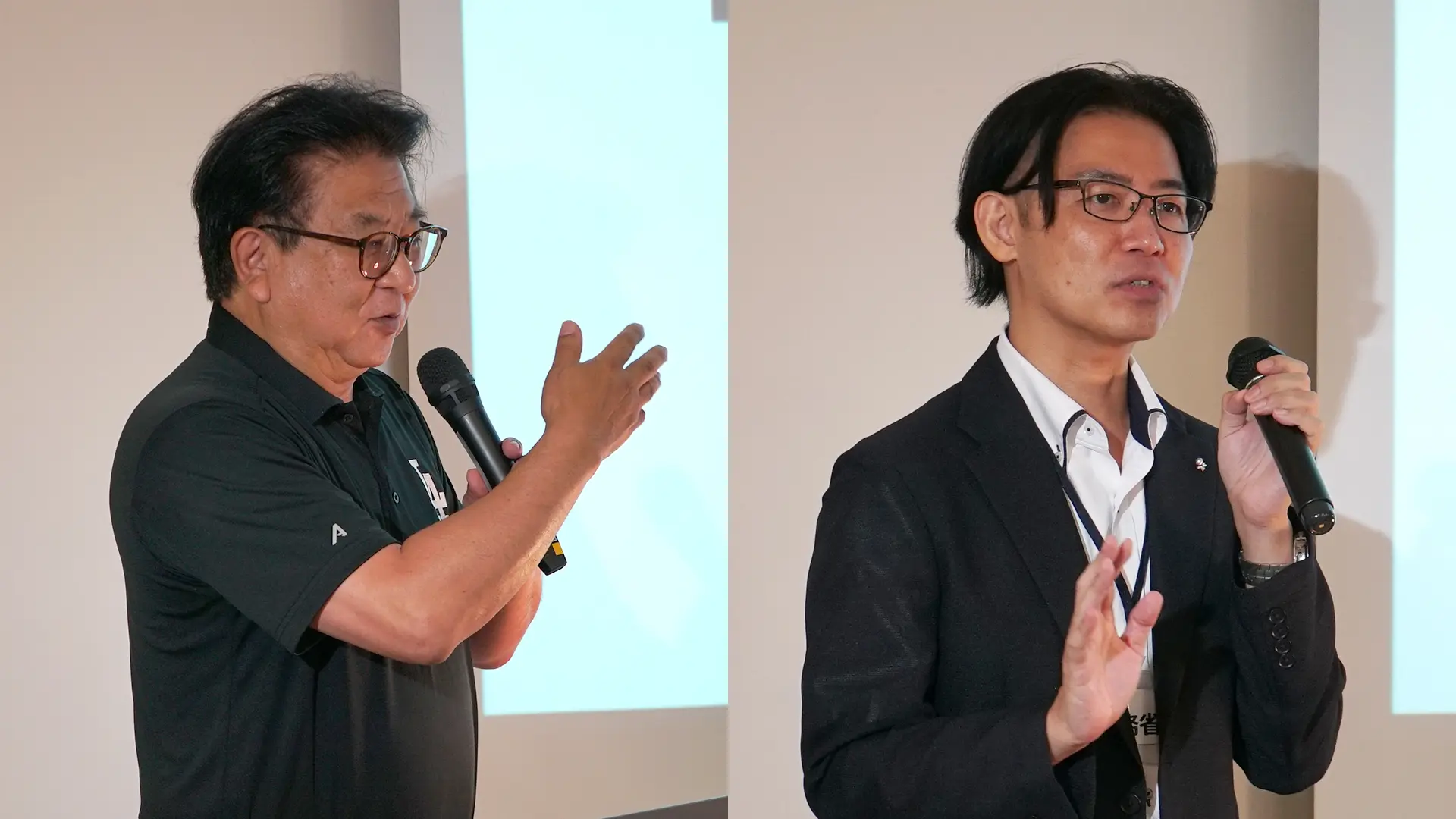 Mr. Tadashi Fukuda (Left: Chairman of ICT Startup League Steering Committee), Mr. Kunio Noma (Right: Ministry of Internal Affairs and Communications)
At the end of the session, a summary was provided by the steering committee. It was clarified that the subsidies for this program are not marketing funds, but funds specifically for ICT technological development. The policy presented stated that funds should not be invested solely for public interest, but rather for technological development aimed at generating profits as a startup and contributing to broader economic development. Mr. Noma from the Ministry of Internal Affairs and Communications also spoke about the critical importance of clarifying "who will pay" in the business and the profound value of connections among the participants.
Hydro Venus Co., Ltd., aiming to build communication infrastructure in rivers and oceans using hydropower, and BearBell Inc. building a platform to quickly visualize bear sighting information and prevent risks. With practical feedback from experts and hands-on support from their caddies, we will continue to closely watch how both companies grow their businesses moving forward.
■ ICT Startup League
This is a support program launched in FY2023, sparked by the Ministry of Internal Affairs and Communications' "Startup Creation-type Exploratory Research and Development Support Project".
The ICT Startup League supports startups through four main pillars.
① R&D Funding / Hands-on Support
A maximum of 20 million yen in R&D funding is provided in the form of a subsidy. For hands-on support, the selection evaluation committee members who participated in selecting the league members remain closely involved after selection to promote growth. For companies the committee members evaluated as ones they "absolutely want to select," a dedicated "fan-style" support system is built, where the evaluators themselves continuously provide advice on business plans and offer growth opportunities.
② Discovery & Cultivation
We provide places for learning and networking that promote the business growth of our league members.
We also work to discover individuals aiming to start businesses, with the goal of broadening the base of entrepreneurs.
③ Competition & Co-creation
It serves as an arena for positive competition, similar to a sports league, where startups learn together and engage in friendly rivalry to win the exact funds they truly need (up to 20 million yen). Furthermore, through various opportunities such as sessions held by selection evaluation committee members, we provide a place for co-creation where league members can collaborate with each other to expand their businesses.
④ Dissemination
We broadcast the initiatives of league members in collaboration with the media! By letting many people know about these businesses, we aim to expand opportunities for new matchings and chances.
■ Related Websites
ICT Startup League
/
Hydro Venus Co., Ltd. (Official Website)
/
Hydro Venus Co., Ltd. (LEAGUE MEMBER)
Other League Reports






For more details on STARTUP LEAGUE's startup support, please see here.