When people hear the words "space travel," most imagine a rocket launching vertically with a deafening roar. It has long been a privileged experience reserved for a select few billionaires or astronauts who have endured rigorous training. That was the conventional wisdom—until now.
However, there is a company that is fundamentally overturning this convention, aiming to realize an experience where anyone can view space quietly and safely. That company is Iwaya Inc., based in Ebetsu City, Hokkaido.
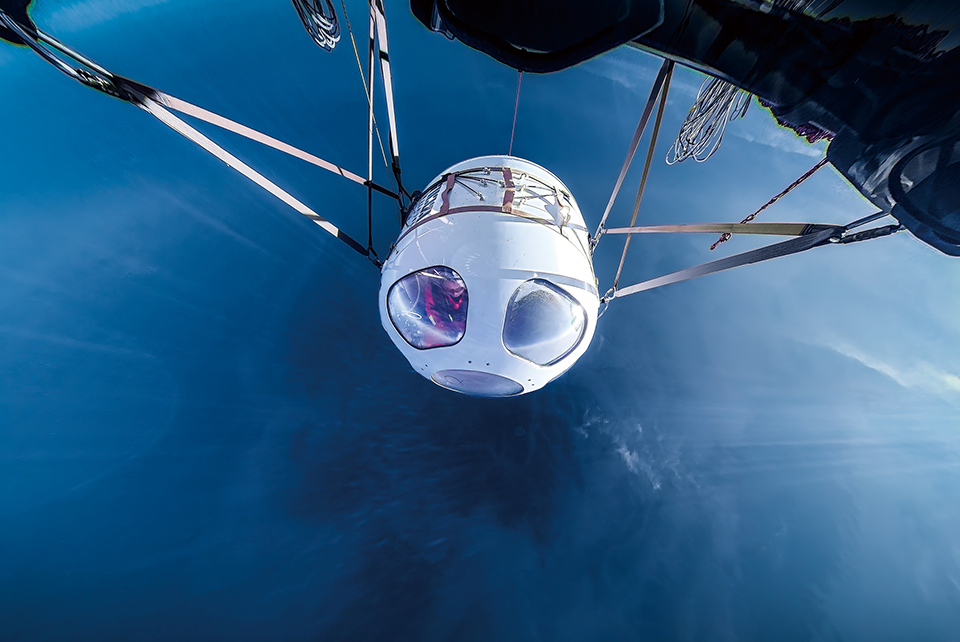
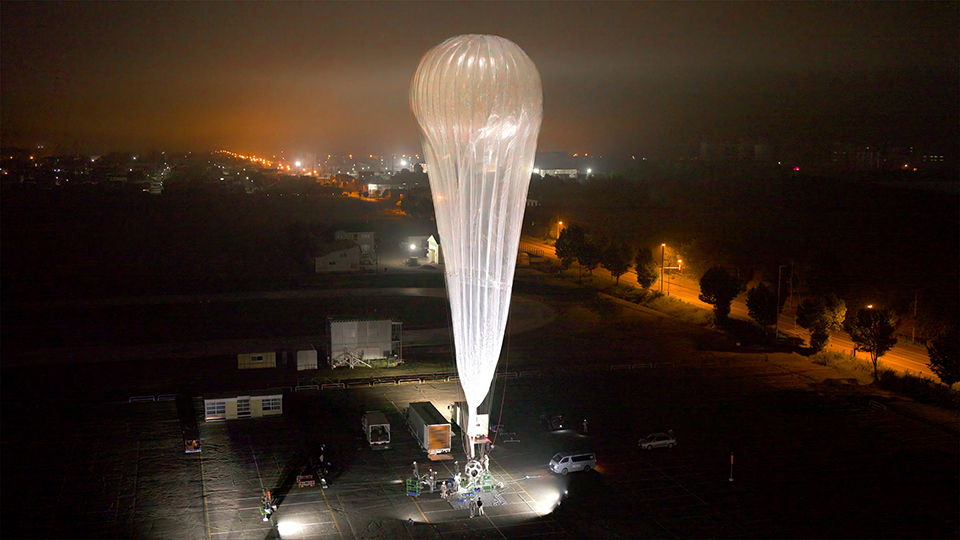
The high-altitude gas balloon developed by the company reaches a maximum altitude of 25,000 meters in the stratosphere using only buoyancy, without burning fossil fuels. Passengers can view the boundary between the blue Earth and the pitch-black universe from a comfortable, airliner-like cabin. In July 2024, a manned flight test exceeded an altitude of 20km, bringing commercialization within reach.
"I don't make things I wouldn't want to ride myself." So says Keisuke Iwaya, the company's Representative Director and an inventor.
How did a boy who idolized "Doc," the scientist from the movie Back to the Future, and aimed for the profession of "Inventor," realize this grand project? Behind the story lies a thorough realism at the opposite end of the spectrum from mere romance, and the unexpected roots of an entrepreneur.
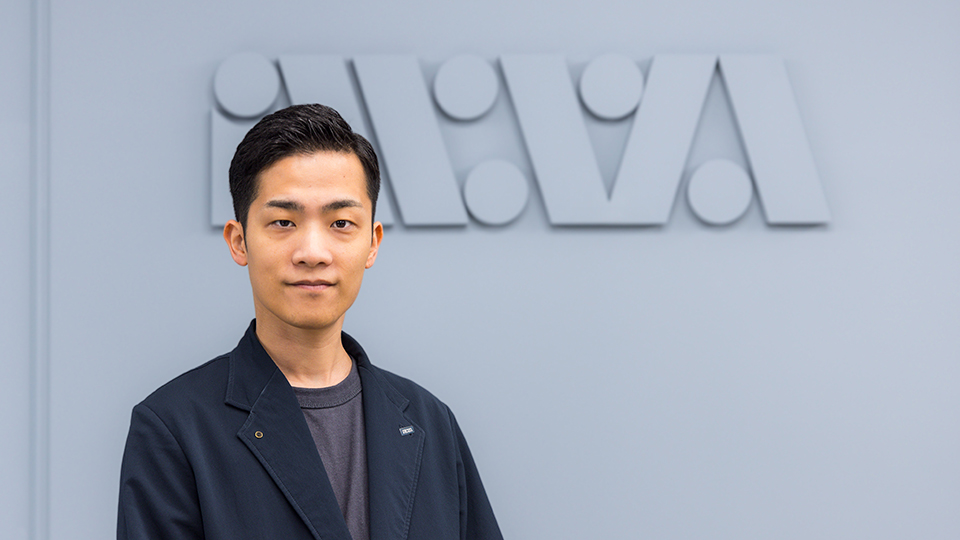
Mr. Iwaya, you hold the title of "Inventor," but when did your interest in science and making things begin?
Iwaya: My origin story goes back to a picture book called Space Station (Fukuinkan Shoten) that was bought for me when I was in the final year of kindergarten. It depicted humans going to space using science, wisdom, and courage to open up the future. Thinking "I wish I could do something like this too" was the initial spark for my interest in science and space.
Did you proceed straight down your current path from there?
Iwaya: No, actually, I experienced a major setback during my second year of high school. When it was time to think about my career path, I genuinely wanted to become an "inventor" like Doc, who built the time machine (DeLorean) in Back to the Future. I wanted to live my life creating and researching things I loved.
However, no matter how much I searched through university faculties or occupations, there was no course to become an "inventor." There were research positions, but those involved following government or company policies; you couldn't just do whatever you liked. I realized that "being an inventor is just fiction," and I completely lost my motivation.
You faced the gap between dreams and reality.
Iwaya: Exactly. From there, I couldn't focus on studying at all. I started getting zeros on tests, and I entered a ronin period (gap years) without even taking the National Center Test for University Admissions. I attended a combined junior and senior high school that focused on college prep, so in an environment where everyone naturally aimed for university, I was quite a rare case for not even taking the entrance exams.
During my two years as a ronin, I spent my time just reading books. I think I read about 1,000 books in total, at a pace of two a day. One day, I saw a poster for the "Birdman Rally" at a train station. Seeing students building and flying their own airplanes gave me a faint "scent of an inventor." So, I decided to enter the Faculty of Engineering at Hokkaido University to learn mechanical engineering, the foundation of manufacturing.
What kind of research did you do after entering Hokkaido University?
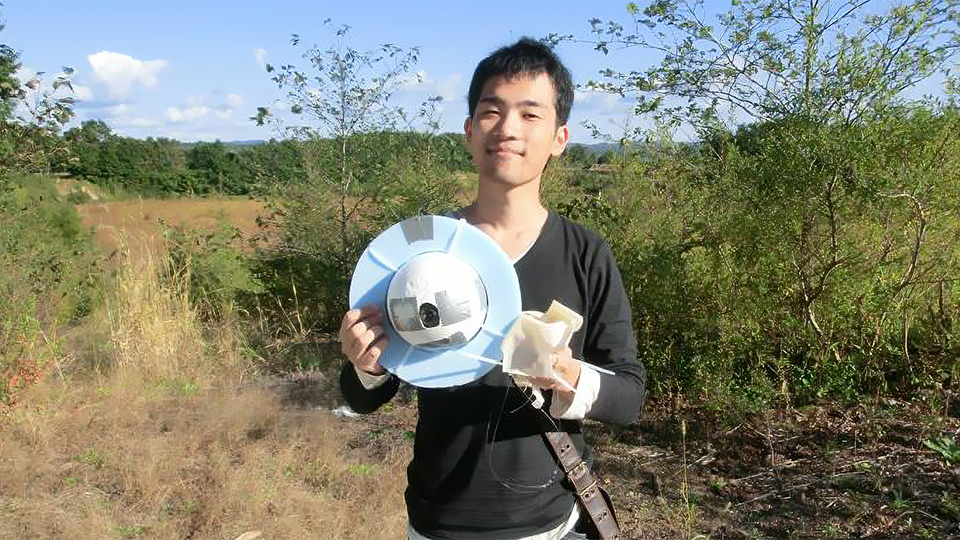
Iwaya: While studying in the Department of Mechanical and Intelligent System Engineering, I started working on space photography using balloons around my fourth year of university. I saw a news report that "students overseas took photos of space with a balloon," and my intuition told me, "I can do this too." That was the trigger. I gathered materials at home improvement centers and started building my own system to attach a camera to a balloon, send it to the stratosphere, and recover it.
At first, nothing went well, but after making improvements and succeeding in taking photos, people around me started to appreciate it, saying, "It's interesting that you can take pictures of space with a balloon."
You were doing your own development since your student days. How did you manage research funds and living expenses?
Iwaya: I had burdened my parents during my two ronin years, so I had to be independent once I entered university. However, the option of working a part-time job like a normal student didn't exist for me. If I sold my time for an hourly wage, I would lose the essential time needed for research and invention.
So, I decided to create a "mechanism to earn money myself." I showed up at local business networking events, pitched myself saying, "I'm a Hokkaido University student, and I can do these things," and started taking orders for website production and system development.
You suddenly took a form of entrepreneurship. Did you have any hesitation?
Iwaya: In my case, I think I was influenced by the fact that I had many entrepreneurs and business owners among my relatives. From a young age, I saw my grandparents and uncles building their own businesses and earning compensation by being useful to society. So, rather than "getting a job at a company and receiving a salary," the idea of "creating work myself to earn money" was a more natural choice for me.
The teaching that "money is received as proof that someone is grateful to you" was also foundational. Fortunately, work went well, and even as a student, I was able to earn enough income not to worry about living expenses. I poured all the surplus funds generated there into balloon research and development.
Earning your own research funds and immersing yourself in the research you love. That sounds like an ideal environment.
Iwaya: Conducting research with your own money, rather than money given by someone else, means you can do what you like without anyone complaining. That was also my definition of an "inventor."
You incorporated in 2016. was that a turning point for business expansion?
Iwaya: No, actually, the reason was much more administrative (laughs). As my activities attracted attention, the scale of the business grew, and it became difficult to accept work as an individual. I incorporated simply for that reason; at the time, I didn't really have the ambition to "make the company big."
Why did you choose "balloons" instead of the mainstream "rockets" as a means to reach space?
Iwaya: In the 2010s, talk of private space travel began to emerge, but almost all methods involved rockets. However, rockets use massive amounts of energy, carry the risk of explosion, and require strict training to ride. I'm just an ordinary citizen, not a daredevil adventurer, so I frankly thought, "I don't want to ride something that dangerous and expensive."
That's when I focused on "balloons." Overseas, adventurers were going up to the stratosphere in balloons and skydiving from there. It started with the idea: "If a human body can go up there, surely ordinary people could go too if we built a cabin."
It's the concept of "making something you want to ride yourself."
Iwaya: Exactly. A balloon operates on the same principle as a "rubber duck" floating on water; it floats simply because it's lighter than the surrounding air. Unlike a rocket, we don't forcefully push it up by exploding fuel, so there's almost no G-force, and it's quiet and safe.
However, to commercialize manned space sightseeing beyond a hobby level, my personal funds had reached their limit. Calculations showed we needed about 4.5 billion yen, and it would take 100 years to earn that on my own. So, I decided to move towards raising funds from outside as a corporation.
What was the reaction?
Iwaya: It was terrible at first. Most people wouldn't give me the time of day, asking, "Space by balloon? What are you talking about?" So, in 2018, we conducted an experiment where we sent a fish to the stratosphere in a balloon and brought it back alive. We built a life support system and a pressurized cabin ourselves, proving that the fish returned alive. I argued, "If a fish can do it, we just need to create the same environment for humans, right?"
This experiment became a breakthrough, and in 2020, we finally gathered significant funding. From there, in the short span of about four years, we've reached the point where we can actually send people to the stratosphere (altitudes exceeding 20km).
You've succeeded in numerous experiments, but what was the moment you felt most moved?
Iwaya: Actually, I'm not the type to get very emotional (laughs). My employees might be crying with joy, but I always feel somewhat detached or cooled off.
For example, when we first took a photo of space in 2012, my reaction was "frustration." Out of 16,000 photos taken, only one was decent. The thought that came first was, "All that hard work for just this?" and "I should have been able to do it better."
It was the same when the manned flight succeeded; all I could see were the issues: "We still don't know anything" and "We can improve this more." Rather than a sense of accomplishment, I constantly feel a lack of ability, and perhaps that's why I can keep moving to the next step.
That stoicism supports the speed of your development. How is the current business situation?
Iwaya: Since we are entrusted with money from investors and customers, we can't let it end as a hobby. We are often viewed as a "space sightseeing company," but that's not all we are.
Currently, we are generating revenue through various development contracts utilizing balloon technology and by providing platforms for scientific experiments. Our sales scale is gradually increasing, and we are becoming established as a grounded "business." My responsibility as a business manager is not to obsess solely over space sightseeing, but to steadily release things we can create with our current technology into the world, contributing to society in various forms while generating profit.
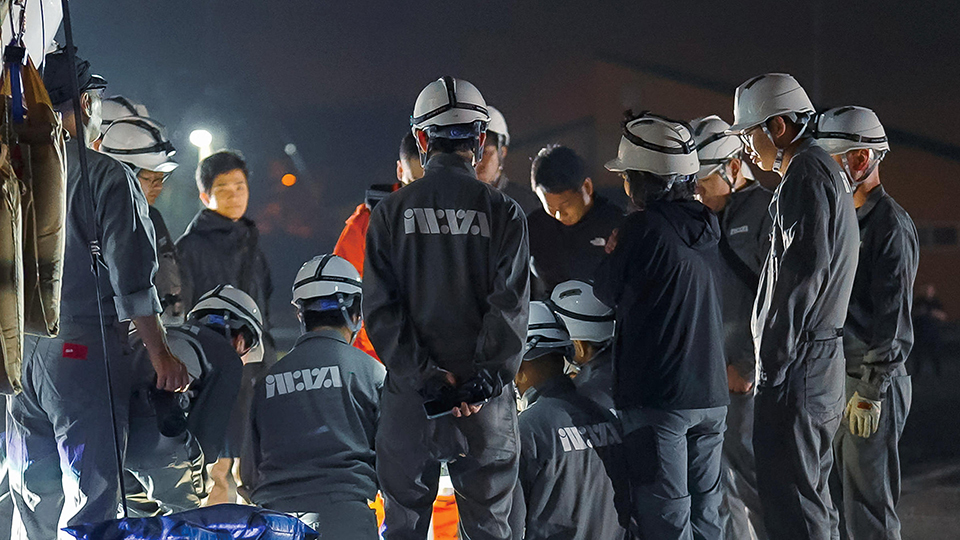
Iwaya Inc. has been selected for the third time this year. Your research theme is "Examination of High-Speed Communication Systems Between Balloon and Ground." What is the aim of this?
Iwaya: Currently, the amount of data we can send from the balloon to the ground is limited. If high-speed communication becomes possible, we can stream high-quality video from the sky in real-time and send more complex control commands without delay.
This not only enhances the entertainment value of space sightseeing but is also directly linked to improved safety. Furthermore, when utilizing the stratosphere as a "high-altitude experimental platform," if we can transmit large volumes of observational data to the ground in real-time, the scope of research and development will expand significantly. With the support of the ICT Startup League, we hope to accelerate the construction of this aerial communication infrastructure.
Finally, could you share your future outlook and a message for the next generation?
Iwaya: I have a dry view that "successful people succeed, and those who don't, don't," but I think it's important not to forget to "be useful to the world." The power and funds gained through entrepreneurship should be used for the public good, not for self-interest. Inherit the society built by our predecessors and pass the baton to the next generation in a better form. While fulfilling that responsibility, I want to create a future where everyone can feel close to space through the means of balloons.
Editor's Note
Making the seemingly reckless decision not to take university entrance exams despite attending a prep school. Iwaya has stuck to his will since childhood, refusing to ride the rails laid out by society's conventions.
However, the "face of a father" he showed briefly during the interview left a strong impression.
"I used to be a disobedient child. If asked 'Aren't you going to take the exams?' I was the kind of difficult kid who would immediately answer 'No.' But now, my three sons don't listen to a word I say either. I understand my parents' hardships back then. This is 'Karma'."
Because he was a child who didn't listen, he had no choice but to think for himself and carve out his own path without relying on his parents. "Necessity is the mother of invention; people think when they are in trouble," he laughed. In that moment, I caught a glimpse of the robust yet human origin of this calm and collected inventor.
■ICT Startup League
This support program started in FY2023, triggered by the Ministry of Internal Affairs and Communications' "Start-up Creation-type Germination Research and Development Support Business."
The ICT Startup League supports startups through four pillars:
1. R&D Funding / Hands-on Support
Up to 20 million yen in R&D funding is provided in the form of a grant. Additionally, in hands-on support, the selection evaluation committee members who were involved in selecting the league members continue to stay close after selection to promote growth. For companies that the committee members evaluated as "absolutely want to select," a "fandom-like" support system is built where the evaluators themselves provide continuous support, such as advice on business plans and providing growth opportunities.
2. Discovery & Incubation
We provide opportunities for learning and networking to promote the business growth of league members.
We also deploy initiatives to discover people aiming to start businesses in the future, aiming to expand the base of the ecosystem.
3. Competition & Co-creation
Designed as a positive competitive arena like a sports league, the mechanism allows startups to learn together and improve through friendly rivalry to win the funding they truly need (up to 20 million yen). We also provide a place for co-creation where league members can collaborate to expand their businesses through various opportunities such as sessions with selection evaluation committee members.
4. Promotion
We promote the initiatives of league members in collaboration with the media! By letting more people know about their businesses, we aim to expand opportunities for new matching and chances.
■Related Websites
Iwaya Inc.
/
Iwaya Inc. (LEAGUE MEMBER)
/
ICT Startup League
💡 Read Next
After exploring the on-the-ground stories of our startups, discover the "big picture" from the top leaders driving Japan's startup ecosystem.
▶︎ Experts Discuss How Startups Should Compete in the Future
For more details on STARTUP LEAGUE's startup support, please see here.