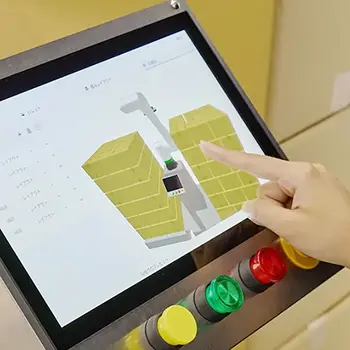

"I want to break down language barriers." This is how Masatoshi Otake, founder of DubGuild Inc., expresses the passion behind his company and its business.
They are working on "AI Dubbing Technology." Using AI, they produce dubbed versions of anime, movie lines, and even live sports commentary in a short amount of time.
Their goal is to deliver iconic Japanese content, such as anime, to every corner of the world—including countries with fewer speakers of major languages. Conversely, they aim to introduce excellent content from minor languages to Japan and the wider world. The potential hidden within "AI Dubbing Technology" is immense.
Voice synthesis via DubGuild's AI dubbing technology allows for control over tone and rhythm. The AI doesn't just automatically propose a dubbed voice that stays as faithful as possible to the original work; it also allows for human operation in the final stages to achieve a higher quality of dubbing.
Because anime and movies are forms of art, some may feel an aversion to AI-automated dubbing. However, as Otake says, "My favorite anime is *Mobile Suit Gundam Unicorn*," demonstrating his love and respect for the content. This is precisely why they leave room for human manipulation, rather than relying solely on automation.
However, as he states, "Our foundation is as engineers," they aim to eventually complete an AI dubbing technology that can accurately express emotions and "pauses" without compromising the charm of the content. We asked him about his vision and the history behind developing this technology and starting his company.
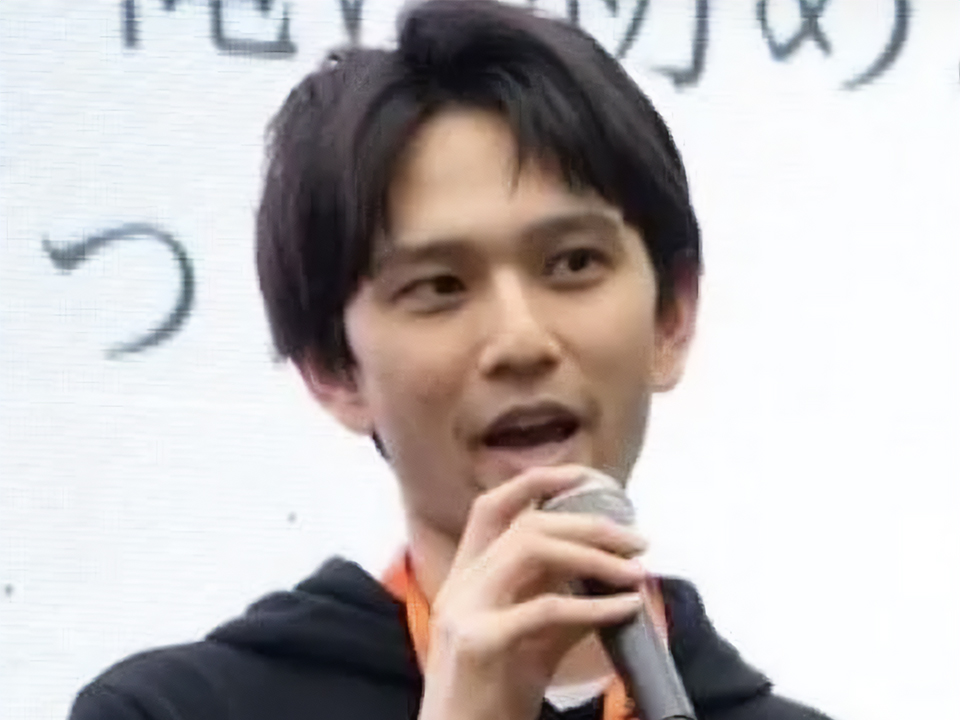 Masatoshi Otake, CEO of DubGuild Inc., pitching at an exhibition in the US
Please tell us what triggered you to start working on "AI Dubbing Technology."
Otake: It's embarrassing to admit, but I actually spent three extra years as a *ronin* (studying for entrance exams) before entering university. The reason was simply that I was terrible at English. I struggled with English even after entering university, and that hasn't changed to this day.
So, because you had a complex about language, you tried to solve it?
Otake: I think my struggles gave birth to a very strong interest in the "language barrier." So, during my master's degree, I conducted R&D on dubbing AI translation, AI-supported education, and support for English learners. That connects directly to my current business.
Did you always like computers?
Otake: Yes. In elementary and middle school, I loved playing online games as a user. Around high school, I started writing my own code and became interested in programming. I came to love computers so much that I applied to the Faculty of Science and Engineering with the motivation of studying computers themselves, rather than just developing apps.
I see. However, the result is that from your master's era until now, you have been involved in research and business close to app development. Was there a change of heart after enrolling?
Otake: I wanted to study computer science, but when I entered university, there were so many people who loved computers much, much more than I did... It became an opportunity to re-examine myself and my life, asking "What can I do?" As a result, I felt I was better suited for application development, and I decided to focus on the theme of "language barriers," which I was interested in. I learned about DeepL and Grammarly, thought that computers could be used to destroy language barriers, and started exploring what I could do myself.
Why did you focus on dubbing instead of text translation?
Otake: Since I am an engineer, I first look at the current level of technology for the theme I'm trying to tackle. As a result, it seemed like someone else would do text translation even if we didn't.
There is certainly an impression that high-performance tools have already started appearing.
Otake: On that point, dubbing looked like it would still take time to develop, so I felt there was value in working on it. So, I decided to "create the world's best AI dubbing."
This connects to the reason DubGuild's AI dubbing technology tackles translating emotional expressions, including conversation tone and rhythm, so as not to disrupt the world of the work.
Otake: If I was going to do a startup anyway, I wanted to challenge myself with something difficult. I wanted to spend time working on something that might be solved in 10 or 20 years, not a problem that would be solved in 2 or 3 years. That said, it was difficult even without emotional expression at first (laughs).
You had the option to work as an engineer in a corporation or as a researcher at a university. Why did you choose a startup?
Otake: I started thinking about entrepreneurship after entering university. After I started researching AI dubbing, I began to think I wanted to do it as my own business. Actually, about a month after I started working on AI dubbing, Meta announced a real-time multilingual translation system called "Seamless." It could translate and speak in a way that sounded like the original speaker... It was close to what we were trying to do, so I was quite depressed. However, after a while, I learned that their development team was being dissolved. Apparently, Meta was lagging behind other companies in the LLM field, so all members were reassigned to that. Knowing that, I felt "large corporations are difficult."
As long as you are an employee, you have to follow directions that may differ from your own will.
Otake: I wanted to do AI dubbing with my own hands, so seeing the "Seamless" incident, I felt that I shouldn't leave it to others and that I should do it myself. That was one of the triggers for starting the business.
What about the choice of being a researcher?
Otake: I worried about that, but simply put, doing it as a startup seemed more interesting, and there was a possibility of gathering more people. In academia, there are many cases where research must be conducted with a very small number of people.
Nevertheless, a startup cannot continue without funding and sales. Did you have any anxiety about that?
Otake: I have an optimistic personality (laughs), so I thought we could compete sufficiently. The market is large, and there were American companies investing heavily in AI voice synthesis, so I thought it would work out somehow.
How has it been in reality?
Otake: We have clients who have placed orders, and our performance is decent so far. My impression is that there is more demand than I imagined.
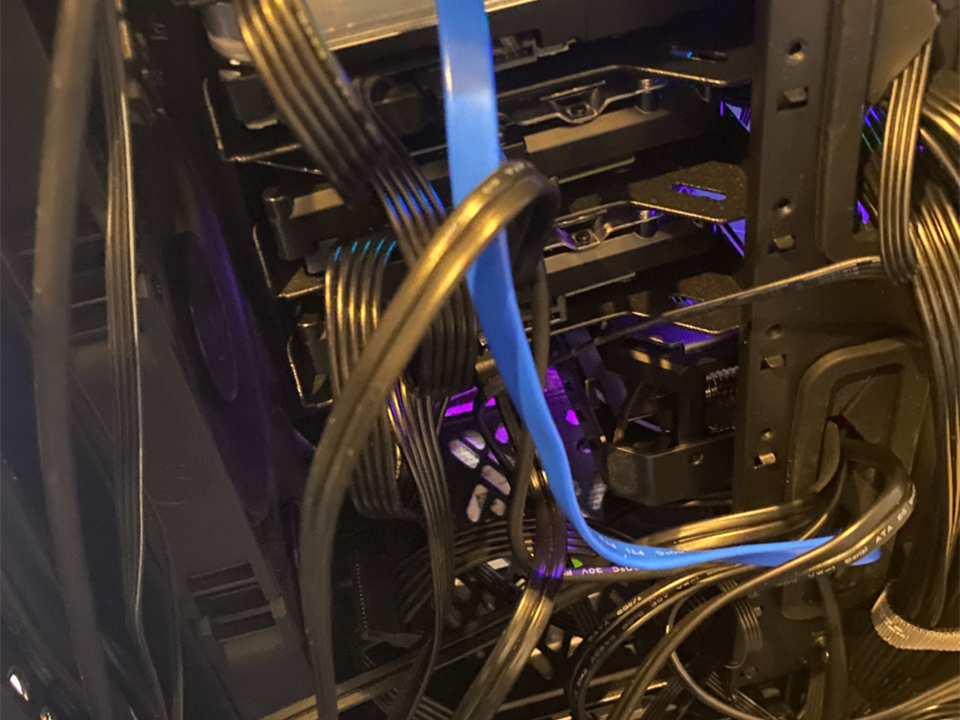 DubGuild Inc. server
As a job, what kind of AI dubbing are you actually handling?
Otake: I can't be specific due to confidentiality agreements, but there are quite a few sports broadcasts.
Technically, simultaneous automated dubbing is still difficult, isn't it? So there is demand even if it's not live.
Otake: We also thought sports broadcasting had no value unless it was live, but it seems there is value even after it has been broadcast in other countries. However, although it's not live, the desired turnaround time for delivery is reasonably short.
It seems there would also be uses for news footage, documentaries, and archival purposes.
Otake: Yes. In the future, we want to advance research and development so that we can also handle live broadcasts.
What are your impressions after actually running the business?
Otake: Regarding demand, there were parts that went as expected, but what was beyond my imagination was the technical difficulty. To be honest, I feel we haven't quite reached the level of dubbing that clients require yet. It diverged from my imagination... We are currently attacking that gap technically.
Specifically, what points were difficult?
Otake: Proper nouns are one example. Sports have unique team names, ring names, and registered names for each competition, and their pronunciation is difficult. It doesn't read naturally when synthesized. Even if we try to adjust it manually instead of automatically, I might not know the name and have to look it up.
I see. It's a fine detail, but enthusiastic fans would likely be harsh in their evaluation if those things aren't correct (laughs).
Otake: Yes. Also, the emotional aspect. Especially in sports broadcasts, there is commentary that involves shouting. I feel again that translating via dubbing and voice is more difficult than text.
Is there a key to solving this?
Otake: Perhaps enhancing the controllability of the dubbing. I'm thinking about making it possible to adjust noun units and such with operation methods that haven't existed before.
Please tell us about your future business outlook.
Otake: There are still many interesting things in the world that are unknown due to language barriers. I want to provide those.
Are you also considering acting as an agency, discovering and providing content yourself?
Otake: With the current members, we only want to focus on the technical side. Actually, when starting the business, I wavered between becoming a "tech shop" or a "content shop," but after researching, I realized our naivety. We like content like anime, but there are people in the content world who love it to an unbelievable degree. I realized it was impossible with our power alone.
That sounds like a recurrence of the story when you tried to do computer science after entering university.
Otake: However, regarding the discovery of overseas content, I have an image of achieving delivery by partnering with people who are good at that in the future. But I repeat, technology comes first right now. I want to provide DubGuild's superior AI dubbing technology to the world and gain evaluation and results that allow us to compete globally as a startup from Japan.
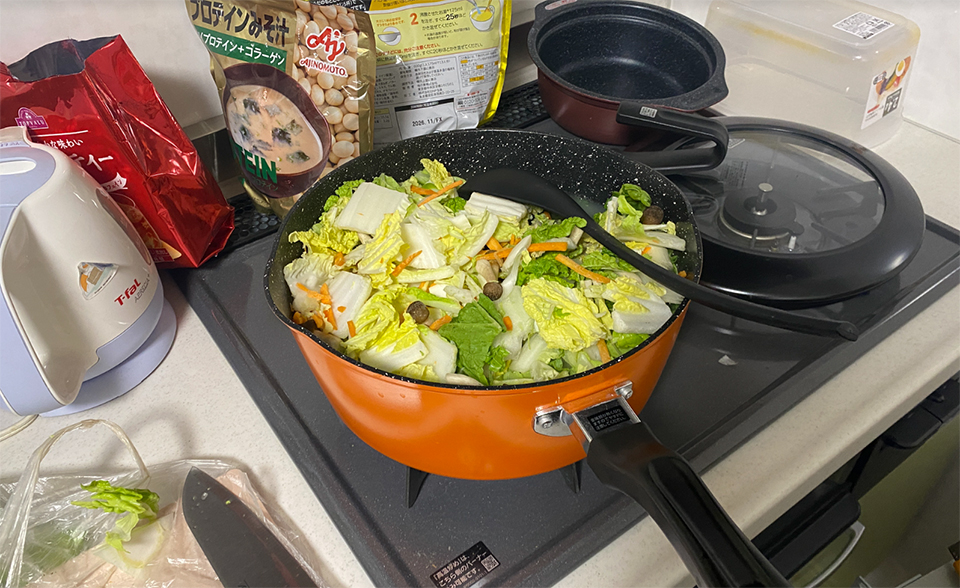 Hot pot party often held at the company
How do you feel about participating in the ICT Startup League?
Otake: As I mentioned earlier, we started as a group of engineers, so the challenge from the beginning was how to connect technology to business. I expected that from the ICT Startup League, and I feel that those seeds have truly started to sprout.
Specifically?
Otake: The ICT Startup League has strong connections with media such as TV stations, and many involved parties are strong in press relations. Just the other day, they connected us with media personnel immediately, and we were able to build a very good relationship in terms of future orders. People in the media watch various media due to the nature of their work. Previously, after I was interviewed by a web media outlet, I received a contact consulting about dubbing after they read that article.
Exposure is important, isn't it?
Otake: Also, the fact that it is long-term support. General startup support projects are often one-offs or last only a few months. In that respect, the ICT Startup League has detailed support content, a staged support system, and allows for application in the second year. There is room for them to run alongside us for two or three years. I think many businesses take time to nurture in startup development, but I get the impression that they will nurture us over several years.
In your case, you have to do both management and development, so the support is significant, right?
Otake: Yes. Before I did it, I thought management was something drier. In extreme terms, I thought I just had to make judgments like "to improve the company's business, we should focus on this department," but in reality, there are many cases where we have to solve "wet" (interpersonal/emotional) issues such as human relationships. I actually feel that this might be the primary job.
Because humans are the ones conducting business.
Otake: It's difficult, but I'm enjoying it as a good experience.
The ICT Startup League likely has many young managers with similar worries, so it seems there would be a lot to reference. Finally, could you tell us what you want to do as DubGuild in the future?
Otake: We are working on AI dubbing because we want to challenge difficult things as a startup, but to realize it concretely, we need to solve simple problems first. In that sense, I am interested not only in content but also in dubbing for meetings and such.
Meetings are, in a sense, full of logic and emotion, so they might be good subject matter. Unlike entertainment content, there seem to be many words and conversations that are easy to translate. So, what would you like to do personally, Mr. Otake?
Otake: Personally, I am concerned about the population problem. With Japan's current total fertility rate, the country's future is in danger. I don't know what to do right now, but if I can contribute to solving the problem with the power of technology, I want to try. If I can get the AI dubbing business on track in 5 to 10 years, I would like to challenge these kinds of social problems next.
Editor's Note
Although he claims he can't beat the "specialist maniacs," Otake is a lover of content. As mentioned in the text, his favorite anime is "Mobile Suit Gundam Unicorn" (UC).
"My favorite character is Full Frontal. In UC, the adult characters are great." Full Frontal is the boss character of the enemy side in UC. He occupies a position similar to Char Aznable in the original Gundam.
"I like Full Frontal's speech scenes. It's a sci-fi robot anime, but the appeal is that it's very human, including the Universal Century Charter which is key to the story."
Starting with UC, Gundam is a treasure trove of famous lines. We look forward to Otake enhancing the quality of AI dubbing technology and delivering that charm to every corner of the world.
■ICT Startup League
This is a support program that started in FY2023, triggered by the "Startup Creation-type Embryonic Research and Development Support Project" by the Ministry of Internal Affairs and Communications (MIC).
The ICT Startup League supports startups through four pillars:
① R&D / Hands-on Support
Up to 20 million yen in R&D expenses is provided in the form of subsidies. In addition, in hands-on support, the selection evaluation committee members involved in the selection of league members stay close after selection to promote growth. For companies that the evaluation committee members evaluate as "absolutely want to adopt," a support system like "Oshi-katsu" (supporting one's fave) is built, where the evaluation committee members themselves provide continuous support such as advice on business plans and providing growth opportunities.
② Discovery & Training
We provide places for learning and encounters that promote the business growth of league members.
We also deploy discovery for those aiming to start businesses in the future, aiming to expand the base.
③ Competition & Co-creation
It is a place for positive competition like a sports league, where startups learn together and improve themselves to win the funds they truly need (up to 20 million yen). We also provide a place for co-creation where league members collaborate to expand their businesses through various opportunities such as sessions by selection evaluation committee members.
④ Dissemination
We will disseminate the initiatives of league members in cooperation with the media! By letting many people know about the businesses, we aim to expand new matching and opportunities.
■Related Websites
DubGuild Inc.
/
DubGuild Inc. (LEAGUE MEMBER)
/
ICT Startup League
💡 Read Next
After exploring the on-the-ground stories of our startups, discover the "big picture" from the top leaders driving Japan's startup ecosystem.
▶︎ Experts Discuss How Startups Should Compete in the Future
For more details on STARTUP LEAGUE's startup support, please see here.