The ICT Startup League goes beyond mere entrepreneur support. It provides a venue for competition and co-creation to produce world-class startups from Japan, regardless of age, gender, region, or background. Through "fandom-like" support, hands-on communities, and the intersection of diverse talent from local regions and overseas, the League continues to challenge itself to change society from a global perspective.
Just as Shohei Ohtani shines in the MLB, we want to produce star players admired by the younger generation in the world of "startup business."
In the same way that Professional Baseball and the J.League created new stars, raised the level of the entire industry, and grew the Japanese national teams into strong contenders on the world stage, the "ICT Startup League" aims for a future where it exerts significant influence on the Japanese business scene.
Why is a "League" necessary for startups right now? We spoke with Yoshinori Sasaki of Gaiax Co., Ltd. about the potential, concrete measures for expansion, and initiatives for nurturing entrepreneurs.
■Profile

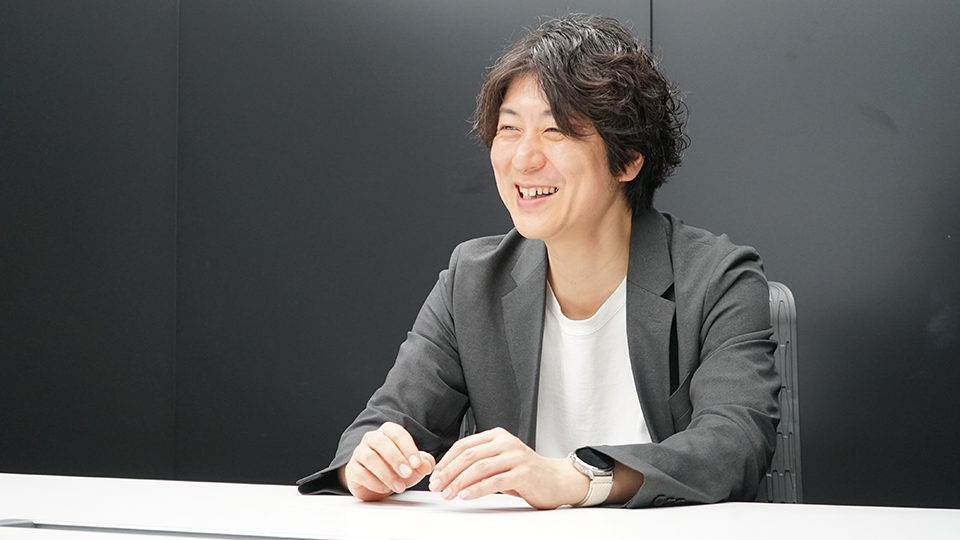
Yoshinori Sasaki
Executive Officer, Gaiax Co., Ltd.
Leveraging his experience in embedded system ventures and consumer-facing internet businesses, he became an independent freelance engineer. After serving as an executive at a field engineering company, he joined Gaiax in 2007. As the head of the Startup Studio, he is responsible for business development support for entrepreneurs and investment decisions. He founded the Startup Studio Association and is engaged in social activities to broaden the horizons for startup challengers.
What triggered your participation in the ICT Startup League?
Sasaki: At Gaiax, I serve as the head of the technical development department and the "Startup Studio," a business that creates startups. We provide hands-on support and investment to pre-founding entrepreneurs to assist in business creation. While I am in a position to support the birth and growth of startups on a daily basis, I felt strongly attracted to the ability to support entrepreneurs in a form different from my own organization through participation in this League, so I decided to join.
"Acceleration Programs" have traditionally existed as a mechanism to accelerate startup growth. What issues do you think exist with this mechanism?
Sasaki: Since they are limited to specific operating companies or local governments, the knowledge gained and the scope of support tend to be limited. Furthermore, the issue that results are difficult to achieve depending on the compatibility between the entrepreneur/business content and the program has become apparent. In contrast, the appeal of the ICT Startup League is that diverse top-tier leaders active on the front lines of the ecosystem are gathered here. A place to think together about "how to scale" is provided, and the "Value-Up Sessions," where one can gain not only one-on-one but multifaceted perspectives, are a very unique and practical initiative.
The League is currently in its third term. What are your thoughts on continuous support?
Sasaki: For entrepreneurs, support from the top layer is important, of course, but "Peer Learning" (mutual learning), where entrepreneurs fighting on the front lines exchange information and advise each other, is crucial. As we are involved continuously through the 1st to 3rd terms, I believe there is great significance in a community where members can share their approaches to customers and knowledge of scaling with each other.
What do you expect most from this League?
Sasaki: That the "human drama" of entrepreneurs is conveyed to the world. Supporting them daily, I strongly feel that there is so much drama in the thoughts behind founding a company to solve social issues and the process of business growth. However, such inner stories tend to be hidden behind the business unless intentionally told. That is why I want the entrepreneurs chosen for this League to be in the spotlight like talents, conveying their thoughts and the drama behind the scenes. I strongly expect such a development where this consequently leads to improved business recognition and brand value.
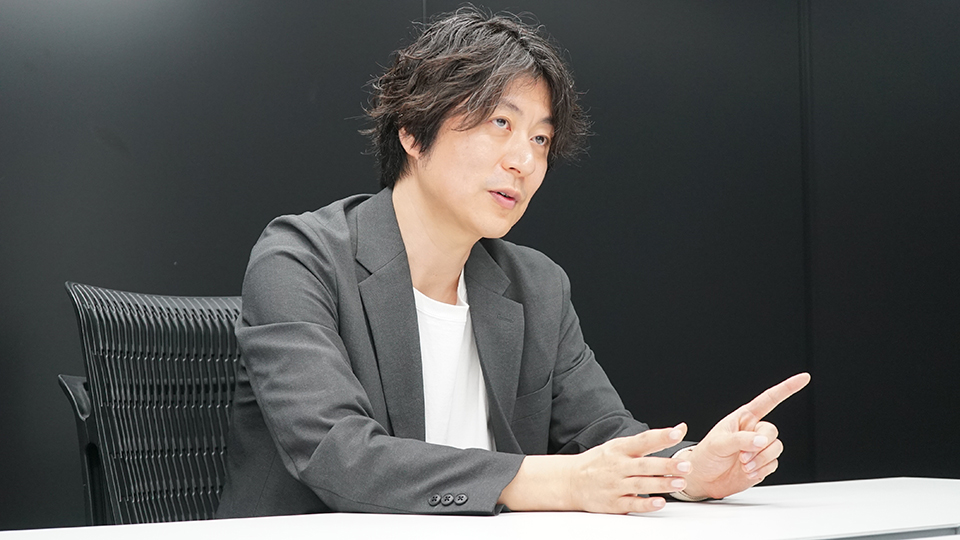
What kind of outreach is necessary for society to make the younger generation embrace the desire to "start a business"?
Sasaki: As part of our company's entrepreneurship education business, we run an entrepreneurship program called "Kigyo Zemi" (Entrepreneurship Seminar) to support challenges by the younger generation. The target audience is junior high and high school students (including technical college students), and their eyes light up with interest when we talk about the secret stories behind the birth of familiar services. For example, if we use a quiz format like "With what thoughts did the person who created LINE develop it?" and explain the stories behind the scenes and the reasons for success in an easy-to-understand manner, they become very interested. It might also be effective to disseminate information by incorporating entertainment elements highly compatible with the younger generation, such as anime and music.
When actually starting a business, what becomes important?
Sasaki: There are many elements necessary for an entrepreneurial mindset, but what I am convinced of after nearly 10 years of support is that two points are crucial: "Whether you can take action" and "Whether you can learn and change after taking action." Quick thinking and assets are important, but they cannot beat these two qualities.
Is that a matter of natural aptitude?
Sasaki: Yes, it is. There is a figure that 93% fail, but conversely, the game is about how quickly you can fail and move on to the next challenge. If you don't try to succeed in one go, but repeat challenges 10 or 20 times, the probability of success rises dramatically. I feel that "action power regardless of failure" is the most important thing. The ICT Startup League is, of course, a program to produce success stories, but I believe there is even greater meaning in "standing on stage and experiencing failure" itself.
Do you have any advice for those who feel the risk and cannot take the first step?
Sasaki: The fun of a startup cannot be conveyed unless you actually do it. It's the same as not knowing the fun of soccer unless you play it. Suddenly becoming a coach or aiming to be an ace striker is a high hurdle, isn't it? First, just get involved. Help out as a side job, change jobs to a startup; if you actually experience it, a moment will come when you think, "I could do this too." Just like learning the fun of soccer during recess before joining the soccer club, I want people to first knock on the door.
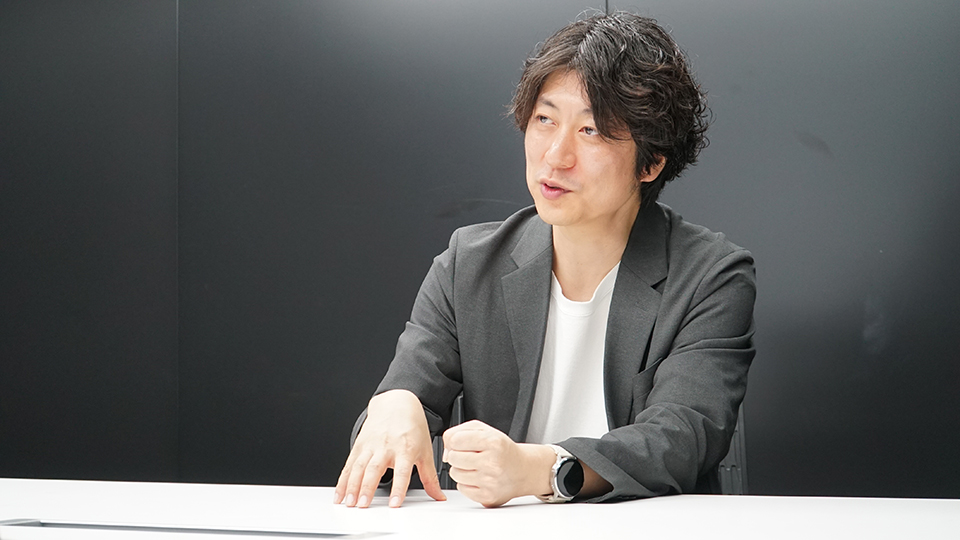
What is the key to turning technical seeds into a globally competitive business?
Sasaki: Statistically speaking, it is said that the "Product-out type (based on what you want to make)" is difficult to succeed with. Instead of starting with "I want to use this technology," it should originally be "Whose and what kind of problem to solve." To make technical seeds successful, it is important to combine that technology with deep issues in the world and a large market.
What challenges exist currently for realizing that?
Sasaki: There are two major challenges. First, much intellectual property, such as patents from universities and large corporations, is not public, and external entrepreneurs cannot access it. A mechanism to release unused "dormant assets" is necessary. Second is the language barrier between academia and business. Specialized papers are too difficult for general entrepreneurs to read. One of the things we want to achieve is to smooth the matching between technology and entrepreneurs by bridging this gap using AI and other tools in the future.
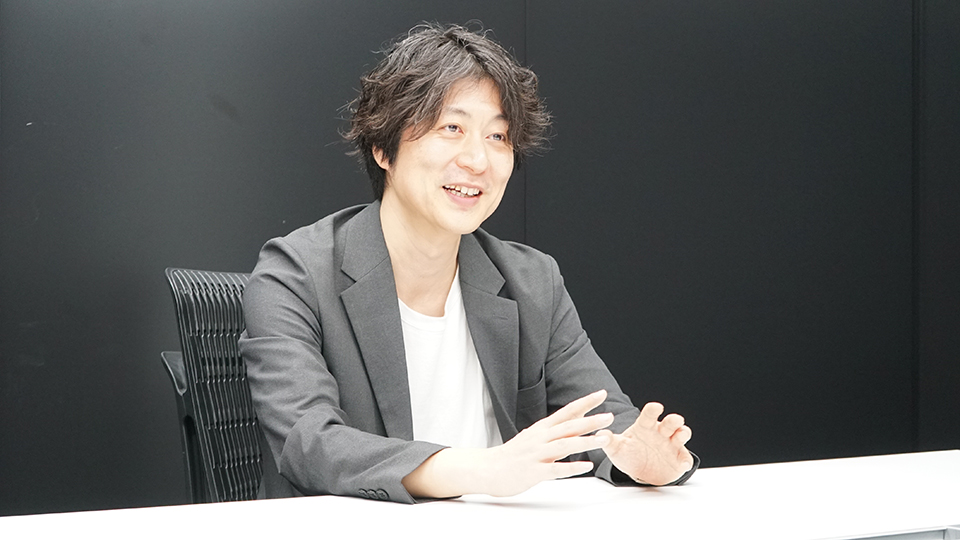
Finally, please give a message to those aiming to be active in startups.
Sasaki: Broadly speaking, I have two points. The first is for those who are about to start a business or are in the seed stage where the business has not yet launched before fundraising. The most important thing in this phase is, after all, the "volume of action" (number of attempts). Sticking to just one "strongest idea I came up with" and failing after spending three years of time and money... there is nothing more wasteful than this. Instead, first move your hands and feet. Then, sincerely face the inconvenient fact of "what is not going well" and repeat pivots (changes in direction); this is how the business evolves. I sincerely hope you will not fear the process of changing the business while facing "things that don't go well."
The second is for those who have already generated revenue, completed fundraising, and are now entering the phase of scaling their business. The key factors here are undoubtedly “organization” and “talent.” While advice from outstanding mentors like those in the ICT Startup League is certainly important, it's the team that actually brings that advice to life. To scale, the critical challenge is how to attract people more talented than yourself to join your team. Don't hire people who are “easy to manage” for you; instead, recruit talent who will become your “right-hand person” and genuinely strengthen the organization. I hope you'll put in the time and effort to build a strong organization without hesitation.
■ICT Startup League
This is a support program that started in FY2023, triggered by the "Program for Supporting Embryonic Research and Development for Startup Creation" by the Ministry of Internal Affairs and Communications.
The ICT Startup League supports startups through four pillars.
① R&D Funds / Hands-on Support
Up to 20 million JPY in research and development funds is provided in the form of subsidies. In addition, for hands-on support, the selection evaluation committee members involved in the selection of league members will continue to stay close and promote growth even after selection. For companies that the evaluation committee members evaluate as "absolutely want to adopt," a true "fandom-like" support system is built where the evaluation committee members themselves continuously support by providing advice on business plans and growth opportunities.
② Discovery & Nurturing
We provide opportunities for learning and encounters that promote the business growth of league members.
We also deploy discovery efforts for those aiming to start businesses in the future, aiming to expand the base.
③ Competition & Co-creation
It is a venue for positive competition like a sports league, where startups learn together and improve themselves while competing to win the funds they truly need (up to 20 million JPY). We also provide a place for co-creation where league members collaborate to expand their businesses through various opportunities such as sessions by selection evaluation committee members.
④ Dissemination
We will disseminate the initiatives of league members in cooperation with the media! By letting many people know about the businesses, we aim to expand the field for new matching and chances.
■Related Websites
Gaiax Co., Ltd.
/
ICT Startup League
💡 Read Next
After exploring the theories and high-level perspectives of our experts, dive into the "reality" of the startups directly tackling social issues on the front lines.
For more details on STARTUP LEAGUE's startup support, please see here.