The average lifespan of pets like dogs and cats has increased dramatically in recent years due to the rise in indoor keeping, the development of nutritionally balanced pet food, and advancements in veterinary medicine. However, behind this progress, a serious issue has been highlighted: the absence of a unified blood donation and transfusion infrastructure. Confronting the harsh reality where lives that could have been saved are lost due to blood shortages, Sayaka Toki, Representative of Vanishing Company Inc., is attempting to build a new "blood infrastructure for dogs and cats" using the power of ICT.
After observing the subtleties of society as a reporter at a local newspaper in Fukuoka for 10 years, she decided to make animal welfare business her life's work. In her 30s, she "burned her bridges" and ventured into the path of an engineer with no prior experience. Fueled by the experience of facing her own dog's mortality, she launched "Blut," a matching platform connecting veterinary hospitals with blood donors. We look closely at her challenge to fundamentally rebuild Japan's animal welfare and veterinary infrastructure, starting with app development.
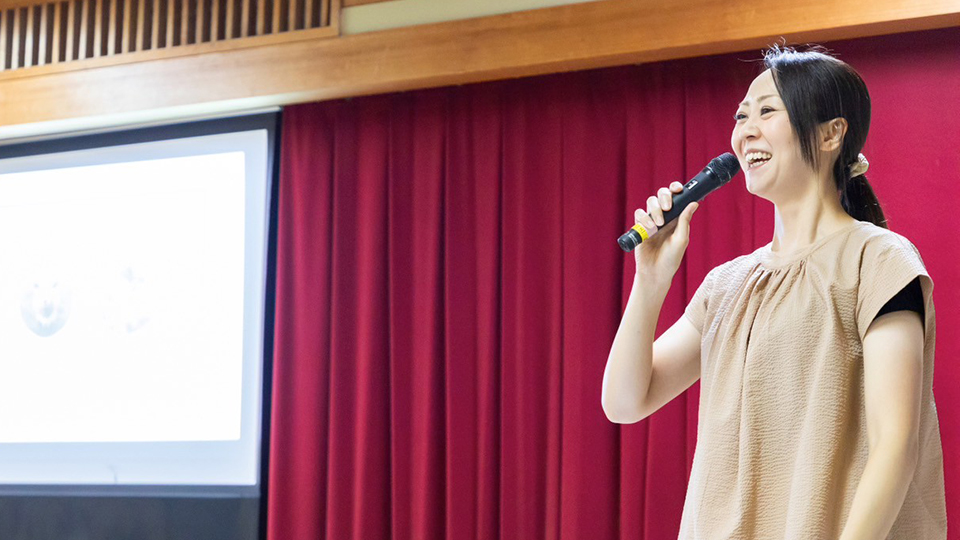 Speaking at a lecture
First, could you tell us about your background leading up to the founding of Vanishing Company? I understand you were originally a newspaper reporter in Fukuoka.
Toki: I worked at a local newspaper company for about 10 years. While working as an employee, I had another life work: rescuing dogs and cats, which I had been doing since I was in elementary school.
About 20 years ago, when I was a child, it was common to see stray dogs and cats nearby. I would rescue them individually, take them home, treat them at the vet, and find foster parents once they were healthy. I didn't have a large facility like a shelter, but I have continued these activities within my personal reach, facing each animal one by one, since I was young. Once I started earning an income as a company employee, I also began visiting shelters to clean as a volunteer and donating to protection organizations.
Having watched the field as a volunteer for many years, why did you choose the path of "entrepreneurship"?
Toki: Although statistics show a downward trend in culling (euthanasia), it has not reached zero even in the Reiwa era. When you look at the actual sites, every shelter is constantly full, and the people involved are whittling down their physical and mental health to keep going. Seeing this situation up close, where things rarely took a turn for the better, I began to feel that I had to solve the "culling problem" even if it meant dedicating my life to the animals.
When I entered my 30s, I resigned from the newspaper company, effectively backing myself into a corner. When I thought about what to do next, the answer I arrived at was "IT." I vaguely felt that to fundamentally change the culture of culling, we needed a form of appeal that naturally blends into people's lives through the smartphones everyone holds today. So, I decided to make an "app for animals" and, despite having absolutely no experience, decided to attend a programming school. It was a reckless plan, but looking back now, I’m glad I stepped into the IT world, even if it was a leap of faith.
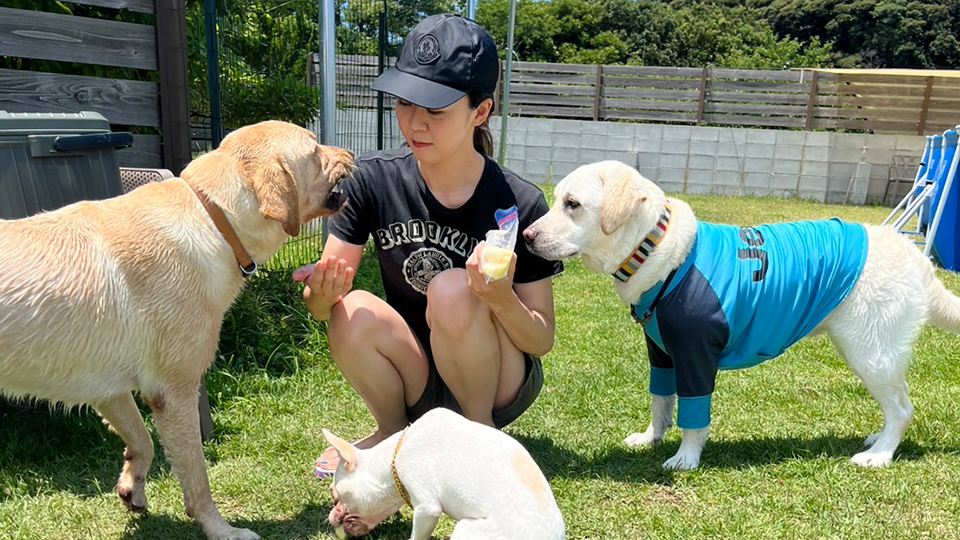 Playing with a donor dog at a dog run
Could you tell us more about the "culling" problem you are trying to solve? Why does culling not disappear despite so much effort?
Toki: The officials at the so-called "Public Health Centers" (administrative agencies responsible for culling) certainly do not wish to dispose of animals. To avoid culling, they partner with about 20 protection organizations per center and contact them daily to see if they can take in the animals brought to them.
Particularly difficult to save are dogs and cats with little chance of survival after traffic accidents, or kittens that cannot excrete on their own and need assistance or milk every few hours. It is difficult to care for dogs and cats 24/7 in such facilities, and realistically impossible to sustain intensive care amidst labor shortages.
I see. So the shelters of the protection organizations serving as safety nets are also constantly full, and even if they frantically find foster parents, new dogs and cats are brought in one after another.
Toki: Exactly. Even more deep-rooted is the difference in mindset regarding dogs and cats. In Japan, it is not uncommon for people to still have the sense that "dogs should naturally be kept outside as watchdogs," "cats roam freely inside and out," or "if you can't keep them, you dispose of them." On the other hand, those studying animal welfare think, "Isn't there a way to coexist with animals?" This cultural gap makes solving the problem difficult.
 Talking about Blut at an event
I imagine it was a considerable struggle to become an engineer from scratch. In what kind of environment did you learn?
Toki: I entered a programming school famous for being extremely strict. I was aware that I had a tendency to be easy on myself, so I deliberately chose a harsh environment. There, we were given two assignments a week, and if we couldn't produce an app, we couldn't graduate. It was a Spartan-style year where I frantically wrote code every day. Pulling all-nighters to code was a daily occurrence. While many people dropped out, I think I was able to see it through thanks to the Judo I’ve practiced. Blessed with a physique of 172 centimeters, I have continued Judo from elementary school to the present. The hardest time in my life was the Judo club training in junior high school, so when I look back on those days, I feel that for most things, "I won't let myself be beaten by this." This "stamina" and "competitive nature" have become the driving force to confront the pains of development and the difficulties of entrepreneurship.
I hear that power was also utilized in your rescue activities.
Toki: That's right (laughs). Many volunteers in rescue activities are women, but adoption events where we hand over rescue dogs and cats to foster parents actually involve a pile of physical labor, like setting up tents and carrying heavy cages. When called upon during venue setup saying, "We have physical work today, can you come?", I would fly over happily. I think the experience of helping with shelter cleaning and loading work almost every week, weaving through my shift work as a newspaper reporter, supports my current business.
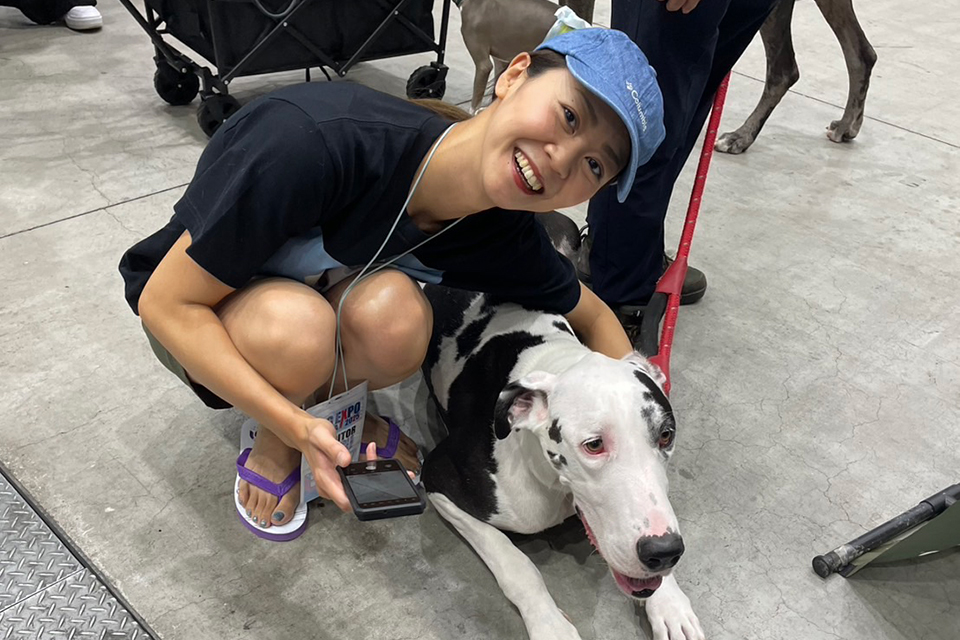 With a donor dog at an event hosted by Vanishing Company
You founded Vanishing Company in 2022. Did you have the concept for the current "Blut" from the beginning?
Toki: No, initially it was a vaguer concept of "IT x Animals," and I was making apps like an "Owner Certification" which deepened animal knowledge in a quiz format. Looking back now, it was a period where it was too immature to call a business, and I lacked knowledge of entrepreneurship and perspectives on monetization.
The turning point came about a year after founding the company when my own dog fell into a situation requiring a blood transfusion. When I rushed to the hospital, the doctor told me, "The hospital has no blood." He said, "Please bring three dogs with compatible blood yourself within two days. If you don't find them, this child will die."
That is a truly cruel declaration.
Toki: I was in despair. I frantically asked around, but the grace period was only two days. Even if I appealed on social media, asking strangers to take the risk of blood collection was a high hurdle.
When I investigated, I found this was a problem faced not only by my dog's primary care hospital but by almost all veterinary hospitals across Japan. Furthermore, when I was dining with a veterinarian friend, they consulted me seriously, saying, "We are truly in trouble because there is no blood. Can't we do something with the power of IT?" My own real-life experience and the screams of professionals in the field overlapped, and I was convinced that this was the business I should be doing. From there, the development of "Blut" started, involving legal checks with lawyers and supervision by veterinarians.
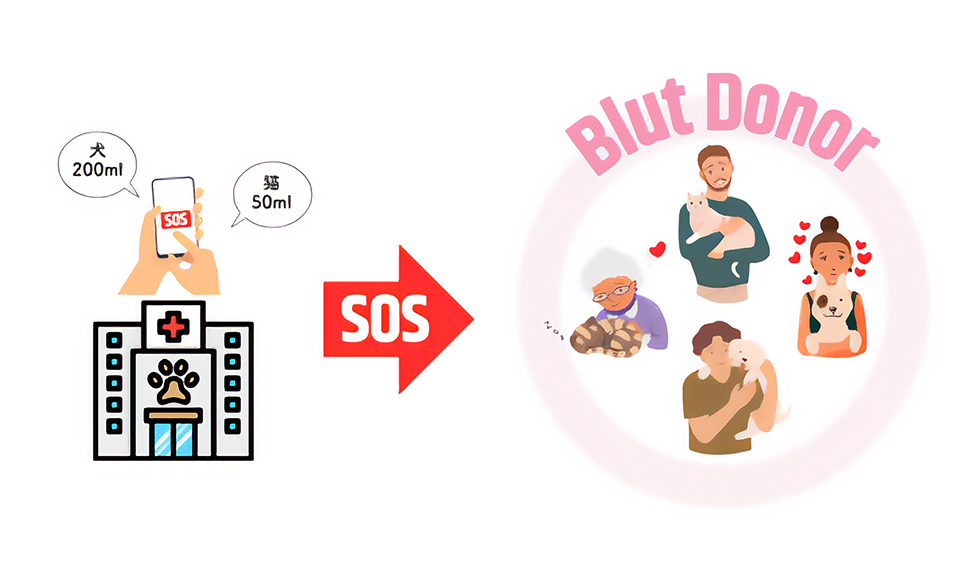 System image of "Blut"
So, triggered by such an event, you discovered the social issue of the "transfusion problem" within the larger theme of culling issues and decided to focus on it. Please tell us about the specific service content of "Blut."
Toki: "Blut" is a platform that matches veterinary hospitals needing blood with pre-registered donors (blood donor dogs and cats).
The biggest feature is the mechanism that "does not allow owners to contact each other." Currently, scenes of owners searching for blood on social media are common, but this often leads to trouble. This is because there are constant risks of disputes over remuneration, or the donor side being blamed or sued if the condition worsens after the transfusion. Blut manages this risk by strictly connecting "hospitals" and "donors" and having professional veterinarians intervene.
I heard the registration criteria for donors are also strict.
Toki: Yes. Previously, we solicited registration widely on the app, but now I go directly to sites like dog run events to talk with owners and proceed with registration. Blood collection involves risks, and depending on the dog's personality, sedation may be necessary. To ensure they understand all of this correctly, I explain it to each person individually and only register those who consent as donors.
We are also thorough with medical screening. In addition to checking for infectious diseases, we make BNP testing (a test to check how much load is on the heart) mandatory to consider the burden on the heart. I personally accompany the blood collection sites to check with my own eyes if the donor candidate dog or cat is trembling, falling into panic, staying calm even in an unfamiliar hospital, or if their tongue color is normal, ensuring only truly healthy and suitable animals are certified as donors.
Please tell us about the revenue model of "Blut" and its current implementation track record.
Toki: We receive a monthly contract fee from veterinary hospitals utilizing the matching service with donors. As for specific results, as of 2025, we have signed paid service contracts with three veterinary hospitals in Fukuoka Prefecture, our base, and the number of registered donors has expanded to about 200 dogs and cats combined. Based on this success in Fukuoka, we are currently proceeding with a full-scale expansion into the Kanto region at a rapid pitch. As a very significant development, a contract with the Veterinary Medical Center of the University of Tokyo has been concluded, and operation is decided to start in January 2026.
How does the recent global "trend towards abolishing animal testing" affect the business of "Blut"?
Toki: I don't know if it's a "tailwind," but I think this trend and the direction of "Blut" are in alignment. Until now, many university hospitals and large-scale veterinary medical centers have kept and maintained "donor dogs" and "donor cats" within the hospital—animals kept solely to share blood—to secure blood for emergency transfusions. However, the idea that "keeping animals confined solely for the purpose of drawing blood is ethically unacceptable" is becoming mainstream globally from the perspective of animal welfare.
In response to this, for large hospitals that have decided to abolish the means of securing blood in-house, I am convinced that the "Blut" mechanism, which allows them to find external reliable donors quickly and safely, can help them continue advanced veterinary medicine.
You were selected for the ICT Startup League this time. How was it participating?
Toki: Actually, I applied last year too, and it was really frustrating not to be selected... Since I hate losing, I took on the challenge this time with a feeling of revenge. As a result, I am truly grateful to be selected, and the detailed support from the secretariat has been helpful.
What was particularly significant was the mentoring by the operation manager, Mr. Fukuda. He pointed out the weak parts of the business with sharp, strict words.
What advice left an impression on you?
Toki: I received valuable advice on legal aspects, and regarding competitive strategy, he gave me a perspective I hadn't thought of alone: "Instead of fighting against those who might become competitors, it is better to become allies and grow big together." Startups often rack their brains over "competitor research" and "superiority" in the early stages of founding, but I felt the idea of growing together with competitors was truly wonderful. Through dialogue with Mr. Fukuda, I feel that Blut has been elevated from a mere "matching app" to a stage aiming to be an "infrastructure" for the entire industry.
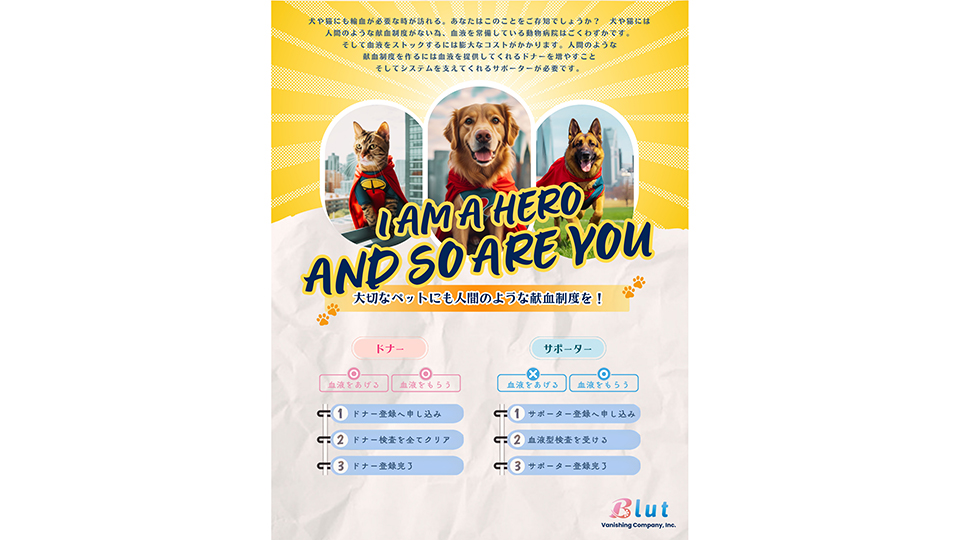 "Blut" Flyer
Finally, please tell us about your future business outlook and the impact you want to have on society.
Toki: "Make the number of children (pets) dying due to inability to receive transfusions zero." This is the absolute goal of Blut. We will expand Blut nationwide, centering on Fukuoka Prefecture and Kanto. As a target, we aim to have Blut introduced in about 1,000 veterinary facilities, which is 10% of the approximately 10,000 veterinary hospitals operating nationwide.
We also have high ideals for the number of donors, aiming for about 20% of dogs and cats aged 1 to 7 who can become donors. Currently, it is said that there are 6.8 million dogs and 9.5 million cats kept in Japan, so the target would be 20% of that, or over 3 million animals.
Donors receive a free medical checkup at the level of a human comprehensive medical exam (Human Dock) once a year, and mixed vaccinations are also included for free. The system of Blut is to protect the health of those children in exchange for providing blood. By providing generous care to donors, I hope all dogs and cats in Japan will think "I want to become a donor." This is because it results in "increasing healthy individuals" and "coexistence with animals." I believe it is also our company's mission to reduce the number of children suffering from congenital diseases due to forced breeding.
The company name "Vanishing Company" literally translates to "a company that disappears." I'm sure many people have a scary image of it, but I want it to be "a company that vanishes when the world becomes a place where animals are naturally cherished." Creating a society where animals can naturally live out their lives in health using the power of IT is our mission.
Editor's Note
During the interview, Ms. Toki's expression when telling the episode about her dog's transfusion was striking. It is something every owner who has suffered the same pain can empathize with. The animal and pet industry is a very complex world where businesses of various positions and general owners congregate. Ms. Toki's challenge, which embodies both "muddy field work" and "cutting-edge ICT" in equal measure, has only just begun. However, the "blood network" she is building will undoubtedly become a light that brightly illuminates the future of animal welfare in Japan.
■ICT Startup League
This is a support program that started in fiscal year 2023, triggered by the "Startup Creation-type Germination Research and Development Support Project" by the Ministry of Internal Affairs and Communications.
The ICT Startup League supports startups through four pillars.
1. R&D Funding / Accompaniment Support
Up to 20 million yen in R&D expenses is provided in the form of subsidies. In addition, for accompaniment support, the selection evaluation committee members involved in the selection of league members will stay close after selection to promote growth. For companies that the evaluation committee members evaluated as "absolutely want to adopt," a "push activity" (Oshi-katsu) style support system is constructed where the evaluation committee members themselves continuously support by providing advice on business plans and growth opportunities.
2. Discovery & Incubation
We provide places for learning and encounters that encourage the business growth of league members.
We also deploy discovery for those aiming to start businesses in the future, aiming to expand the base.
3. Competition & Co-creation
It is a place for positive competition like a sports league, where startups learn together and improve themselves through friendly rivalry to win the funds they truly need (up to 20 million yen). We also provide a place for co-creation where league members collaborate to expand their businesses through various opportunities such as sessions by selection evaluation committee members.
4. Dissemination
We will disseminate the initiatives of league members in cooperation with the media! By letting many people know about the businesses, we aim to expand the field for new matching and chances.
■Related Websites
Vanishing Company Inc.
/
Vanishing Company Inc. (LEAGUE MEMBER)
/
ICT Startup League
For more details on STARTUP LEAGUE's startup support, please see here.