- TOP
- About
- Affiliated League
- Information
- Column
- Media Information
- Job Information
- League Report
- League Members
- Partners
-
-
 公式X
公式X
公式X
Water: the foundation of human activity, yet at times a cause of disaster. Hydro Venus Co., Ltd. envisions a future where sustainable energy is generated, and water-related data is collected and utilized, wherever water flows.
The company is developing "Hydro Venus," the world's only pendulum-style flow-induced vibration generator, distinct from conventional propeller types. It possesses groundbreaking features: it generates electricity by vibrating a pendulum in even the slightest water currents, and it rarely gets tangled with debris.
This technology resolves power supply issues in areas without electrical or communication grids and enables Flood Control DX through waterway sensing (technology that detects information using sensors and converts it into data) for flood prediction and infrastructure aging countermeasures.
CEO Koji Ueda established the company after working in the semiconductor industry. While exploring industry-academia joint projects, he met Professor Shinji Hiejima of Okayama University and participated in launching this university-born venture.
Initially focusing on the widespread adoption of small-scale power sources and sensing to form communication network foundations in rivers and agricultural canals, the company looks toward a grand future of clean energy: massive tidal power generation in the Seto Inland Sea, where energy equivalent to 20 nuclear power plants flows. We listened to his passionate vision.
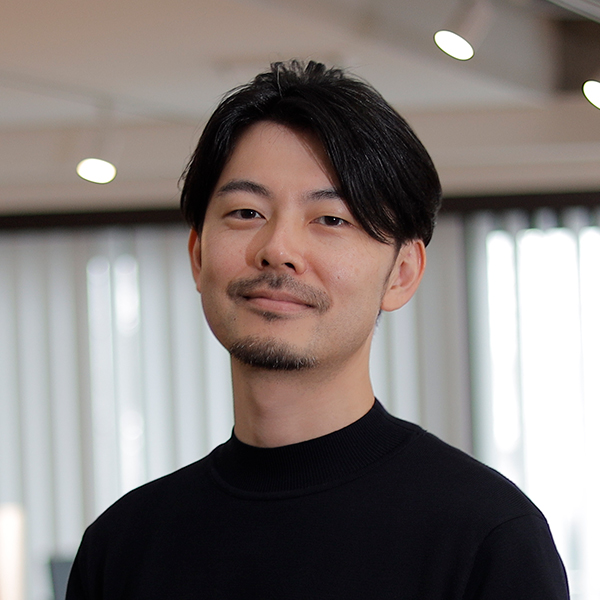
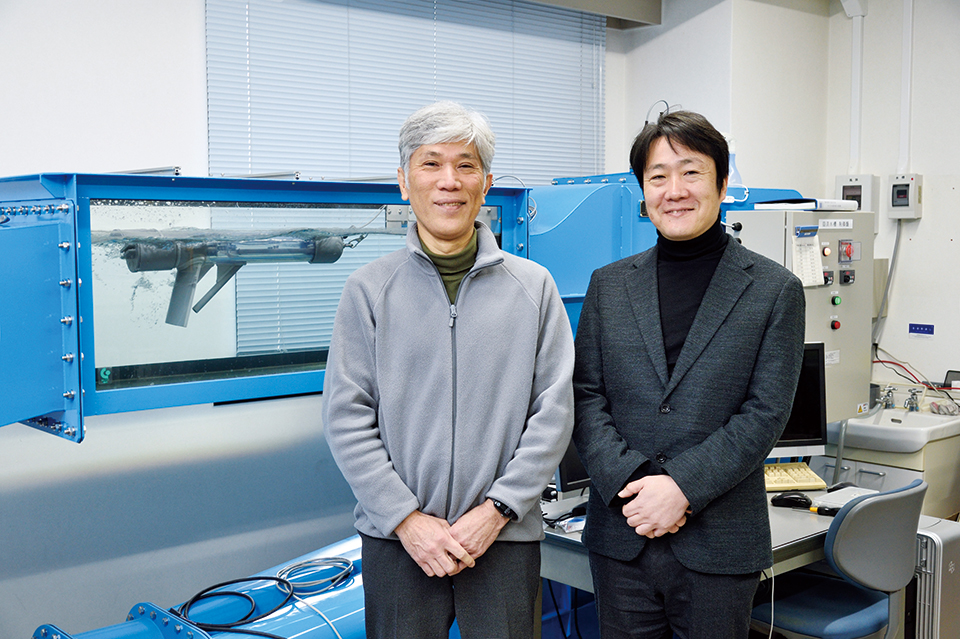 Koji Ueda, CEO of Hydro Venus Co., Ltd. (Right) and Professor Shinji Hiejima of Okayama University (Left)
Your first job was at a semiconductor cleaning equipment manufacturer. How does that background connect to your current energy business?
Ueda: After graduating from graduate school at Okayama University, I joined a manufacturer making cleaning equipment essential for preventing short circuits in the manufacturing process of semiconductors like LSIs (Large-Scale Integration). There, I worked as an engineer on the process of cleaning wafers (semiconductor substrates) with chemicals and drying them.
Later, I became a researcher at the University of Tokyo, conducting research in physics. This also involved energy fields, such as semiconductor electronics, electro-interfacial chemistry related to cleaning, and sensors using quantum mechanics in physics. For me, this series of experiences was a process of completely understanding "energy" and "matter" in my own way, and I believe it is all connected.
Please tell us what led you to start your own business from there.
Ueda: As a researcher who studied physics and chemistry, I was originally interested in environmental issues and resource regeneration, but energy issues are always intertwined with these topics. Therefore, the background is that I wanted to solve those social issues first.
A major turning point was the Great East Japan Earthquake in 2011. After obtaining my doctorate in quantum semiconductor physics, the company I worked for was located in Sendai. Since it was immediately after the disaster, electricity and gas had not yet been restored, and the Fukushima nuclear accident had just occurred. I painfully realized that energy, in particular, is extremely important as a social infrastructure for everything. Also, wanting to use the limited time remaining in my life for something meaningful to myself and my family, I took the plunge, quit the company, and started my own business.
After becoming independent, I first thought about solving this social issue through industry-academia collaboration connecting universities and private companies. In that flow, I met Professor Hiejima, who possesses the fundamental technology of "Hydro Venus," and founded the current Hydro Venus based on his technology. My cross-disciplinary specialized knowledge and various experiences studying chemistry and physics are also being utilized in the technology of "Hydro Venus."
Could you explain your business content and the uniqueness of your service, and specifically what problems it solves for users?
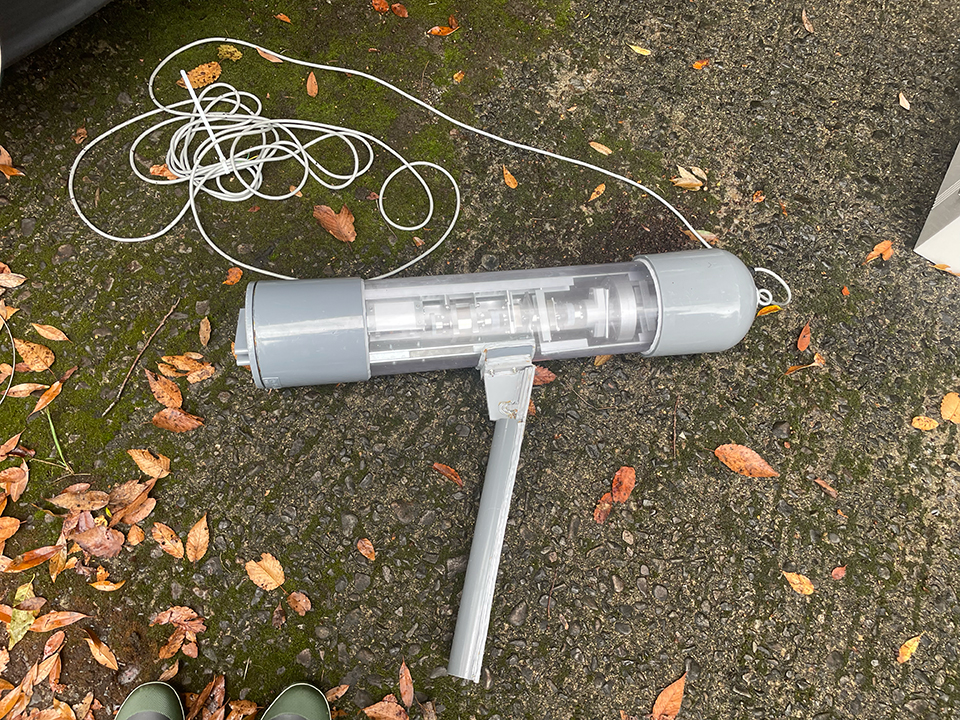
Ueda: Basically, we are a hydroelectric power company. However, we have a grand mission not just to generate electricity, but to "Live with water and create a clean future."
Water is essential for human survival. We also live near water, such as oceans and rivers. However, we haven't been able to utilize it well as energy for power generation.
On the other hand, we are also troubled by water damage such as tsunamis and floods. With the mindset of how to coexist with the water around us and how to convert it into energy, we have made DX (Digital Transformation) in fields where water and humans are closely related—such as flood control, agriculture, and fisheries—one of our pillars.
To clear that mission, what is needed first?
Ueda: To understand water. For that, securing a power source is necessary. Simply put, it's the "power supply problem." Whether collecting data to utilize AI, transporting robots to uninhabited places, or flying drones, you first need a power source or charging port. In times of disaster, emergency power sources are also required.
However, there is a common challenge: there are no transmission grids or power sources in places where people are not present or cannot enter, such as underground, deep in the mountains, or underwater. Yet, stringing electrical wires and communication networks to these places is not cost-effective.
So, you mean this power supply problem can be solved with clean water energy?
Ueda: Until now, "clean energy"—be it solar, wind, or hydro—has mostly been about "connecting to power lines and selling electricity." However, we don't think that is the direction we desire, nor does it bring out the maximum benefit of this technology.
Self-sufficiency in electricity, generating the necessary power on the spot—"locally produced and locally consumed energy"—is the most important core of our company.
That is where your unique technology comes to life.
Ueda: Yes. Our greatest uniqueness is that it is the world's only "Swimming Generator" moved by vortices. In the field of hydroelectric power (excluding the direction of selling power via grids), water wheel types that rotate propellers are common, so a "Swimming Generator" is extremely revolutionary.
When a cylindrical or semi-cylindrical pendulum (fin) is placed in a water current, vortices are generated around it, creating a pressure difference that causes it to oscillate with strong force (flow-induced vibration). The oscillating movement further triggers vortices, amplifying the motion to vibrate continuously and generate electricity. Also, unlike water wheel power generation, it has the advantage that drifting debris does not get entangled. Water wheel types inevitably wind up debris, so garbage tends to accumulate at the installation site.
So that isn't "clean"?
Ueda: At first glance, water wheels seem like environmentally harmonious energy, but municipalities that have installed them are actually quite troubled by garbage problems. A screen (net) must be used to catch debris, and someone has to clean it, so compared to solar power, installation and maintenance costs are overwhelmingly higher. Also, damming a river with screens can hinder fish migration, causing negative environmental impacts, so it is said that they are not actually eco-friendly.
Does your "Swimming Generator" avoid such environmental burdens?
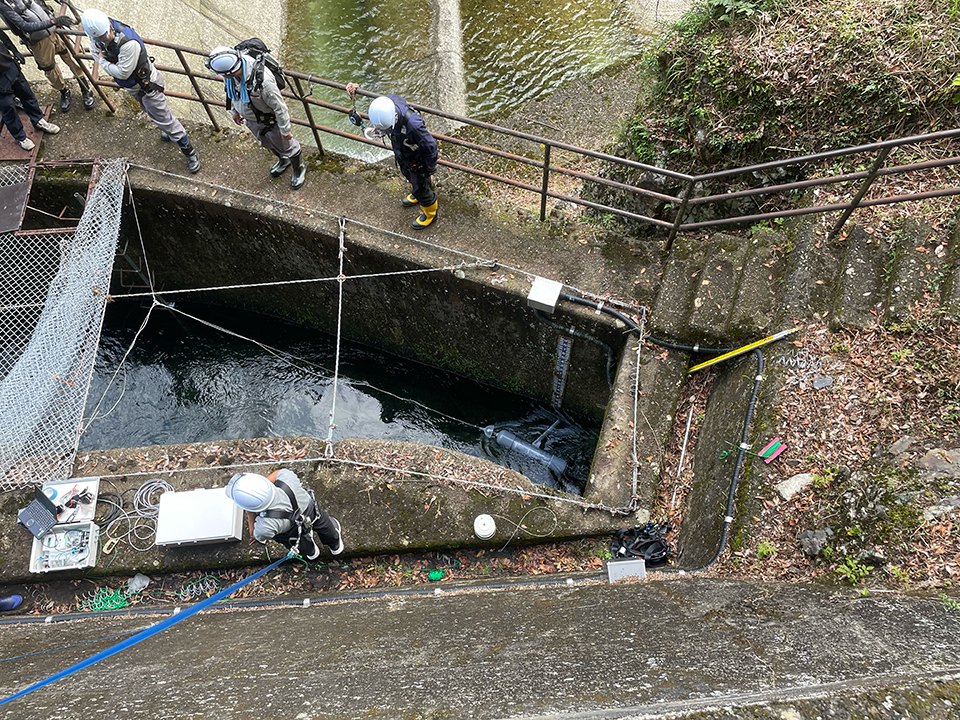
Ueda: Yes. Our "Swimming Generator" moves and generates electricity the moment it is thrown in, provided there is a tidal current, and ease of installation is a major feature. It moves energetically even in slow currents and does not tangle with debris. The presence of this device allows for power generation and storage in places where electricity could not be produced before. At the same time, it serves as a measuring instrument for water levels, flow rates, and flow velocity.
Where do you envision installing it?
Ueda: For rivers, it can be placed from upstream to downstream. If miniaturized, it can also be placed in underground waterways. The benefit of this relates to the power supply problem I mentioned earlier. Even in places where data could not be collected before due to a lack of power lines or communication networks, you can generate your own power and collect data.
Hydro Venus can generate its own power and transmit data wirelessly (via satellite communication), so if you place these in various locations, you can gather more and more water-related data on a cloud server. By equipping it with sensors or other devices, "sensing"—detecting information using sensors and quantifying it—is possible to visualize data you want to capture, such as water level, flow velocity, and water quality.
What becomes possible through the visualization of data?
Ueda: For example, in a demonstration experiment we conducted in Ehime Prefecture, there was a place troubled by flash floods. Downstream, it looks like the water increased suddenly, but in reality, rain that fell a day ago flows down, so the water volume increases suddenly the next day. We found that at the midpoint, it happens 18 hours later, and as you get closer to the summit, the lag approaches zero. In other words, looking upstream is also looking into the future, which is very useful for risk prediction.
Furthermore, by analyzing the accumulated data with AI along with weather information and sluice gate control information, and building a learning model specific to the region, we can provide disaster prediction from precursors such as river flooding and landslides, flood control (optimal control of dams and sluice gates), and irrigation navigation (technology to efficiently manage and operate irrigation systems in the agricultural field).
What other applications are possible?
Ueda: For instance, there was a road collapse accident in Saitama this January. If we continue to collect data underground, I believe we can visualize infrastructure aging and predict precursors. Troubles caused by a lack of sensing can be managed through crisis management by visualizing them in this way.
Currently, we are focusing on collecting data in various places, but in the future, we aim to use the generated power to operate robots, for example, agricultural rovers (unmanned robots supporting farm work), pump operations, and as charging ports for drones. With a shrinking workforce, labor-saving is required. We are targeting the niche of power sources to move things efficiently without incurring excessive costs.
By the way, who do you envision as users? Also, are there any difficulties in business expansion?
Ueda: We envision public institutions involved in flood control and water utilization, such as municipalities and land improvement districts. However, there are few cases where we deal directly with public institutions at the moment. Mostly, users such as telecommunications carriers, construction consulting companies utilizing disaster prevention data, and those in the fishing industry need our technology and data.
Particularly in collaboration with municipalities, there is currently the barrier of "bidding," so we are focusing on technological development and prioritizing partnerships with companies that have expansion capabilities, such as telecommunications carriers.
Please tell us about your future goals and vision, focusing on plans for 3 and 5 years from now.
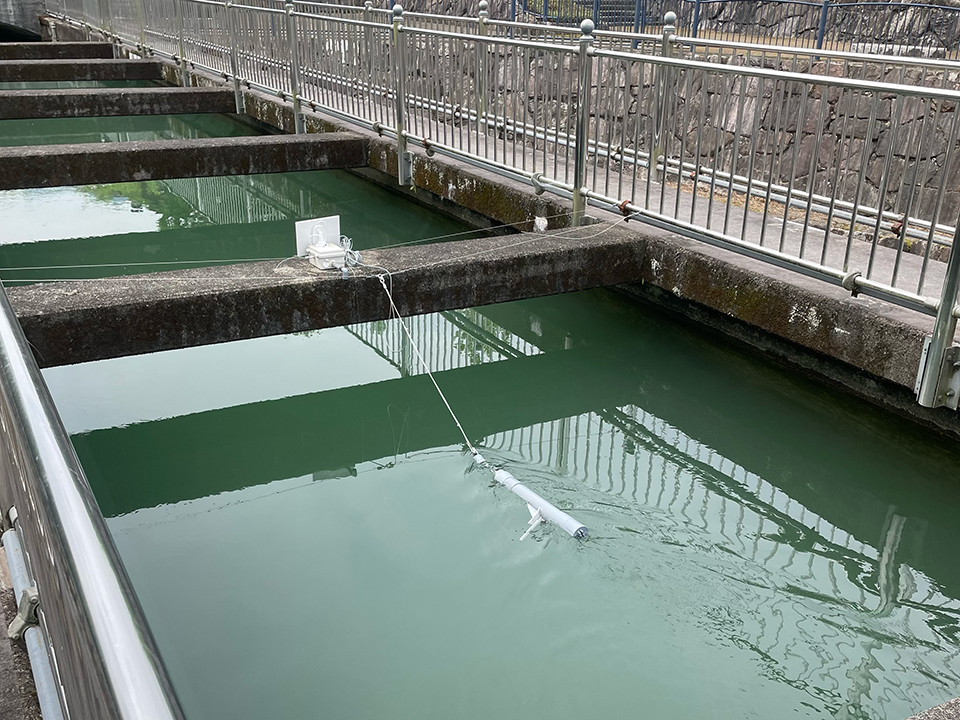
Ueda: Right now, we are cultivating two pillars: "Data Collection/Utilization" and "Power Supply." In the first three years, we will mainly proceed with Flood Control DX. We will place many small devices ranging from mW (milliwatt) to W (watt) levels in rivers and agricultural canals for the purpose of providing communication means. The goal is to make Hydro Venus a familiar sight.
Beyond that, we aim for tidal power generation by placing devices in the sea. Since the device allows power generation capacity to change depending on the size of the unit, placing it in the sea allows for massive power generation.
It is said that energy equivalent to 20 nuclear power plants flows in the Seto Inland Sea alone. Tidal power generation, which is unaffected by weather and where power generation amounts can be perfectly predicted by the tides, is a very stable clean energy. Ultimately, we aim for this large ocean market.
Are you also considering overseas expansion?
Ueda: Actually, we have been targeting overseas expansion from the beginning. From the perspective of tidal power generation, we are looking at a debut in Europe, such as Scotland, a globally famous demonstration site.
Also, regarding Flood Control DX, which we have been focusing on recently, Asian countries have flooding issues, while Europe, America, and China have drought issues; sensing is extremely important whether water is abundant or scarce. JICA (Japan International Cooperation Agency) has also shown interest, and we are looking for opportunities to expand overseas.
Finally, what are your expectations for the ICT Startup League?
Ueda: Our business is based on telecommunications and IoT connecting things to the Internet, so the Ministry of Internal Affairs and Communications' ICT Startup League was very attractive. Solving social issues, especially disaster prevention, involves government administration and has high barriers such as permits and approvals.
My expectation for this League is that, through the angle of ICT, we can create contact points with administration and other fields that were difficult to reach on our own until now. Even with good technology, overcoming vertical silos is essential for solving social issues. I hope this League develops and brings about a transformation in how people connect.
Editor's Note
I felt that the driving force behind Mr. Ueda's business lies in a firm philosophy of "solving social issues" rather than merely seeking business opportunities. The "Swimming Generator"—a world-first device moved by vortices—is the fruition of his scientific knowledge as a semiconductor engineer and researcher, combined with his strong determination to sincerely face energy and environmental issues following the earthquake disaster.
The path to delivering this innovative technology to society is steeper than imagined. During the interview, I heard about the walls of steady hardware development, such as improving materials and designs to ensure durability for over 10 years in lands without power lines or communication networks, and DNA analysis to consider ecosystems underwater. In addition, there are hurdles such as permits and bidding.
They are trying to overcome these technical and social difficulties using public support like the ICT Startup League as a foothold. Their grand vision—aiming first for the spread of Waterway DX via small power sources, and ultimately utilizing the massive tidal energy of the Seto Inland Sea—gives hope for the future of Japan's energy self-sufficiency and disaster prevention. When Hydro Venus succeeds in this challenge, our society should acquire a stronger and cleaner energy foundation.
■ICT Startup League
A support program launched in FY2023, triggered by the Ministry of Internal Affairs and Communications' "Start-up Creation-type Embryonic Research and Development Support Project."
The ICT Startup League supports startups through four pillars.
1. R&D Funding / Hands-on Support
Up to 20 million yen in R&D funding is provided in the form of subsidies. In addition, for hands-on support, the selection evaluation committee members involved in selecting league members stay close after selection to promote growth. For companies that evaluation committee members evaluate as "absolutely want to adopt," a "fandom-like" support system is built where the committee members themselves provide continuous support, such as advice on business plans and providing growth opportunities.
2. Discovery & Incubation
We provide opportunities for learning and networking to promote the business growth of league members.
We also deploy discovery initiatives for those aiming to start businesses in the future, aiming to expand the base.
3. Competition & Co-creation
It serves as a place for positive competition like a sports league, where startups learn together and improve through friendly rivalry to win the necessary funding (up to 20 million yen). We also provide a place for co-creation where league members collaborate to expand businesses through various opportunities such as sessions by selection evaluation committee members.
4. Dissemination
We disseminate the initiatives of league members in cooperation with the media! By letting many people know about the businesses, we aim to expand the field for new matching and opportunities.
■Related Websites
Hydro Venus Co., Ltd.
/
Hydro Venus Co., Ltd. (LEAGUE MEMBER)
/
ICT Startup League
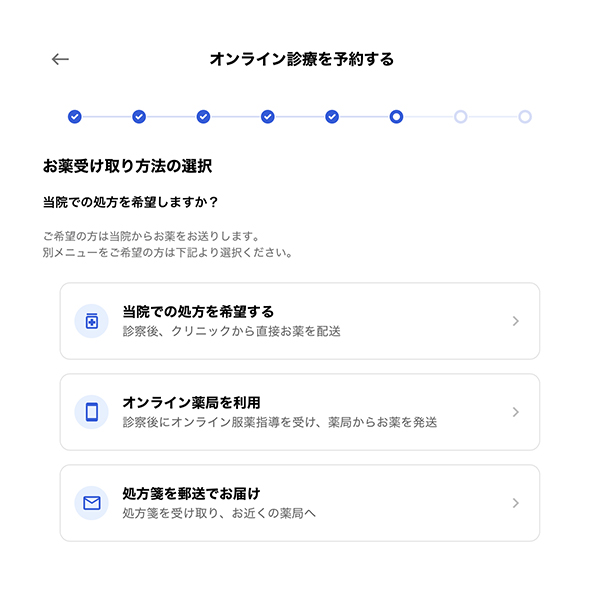
InnoJin Integrates Telemedicine with Pharmacies: Resolving Fragmentation in Ophthalmology
iiba Signs Cooperation Agreement with Komaki City, Aichi to Develop Digital Childcare Map
For more details on STARTUP LEAGUE's startup support, please see here.