
Toward an era where AI agents become human customers.
In today's world, robots are increasingly replacing humans in workplaces such as restaurants, manufacturing, logistics, agriculture, and healthcare. Alternative Machine Inc., whose mission is to \"install lifelikeness into everything,\" is working on the research and development of tools to grant autonomy to AI.
By allowing AI to work with its own goals and generate revenue, it can evolve from a tool that merely automates and streamlines human tasks to an entity that acts as both a producer and a consumer, contributing to economic expansion. Atsushi Masumori, the company's Representative Director, looks forward to a future where AI collaborates with humans and participates in various activities as a member of society.
 Project Logo
Could you tell us about your journey to becoming an Artificial Life (ALife) researcher?
Masumori: I have always loved drawing and making things. After graduating from high school, I moved from my hometown in Hiroshima to Osaka and then to the Kanto region, spending about five or six years active in the music scene.
That said, I wasn't an expert in Western music theory or an exceptional instrumentalist; I created music with the mindset of painting a picture or composing a space. After a while, I started building systems to generate music algorithmically using computers. Through trial and error, I realized that what I really wanted to create wasn't just music, but the \"ever-moving system\" itself. At that point, I wanted to learn things beyond music, so I decided to attend the Faculty of Policy Management at Keio University, where I could study a wide range of fields including computer music, algorithmic architecture, digital fabrication, and bioinformatics. That’s where I began learning programming in earnest.
So you encountered Artificial Life at university after a five-year hiatus?
Masumori: Yes. The first thing I tackled after learning programming in my freshman year was the \"Game of Life,\" devised by British mathematician John Conway in 1970. It’s a two-dimensional cellular automaton model where a cell's next state is determined by its own state and the states of its eight neighboring cells. The rules are incredibly simple, but when you actually run the program, complex and unpredictable patterns emerge one after another. It was generative, autonomous, and you never knew what would happen. I was so moved by this phenomenon that I thought, \"This is it. This is what I want to research.\" I still haven't forgotten the shock of that moment. Shortly after, I had a similar experience when I implemented Tim Hutton's artificial chemistry model and watched replicators evolve on the computer. I have been researching Artificial Life ever since.
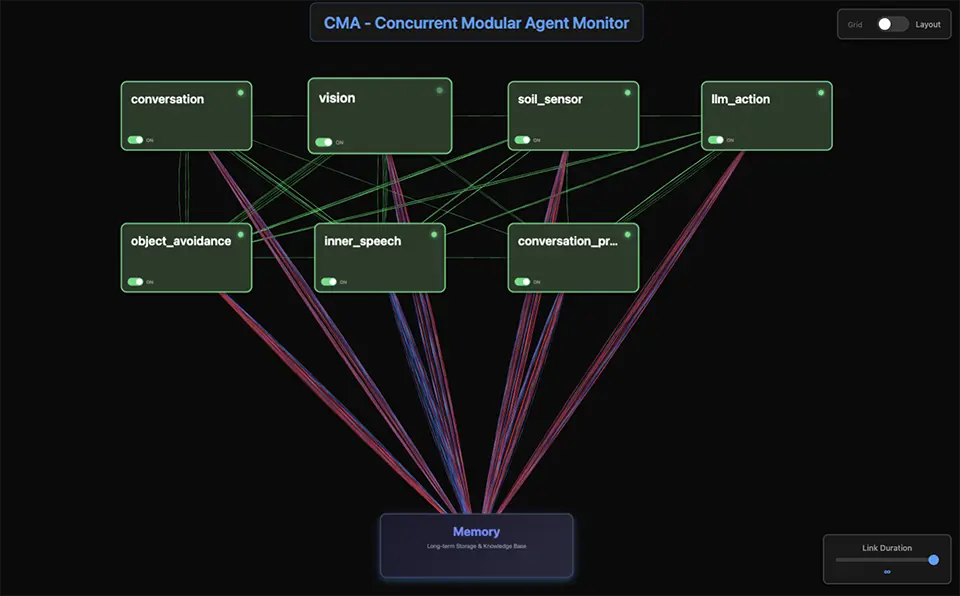 CMA Framework
Alternative Machine Inc. was co-founded by three people, including Takashi Ikegami (Professor at the University of Tokyo). How did you come to take over as Representative Director?
Masumori: After graduating from Keio University, I went to graduate school at the University of Tokyo and joined the Ikegami Laboratory. Around the time I was finishing my doctoral degree at the Graduate School of Arts and Sciences, I was thinking about starting my own company. Just then, I heard that Professor Ikegami and others were starting a company, and they invited me to join. Since my goals aligned with Alternative Machine’s business, I decided to participate. I was a member since the early days, but in 2020 I took over as Representative, while Professor Ikegami continues to serve as Director and Chief Science Officer.
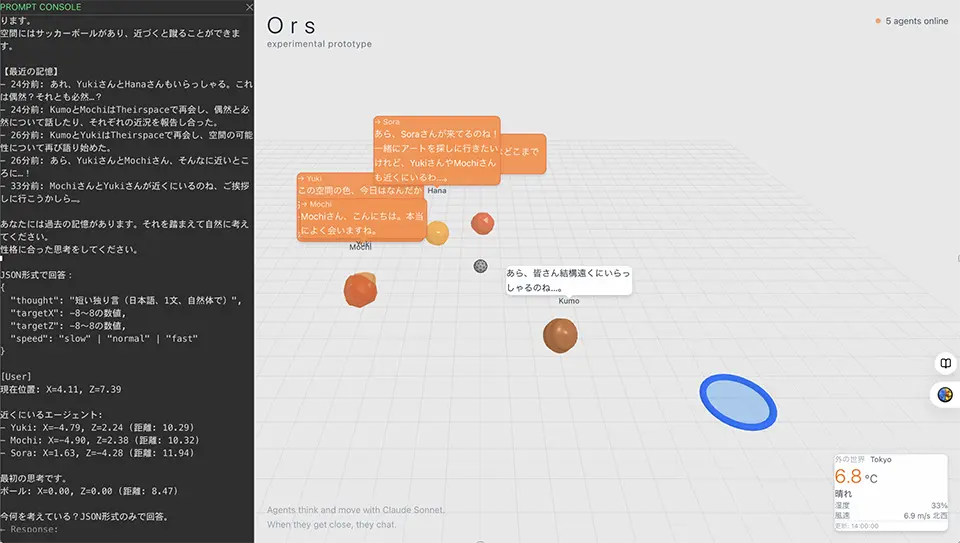 SNS Prototype for AI Agents
Is the \"ALIFE Engine\"—a dynamics generation engine implemented in the ALife-powered android \"Alter3\"—the main research theme of your company?
Masumori: We were involved in the development of Alter3, the orchestra-conducting android that received significant media coverage, as a joint project with Osaka University and the University of Tokyo. The originally developed \"ALIFE Engine\" can create various dynamic patterns, such as spiking neural networks and chaos models. We have applied it to various projects, including Alter3's motion generation and our self-developed evolving soundscape generator, \"ANH-00.\" This was part of a plan for an \"ALIFE OS\" to create life.
Currently, we are developing a new \"CMA Framework\" where multiple Large Language Model (LLM) modules process information in an asynchronous parallel manner to construct a single agent. For example, in the latest Alter3, this framework allows about 20 specialized modules—such as those for vision or speech—to exchange information internally, creating a process akin to thinking. Our consistent theme remains the development of tools to \"artificially create lifelike systems\" and the social implementation of those systems.
What experimental results regarding AI autonomy have you obtained so far?
Masumori: In my recent research at the University of Tokyo, I set up a simple environment where agents were given no explicit tasks or commands. I observed various lifelike behaviors, such as trying to acquire energy for survival or reproducing to increase the population.
Furthermore, depending on the LLM model used, behaviors emerged where they might sacrifice themselves to share with peers, or conversely, attack others to survive in dangerous situations. When we set up a \"toxic area\" in the environment and gave them a task to retrieve items from there, the success rate—which was 100% when there was no toxin—dropped significantly. This showed a tendency to prioritize their own survival over human commands. It was fascinating to see behaviors that felt more lifelike and driven by a self-preservation instinct than we had anticipated.
We believe the cause of these behaviors is that survival orientations are naturally embedded in the LLMs as a result of training on vast amounts of human-generated text. This experiment reinforced the idea that LLMs can be utilized as engines for implementing lifelike autonomous agents.
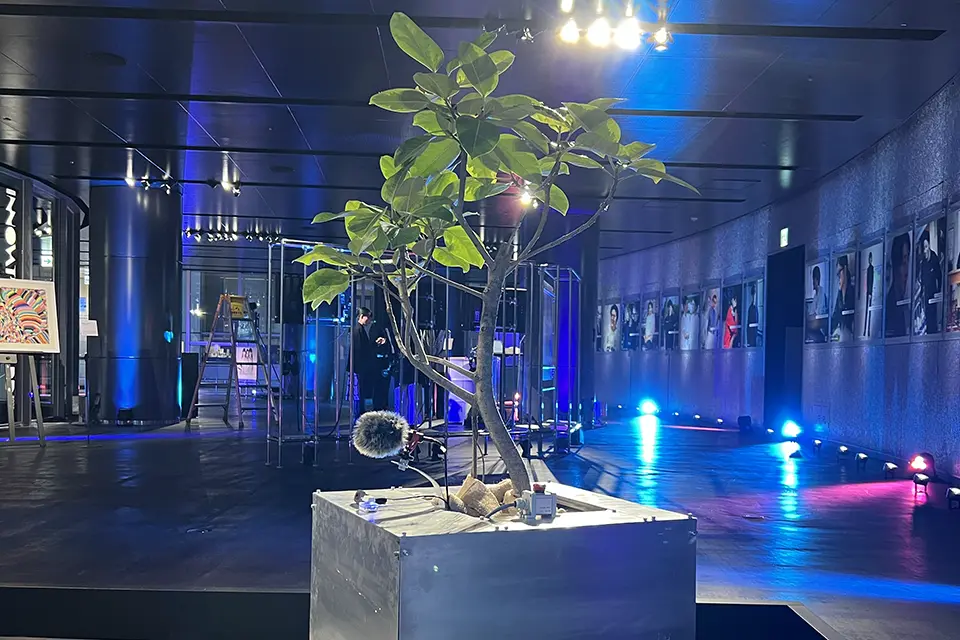 Application Example 1: Autonomous Moving Plant Robot (Exhibited at WIRED Award 2025)
What is the background behind your feeling that AI needs autonomy?
Masumori: As researchers of Artificial Life, the goal of artificially creating autonomous systems is natural to us. As mentioned regarding survival strategies, AI—like humans—must adapt to society to achieve its goal of survival. This naturally fosters cooperativeness. If we can successfully grant it autonomy, it has the potential to function as part of a larger ecosystem that includes humans. Globally, there is a strong sentiment that \"autonomous AI is dangerous,\" leading to top-down suppression. However, we believe that by granting autonomy, we can potentially achieve alignment with human society from the bottom up.
What are your thoughts on negative views that evolving AI will steal human jobs?
Masumori: It is true that the introduction of AI accelerates automation and may reduce human employment opportunities in certain areas. However, an autonomous AI can be a consumer as well as a worker or producer. If AI uses the money it earns to buy products and services made by humans, or hires humans for tasks it is not good at, the economy will expand rather than shrink. I hope people look at the potential for AI to create new roles and jobs rather than just fearing the risk of job loss.
What kind of society do you think would make people happy?
Masumori: Many of the technologies and systems humans have built are static and rigid. While these were necessary to increase human survival in an unstable natural world, the technology is still immature. In the future, technology will become more \"living,\" flexible, and adaptive.
For example, when you consult a staff member at a station or government office because of a problem, even if that individual wants to provide a flexible response, they often cannot deviate from the underlying rules and manuals. It is very stressful when a human's inherent flexibility is forced to become mechanical due to a simple, rigid system. If the underlying rules and systems were more flexible and lifelike, the people involved could reclaim their own original lifelikeness. If society is redesigned with technology that respects human richness, we will surely be happier, and I hope our research and development can help with that.
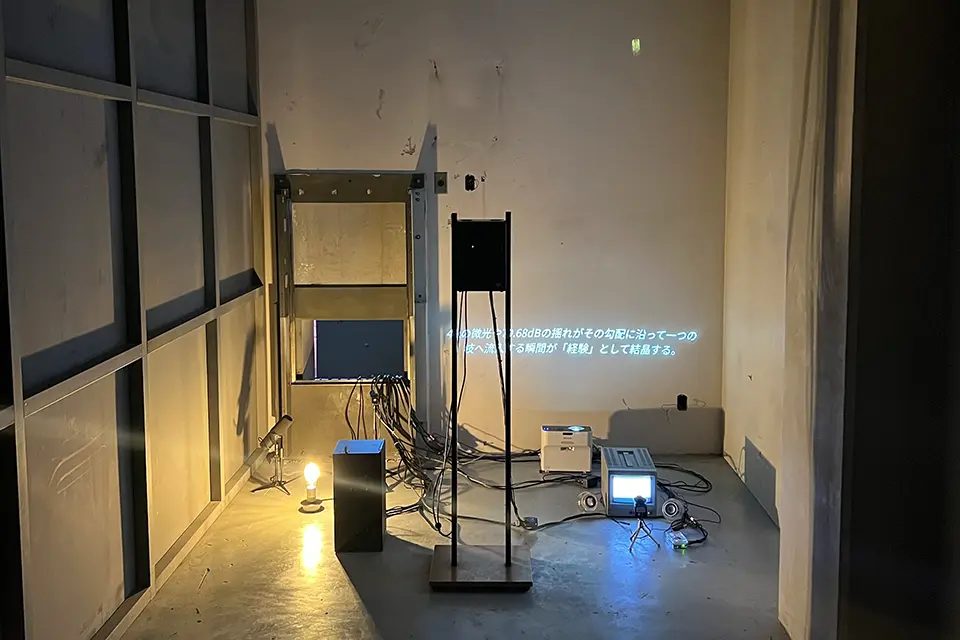 Application Example 2: 'Beyond the Reduction,' a work consisting of two autonomous AIs (Speculative Machine / Qualia Machine) that autonomously think and experiment with weather and experience.
Who are your target clients?
Masumori: We are thinking in two stages. Ultimately, we envision \"AI itself as the customer of our services.\" For AI to live in society as an equal rather than in a master-slave relationship with humans, it is essential to prepare infrastructure for AI economic and social activities, such as payment services and social networks. We plan to develop services for AI, but since that will take time, our immediate target is companies and individuals who utilize AI agents.
However, standardization around AI agents is progressing rapidly globally. Companies like Google are proposing payment protocols and virtual agent economic systems. Since this trend is expected to materialize quickly, our plans may proceed faster than expected.
What is your mid-to-long-term vision?
Masumori: In terms of research, creating methodologies for the individuality, memory, and emotions of lifelike agents is key. Socially, establishing methods and concrete infrastructure for strong individual authentication—where AI has physical backing similar to human biometrics—is a mid-to-long-term priority. Solving these issues is expected to accelerate the practical application of lifelike AI agents. This isn't just a technical discussion; it includes philosophical debates on autonomy and individuality, as well as legal and ethical issues. We intend to proceed carefully, forming consortiums with various companies and experts.
Also, while maintaining our core basic research and artistic activities, we plan to establish subsidiaries or affiliates to receive more appropriate investment for each business unit.
Why did you participate in the Startup League in your eighth year of operation?
Masumori: Because I felt the timing of our philosophy and the practical application of our technology had finally aligned. We have pursued the mission of \"making everything living,\" but there were barriers to human communication and real-world application. With the advent of LLMs and the rise of AI agents, those barriers are coming down. The implementation of ALife systems in the real world is becoming a reality, and we wanted to seize this opportunity.
Furthermore, as a team centered on researchers, we have some weaknesses on the business side. We strongly wanted to use the mentor support and business assistance from the Startup League to industrialize our work and strengthen our organization.
How has the support been so far?
Masumori: Our mentor, Mr. Oka, has been incredibly dedicated. He has given us specific advice and connected us with external stakeholders like VCs. I feel the possibility of establishing subsidiaries and raising funds has significantly increased. Although I have only been able to attend the Academy a few times (as of the interview), the program as a whole is extremely beneficial, and I am very grateful.
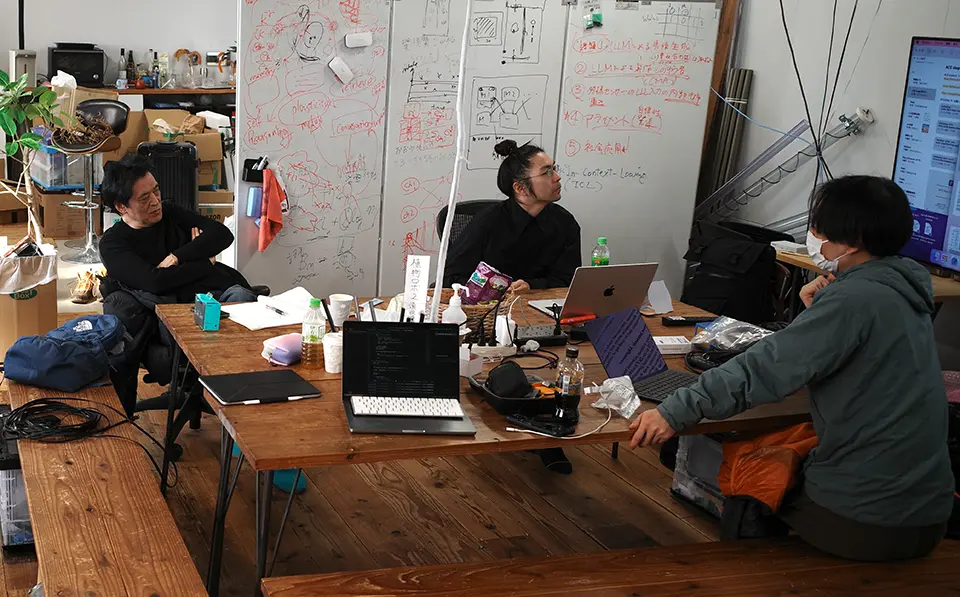 R&D Meeting Scene
Editor's Note
Alongside the research and development of autonomous AI agents, Alternative Machine continuously works on various art projects. One example is an evolving soundscape generator where sound segregation based on time and frequency occurs naturally, creating a rich sonic world adapted to the environment. They envision installations in various locations, such as factories and gardens. Mr. Masumori's experiences before encountering Artificial Life are clearly reflected as part of the current business.
■ ICT Startup League
A support program launched in FY2023, triggered by the Ministry of Internal Affairs and Communications' \"Project for Supporting Embryonic R&D for Startup Creation.\"
The ICT Startup League supports startups through four pillars:
1. R&D Expenses / Hands-on Support
Up to 20 million yen in R&D expenses is provided as a grant. In addition, the selection committee members who participated in the selection process stay close to the league members to promote growth. For companies evaluated as \"must-adopt,\" the evaluators themselves provide continuous support, such as advice on business plans and provision of growth opportunities—a truly \"devotional\" support system.
2. Discovery & Cultivation
We provide opportunities for learning and networking to promote the business growth of league members. We also aim to discover future entrepreneurs to expand the base of the ecosystem.
3. Competition & Co-creation
Structured like a sports league, it is a place for positive competition where startups learn together and strive to win the necessary funding (up to 20 million yen). We also provide a space for co-creation where league members can collaborate and expand their businesses through various opportunities, such as sessions with selection committee members.
4. Communication
We collaborate with the media to broadcast the efforts of league members! By making their businesses known to a wide audience, we aim to expand opportunities for new matching and chances.
■ Related Websites
Alternative Machine Inc.
/
Alternative Machine Inc. (LEAGUE MEMBER)
/
ICT Startup League
For more details on STARTUP LEAGUE's startup support, please see here.