
One of the unique features of the ICT Startup League is that it accepts individual research projects, even if a company has not yet been established, as long as there is an intention to expand into a business in the future. In other words, it actively supports "budding startups" that show promise.
Dr. Tetsuma Kawaji, who works as a Senior Staff Doctor and Chief of the Arrhythmia Section in the Department of Cardiology at Mitsubishi Kyoto Hospital, is one such individual whose research was selected. While working on the front lines of medical care, he also serves as a researcher in Medical Informatics at the Graduate School of his alma mater, Kyoto University.
The research theme selected is the "Atrial Fibrillation Monitoring AI System." Atrial fibrillation (AFib) is a type of arrhythmia where the atria—a part of the heart—quiver, causing irregular pulses, palpitations, shortness of breath, and dizziness, while also increasing the risk of stroke.
One of the challenges in treating AFib is that there are cases where no symptoms appear. The condition can progress without the patient realizing it, leading to delayed treatment. The "Atrial Fibrillation Monitoring AI System" is research designed to solve this problem. It is a system utilizing AI that allows patients themselves to check for symptoms of atrial fibrillation and increased risk on a daily basis.
Through years of research, Dr. Kawaji has successfully developed a prototype. He applied to the ICT Startup League because he determined he had reached the stage to aim for the next step: practical application. Why has an active physician, who faces life-and-death situations on the medical front lines, decided to step into the business world? We explored his thoughts and vision.
 AI system for detecting recurrence after atrial fibrillation ablation treatment; Arrhythmia severity diagnosis app
Could you tell us more about the "Atrial Fibrillation Monitoring AI System"?
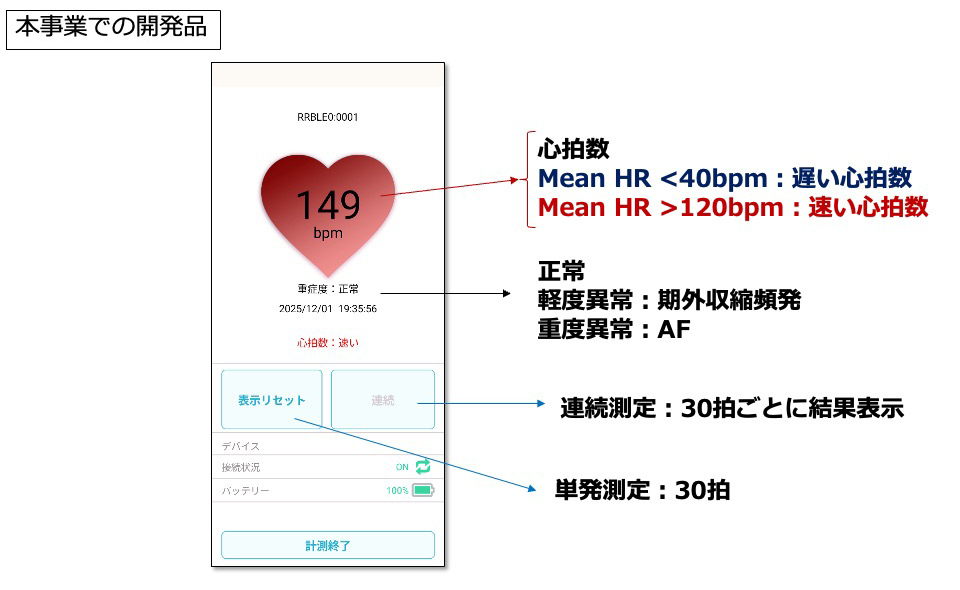
Kawaji: It is an AI system that automatically detects the presence of atrial fibrillation or the frequent occurrence of premature contractions (a symptom where an irregular "skipped" beat occurs between normal heart rhythms), which can be a risk factor for atrial fibrillation. It does this using heart rate variability (HRV) analysis technology and machine learning, based on data from 30 beats—or approximately 30 seconds—of R-R intervals (the time taken for one heartbeat, which serves as an indicator for evaluating heart rate and autonomic nervous function) acquired via a small wearable sensor.
It’s quite speedy to understand the situation with just a 30-second measurement.
Kawaji: Yes. With this system, you can immediately determine if the rhythm is normal, atrial fibrillation, or premature contraction, and check the results instantly on a smartphone app.
Smartwatches that measure and record heart rates or feature ECG apps have become popular recently. Is it a similar concept?
Kawaji: Existing smartwatches do notify users of "irregular heartbeats" or "signs of atrial fibrillation," but since they are not medical devices, a doctor's diagnosis is required to strictly identify the condition. Furthermore, current smartwatch functions cannot automatically detect the frequent occurrence of premature contractions.
So, the significance of the "Atrial Fibrillation Monitoring AI System" lies in its aim to become a medical device and its ability to measure symptoms in greater detail.
Kawaji: Until now, atrial fibrillation has been diagnosed primarily through palpation of the pulse by a doctor or ECG examinations. Unless a patient is having an active episode, they cannot tell by themselves if the pulse irregularity or palpitations they feel are actually atrial fibrillation. Even for doctors, if the atrial fibrillation has relatively mild symptoms, it can be difficult to judge whether it is atrial fibrillation or simply heart palpitations during a short consultation or examination.
Doctors can't stay with a patient 24 hours a day to diagnose them, after all.
Kawaji: Exactly. That is why, traditionally, we have diagnosed patients by having them wear a Holter monitor for over 24 hours to record a continuous ECG. In that sense, the fact that smartwatches allow for more daily measurement and recording of heart rate is a very positive development. However, since many atrial fibrillation patients are middle-aged or older, quite a few are unable to master multi-functional smartwatches. This is especially true for the elderly.
With the latest digital devices, some people might reject them before they even try to use them.
Kawaji: One of the reasons I started researching and developing the "Atrial Fibrillation Monitoring AI System" was to clear that hurdle. The usage of the wearable sensor itself is simple. For example, if we can install it as an optional add-on to home blood pressure monitors, which are used by many elderly people, more people will be able to notice accurate symptoms of atrial fibrillation in their daily lives. Without going to the hospital, they can measure and diagnose immediately if they feel an arrhythmia. If people at higher risk measure themselves three times a day, the number of missed signs of dangerous atrial fibrillation should decrease.
As a doctor, it seems you can also provide peace of mind to patients.
Kawaji: Until now, there were cases where it took time to diagnose whether it was truly atrial fibrillation. However, if this system becomes widespread, unnecessary hospital visits will decrease, limiting visits to only when appropriate. I believe this will reduce the burden on both patients and doctors.
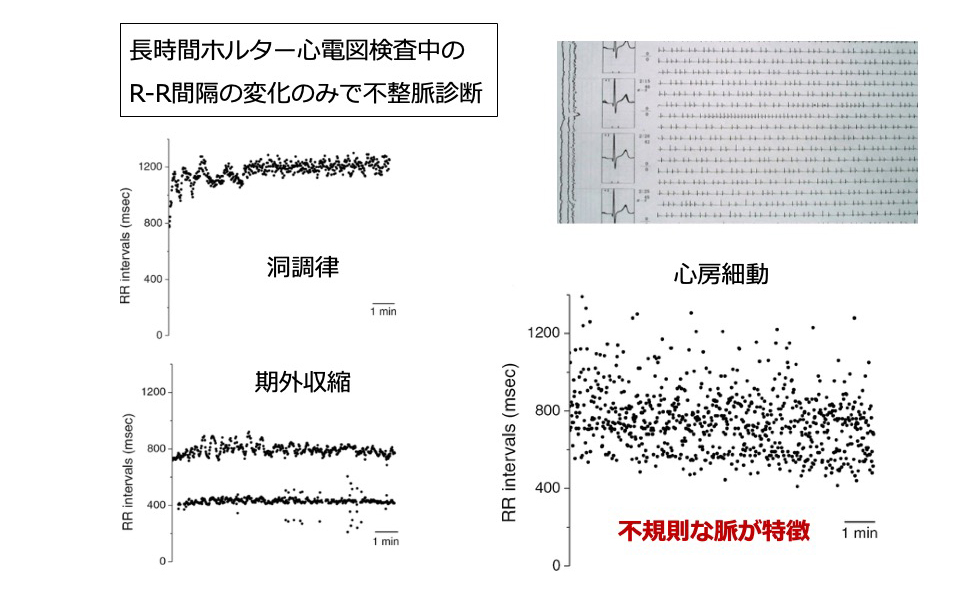 Image of the Arrhythmia Severity Diagnosis App
Please tell us about the current status of the research and the outlook for future business expansion.
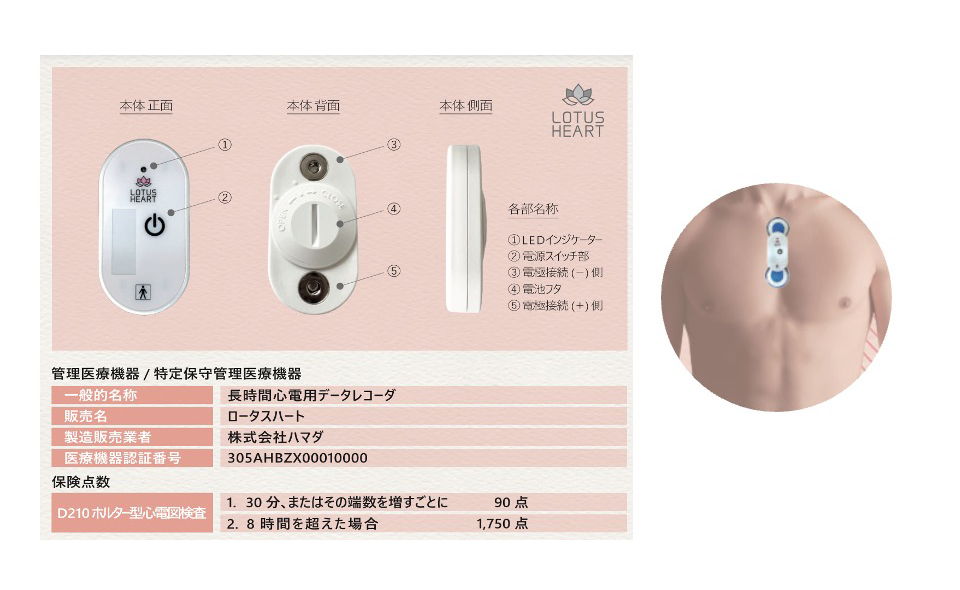
Kawaji: The software for the AI system is complete, and a prototype of the wearable sensor has also been developed. We are moving toward practical application based on Toyota Tsusho's patch-type Holter ECG, "Lotus Heart" (Class II).
It is much smaller than I imagined.
Kawaji: The wearable sensor is attached to the patient's body, and the measurement results are analyzed via smartphone. We are at the stage where we are about to begin verification experiments. As a future step up, I would like to miniaturize it further so that it can be easily added to blood pressure monitors and the like, and then commercialize it.
Dr. Kawaji, you have been involved in development from the standpoint of a clinical physician and a researcher. Why did you decide to aim for commercialization yourself?
Kawaji: When the prototype was completed, there was nothing left to do in terms of research and development. It felt like I had naturally reached the steps of commercialization and starting a business. Even if I create an AI system through research, I cannot reflect it in medical practice unless I create the device. I have a strong desire to take it to the point where it is actually useful in the field, for the sake of doctors nationwide.
Your experience standing on the medical front lines for so long seems to have influenced this.
Kawaji: Even if a patient complains during an outpatient visit that they "had palpitations at home," if there are no abnormalities at the time of diagnosis, we cannot identify if it is atrial fibrillation. So, I had always felt a need for something that allows for easy monitoring in daily life. Also, in the treatment of atrial fibrillation, management after measures such as surgery or ablation (a treatment aiming to cure arrhythmia fundamentally by cauterizing the inside of the heart with a catheter) is very important. Since ablation has a recurrence rate of 20 to 30%, post-operative monitoring is indispensable. It affects decisions on whether to continue medication, so while doing research, I definitely had the desire to do something about it.
Did you originally have an interest in entrepreneurship or business?
Kawaji: I have seniors at the university who have started businesses, and others who left the medical field to become bureaucrats. There were many seniors around me who weren't "typical doctors," so I sensed the possibilities and interest in such paths to some extent.
Is there a possibility that you will shift from being a doctor/researcher to a business manager in the future?
Kawaji: I am thinking about establishing a company, but I think it would be fine to leave the CEO role to someone else and focus on research and development myself. I like performing surgery, so I feel that working in a hospital suits me better than being a private practitioner where outpatient care is the main focus. My current position, where I can utilize what I like and am good at—clinical practice, research, and surgery—is ideal. That said, I do think that once I establish the company, I will have to do some sales and other tasks myself in the beginning.
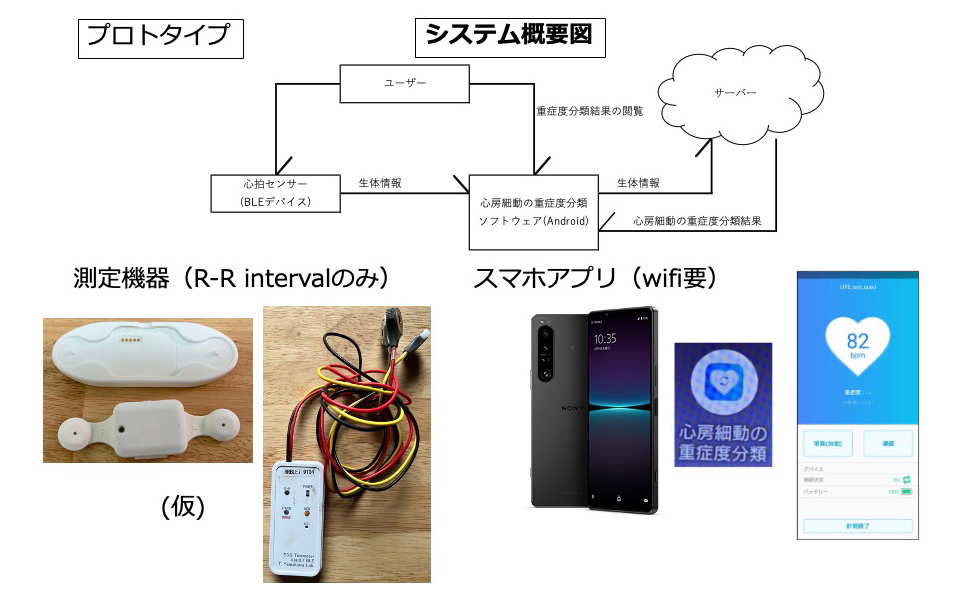 Development of Arrhythmia Severity Diagnosis App analyzing R-R interval data
Please tell us why you aimed to become a doctor.
Kawaji: I had wanted to become a doctor since I was in elementary school, but initially, I started aiming for it with just the awareness that it was a "stable profession."
Why did you choose cardiology, dealing with the heart?
Kawaji: I experienced various departments as a resident, and in the emergency room, there were many cases involving heart and circulatory symptoms like myocardial infarction. Experiencing moments where symptoms recovered drastically on the spot played a large part in making me feel that being a doctor was rewarding.
Why have you engaged so enthusiastically in research, not just clinical practice and surgery?
Kawaji: I like "leaving something in a tangible form." If I write a paper, it appears on search sites, making the results visible. It feels like I'm diligently writing as I pile up research, but you could also say I got hooked on the fun of research while writing.
Do you intend to continue both clinical practice and research in the future?
Kawaji: I consider clinical practice and research to be two axles of the same vehicle for me, so I think I will continue. My stance is that I am mainly clinical but also continuing research, but personally, the weight feels about half and half. There is also the merit that research is easier to conduct precisely because I am doing clinical work.
The "Atrial Fibrillation Monitoring AI System" is also research that started from your clinical experience and thoughts.
 AI system for detecting recurrence after atrial fibrillation ablation treatment; Arrhythmia severity diagnosis app
What was the trigger for applying to the ICT Startup League?
Kawaji: Just as I began thinking about starting a business, the prototype was completed, and it became time for the step of commercialization. It was also advice from Professor Koichi Fujiwara (Professor, Department of Biological Sciences, Faculty of Science, Hokkaido University), a co-researcher on the "Atrial Fibrillation Monitoring AI System" who was in charge of developing the AI system. Professor Fujiwara had experience with venture startups, so he said, "Next is starting a business." I had previously applied to research funding support programs, so it felt like a similar sensation.
What is your impression of the ICT Startup League?
Kawaji: At first, regarding starting a business or commercialization, I didn't even know where to go for consultation, so I am grateful just to have a window where I can consult on various things. I am also receiving concrete advice, such as trying to start as a university-launched venture.
Do you have any other requests?
Kawaji: I still don't understand the roadmap for commercialization and productization very well, so it would be helpful to receive further advice. Even regarding installing it as an option on home blood pressure monitors, I don't really know how best to pitch it to manufacturers. Of course, I would be happy if there were opportunities to be directly connected for discussions.
You are strongly conscious of practical application and widespread use.
Kawaji: I want to receive approval as a product from the PMDA (Pharmaceuticals and Medical Devices Agency; the organization that reviews the quality, efficacy, and safety of new drugs and medical devices before they hit the market based on scientific evidence) so that it can be used daily. One of my goals is to contribute to accurate diagnosis of atrial fibrillation and the determination of recurrence after surgery, thereby extending patients' healthy lifespans.
Your position remains that of a doctor. I feel that your stance is that you are starting a business because it is necessary for medical care.
Kawaji: Many people with chronic arrhythmia tend to feel anxious. There are cases where they become mentally unstable after surgery. It is a heart disease, and palpitations can occur simply from being startled; I feel that the characteristic that "even a doctor cannot tell if it is a disease or not without seeing the ECG at that moment" also influences this anxiety.
In that respect, the "Atrial Fibrillation Monitoring AI System" can provide reassurance through numbers, and doctors can diagnose with confidence. I want to make things clear—black or white—for patients who are worried and anxious, and I want to enable doctors to clearly say "It's okay!" when there is no problem. Toward such a goal, I want to continue working on improving the accuracy of the AI system and commercializing it as a product.
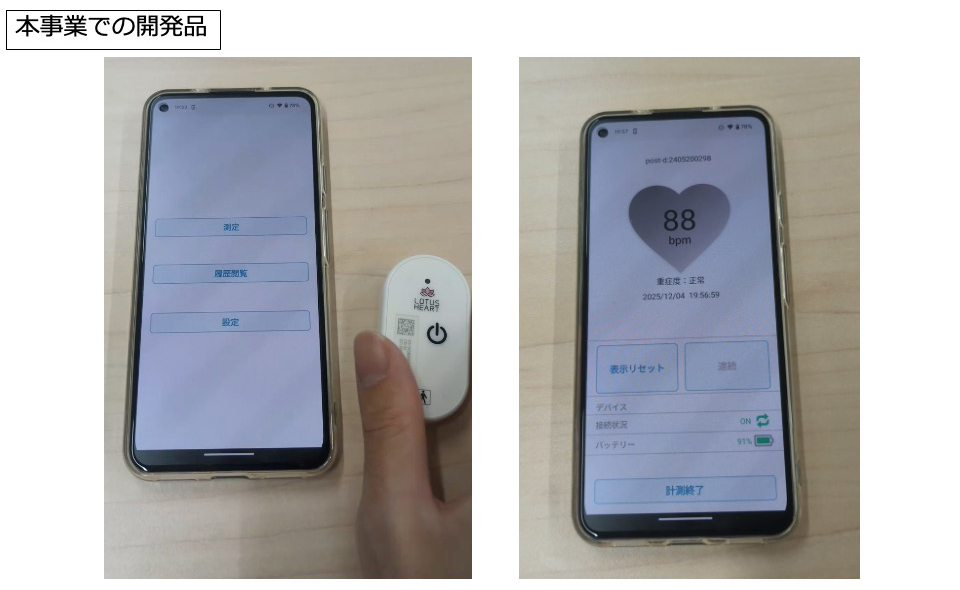 AI system for detecting recurrence after atrial fibrillation ablation treatment; Arrhythmia severity diagnosis app
Editor's Note
Dr. Kawaji, who lives a busy life juggling clinical practice, research, and business, relieves stress by enjoying anime, manga, and dramas.
"I like the anime 'Summer Time Rendering' and the manga 'ONE PIECE'."
Regarding dramas, he says he watches almost all medical dramas, which is his own field of work. However, his way of enjoying them is unique to a doctor.
"I enjoy them like a quiz, finding points to retort 'That wouldn't happen in reality,' or guessing 'This is coming next, isn't it?' (laughs). Sometimes, these 'topics' from anime, manga, and dramas actually come in handy during communication with patients or in lectures."
Conveying specialized content to more people in an easy-to-understand way. His relaxing hobbies ultimately connect back to his work. This is likely another proof of how enthusiastically Dr. Kawaji tackles medical care.
■ICT Startup League
This is a support program that started in FY2023, triggered by the Ministry of Internal Affairs and Communications' "Start-up Creation Oriented Sprouting Research and Development Support Business."
The ICT Startup League supports startups through four pillars:
1. R&D Funding / Accompaniment Support
Up to 20 million yen in research and development costs is provided in the form of a grant. In addition, in the accompaniment support, the selection evaluation committee members who were involved in the selection of league members stay close even after selection to promote growth. For companies that the evaluation committee members evaluated as "absolutely want to adopt," a support system that could be called "Oshi-katsu" (enthusiastic support activity) is built, where the evaluation committee members themselves provide continuous support such as advice on business plans and providing growth opportunities.
2. Discovery & Incubation
We provide places for learning and encounters that promote the business growth of league members.
We also deploy discovery initiatives for those aiming to start businesses in the future, aiming to expand the base.
3. Competition & Co-creation
It is a place for positive competition like a sports league, where startups learn together and improve themselves through friendly rivalry to win the funds they truly need (up to 20 million yen). We also provide a place for co-creation where league members collaborate to expand their businesses through various opportunities such as sessions by selection evaluation committee members.
4. Dissemination
We will disseminate the initiatives of league members in cooperation with the media! We aim to expand new matching and chance opportunities by letting many people know about the businesses.
■Related Websites
Tetsuma Kawaji (LEAGUE MEMBER)
/
ICT Startup League
For more details on STARTUP LEAGUE's startup support, please see here.