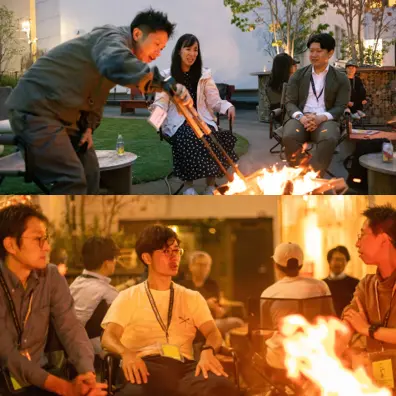


The ICT Startup League goes beyond mere entrepreneur support. It provides a venue for competition and co-creation to produce world-class startups from Japan, regardless of age, gender, region, or background. Through "fandom-style" support, hands-on communities, and the intersection of diverse talents from regional and overseas areas, the league continues to challenge and change society from a global perspective.
We spoke with Nagaharu Okamoto, President and CEO of Mirai Works Inc., who participates as a steering committee member of the ICT Startup League, about his thoughts on the league, his vision for startup support, and the future of the ecosystem.
"The startups we want to cheer for are those that have not just financial success, but a story of 'why they came to do this.'"
"They find issues based on their own experiences and hold a passion to change society. Whether we can empathize with this human, 'only one' story is the deciding factor for our support." We delve into the true meaning behind these words.
■Profile

Nagaharu Okamoto
President and CEO, Mirai Works Inc.
Born in 1976. Graduated from Keio University, Faculty of Science and Technology. After working at Accenture and a venture company, he traveled through all 47 prefectures of Japan. During this journey, his desire to "vitalize Japan" grew stronger, leading him to decide on entrepreneurship. He established Mirai Works in 2012 and achieved a listing on the TSE Mothers (now TSE Growth) market in 2017.
Mirai Works has formed various professional talent networks. How do you think this can contribute to the development of the Startup League?
Okamoto: We intend to support the growth of startups by utilizing our talent platform. We plan to open "Skill Shift," a platform for recruiting side-job talent, to league adoptees so they can use it at any time.
Furthermore, the promising startups gathering in the league serve as attractive touchpoints for professional talent. While most side-job platforms focus on work for earning money ("Rice Work"), we focus on side jobs that act as work for a purpose ("Life Work"). If we can provide more opportunities for professional talent to meet interesting startups, we would be very grateful.
What are your thoughts on the format of the "League"?
Okamoto: It is an environment of friendly rivalry that nurtures startups. It is valuable to have business leaders gather who are "good rivals and good friends." Many leaders in this league possess high aspirations not just for profitability, but to "make an impact on society."
This is the result of being selected by the "favorites" (oshi) of experienced judges. Since startups with high aspirations and the potential to influence society are gathered here, I believe the value of this league lies in building "cohort" relationships where members can walk together regardless of age or business model.
What is the decisive difference compared to traditional support programs?
Okamoto: The biggest difference is the "quality and diversity of the members involved," such as the steering committee and selection evaluation committee members. There is no other program where so many experts gather. With members from diverse backgrounds, experts in each field can answer questions quickly.
Another feature is the frank feedback given during value-up sessions and other events. Businesses are polished by facing straight and harsh opinions, making this a highly valuable venue for startups.
What elements are necessary for Japanese startups to succeed globally?
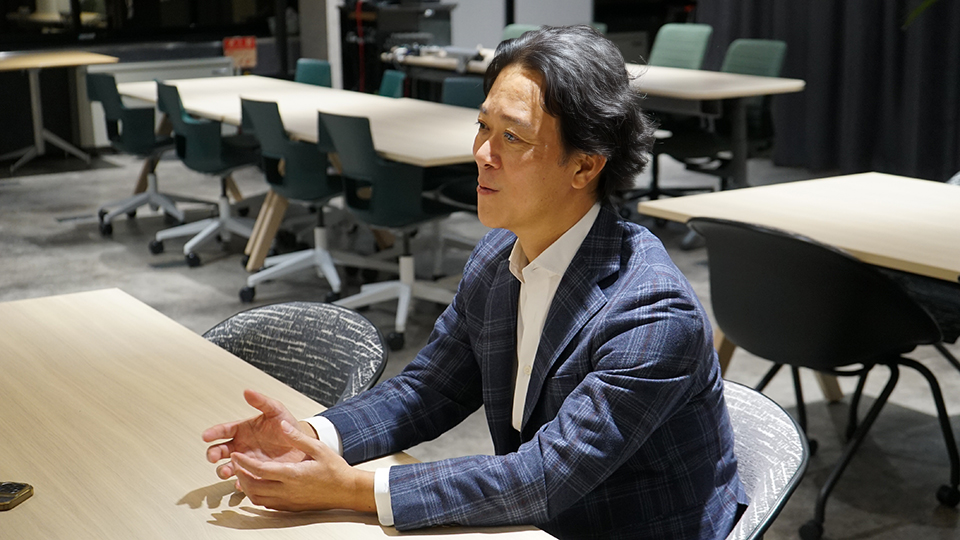
Okamoto: English proficiency is necessary, of course, but the perspective of "accepting various differences" is even more critical. We tend to think based on "Japanese standards." However, the world has as many common senses as there are races and countries, and different "justices" born from cultural and historical backgrounds. Understanding these differences and being able to provide services and products from the other party's perspective is key. For Japanese people raised in an island nation, picking up on different needs might be a weakness, but this perspective is essential to compete globally.
Another point is to have large-scale, high aspirations, such as "wanting to change society or the world." Entrepreneurs can basically only climb the "mountain they aimed for." If financial success is the only goal, growth will stagnate the moment it is achieved. If there is potential for greater growth, that is a huge waste. To maintain the motivation that serves as a long-term driving force, and to shift perspectives, this league provides opportunities for interaction with successful entrepreneurs and others aiming for heights. Through this, we hope they will broaden their horizons and think deeply about the height of the summit (goal) they should aim for.
How did you cultivate your understanding of different values?
Okamoto: I gained it from my experience traveling to 112 countries. What I felt particularly strongly was the goodness of Japan. The compliance with order seen during the Great East Japan Earthquake is a unique and wonderful point unthinkable in the rest of the world, and the quality of service is number one in the world. The problem is that Japanese people do not fully grasp the splendor and uniqueness of their own services and culture. Because few people go abroad (the passport possession rate is only about 17.5%), chances to broaden horizons and raise perspectives are being lost.
That is why going abroad while young and gaining various experiences that others haven't serves to raise one's future perspective. It is also good to adopt an attitude of "I'll just try it" and choose experiences you wouldn't normally choose yourself (such as being invited by someone). It is highly important to touch upon diverse values born from historical friction between neighboring countries and so on. Increasing interactions with people who have different values is the key to re-recognizing Japan's good points and leading to personal growth.
When do you think adoptees feel the most growth?
Okamoto: I believe the moment they get "torn apart" in value-up sessions leads to the most growth. The frank and harsh sparring with experts is a very good experience. You don't have to accept everything that is said, but those who sincerely accept that "there is this way of looking at it" and can apply it to their next evolution will grow in this program. Being able to undergo tough experiences in a safe place is one of the charms of this league.
Have you also had the experience of being "torn apart," Okamoto?
Okamoto: When I presented to an investment committee during our founding period, the president of an investment company (at the time) gave me harsh words: "You're quitting the company to become a freelancer because you aren't excellent, aren't you?" At that moment, I conversely gained confidence, thinking, "If there are people who cannot understand the business value of matching freelance professional talent, then my path is not wrong."
If the current you could speak to the you at the time of founding, what would you say?
Okamoto: I would say, "Proceed on the path you believe in." Things became easier once I centered my focus on realizing my vision and proceeded on the path I believed in, so I feel I should have headed in that direction sooner.

What is the future image of the league 5 or 10 years from now, and what success does the league aim for?
Okamoto: Creating unicorn companies is not the only indicator of success; I believe we can aim for an equivalent impact by "creating 100 companies worth 1 billion yen." True success is maximizing the sum of the market capitalization of graduates and starting an ecosystem (cycle) where successful seniors come back to support juniors.
What is the current status of Japan's startup ecosystem, and what are the conditions for a startup you want to support?
Okamoto: Compared to 10 years ago, VCs and angel investors have increased, and it is definitely showing expansion. However, I feel that among the younger generation, many still hold conservative ways of thinking, such as choosing employment at large companies due to parental influence. In this situation, startups have an important role to show the possibility that "there is this kind of cool world" and to spread a culture of challenge to society.
The startups we want to support are those that have a strong story of "why they came to do this," rather than the motive of "because it makes money." Do they have their own experience, feel an issue there, and have the passion to change society? Whether we can empathize with such a human, "only one" story is the deciding factor for support and cheering.

Finally, please give a message to future business players.
Okamoto: First, I want you to see and experience both the worlds of large corporations and startups. "Seeing is believing." After seeing both, you might gain conviction that your path is correct, or you might think the other world is more fun. I want to convey that "you shouldn't knock it until you try it."
■ICT Startup League
A support program started in FY2023, triggered by the "Startup Creation Type Germination Research and Development Support Project" by the Ministry of Internal Affairs and Communications.
The ICT Startup League supports startups through four pillars.
1. R&D Funding / Hands-on Support
Up to 20 million yen in R&D funding is provided in the form of subsidies. Additionally, in hands-on support, the selection evaluation committee members who were involved in the selection of league members will stay close after selection to promote growth. For companies that evaluation committee members evaluated as "absolutely want to adopt," a true "fandom-style" support system is built where the evaluation members themselves provide continuous support, such as advice on business plans and providing growth opportunities.
2. Discovery & Development
We provide opportunities for learning and encounters that promote the business growth of league members.
We also deploy discovery efforts for those aiming to start businesses in the future, aiming to expand the base.
3. Competition & Co-creation
It serves as a venue for positive competition like a sports league, where startups learn together and improve themselves while winning the funds they truly need (up to 20 million yen). We also provide a place for co-creation where league members collaborate to expand their businesses through various opportunities such as sessions by selection evaluation committee members.
4. Dissemination
We will disseminate the initiatives of league members in cooperation with the media! By letting many people know about the businesses, we aim to expand new matching and opportunity venues.
■Related Websites
Mirai Works Inc.
/
Skill Shift
/
ICT Startup League
For more details on STARTUP LEAGUE's startup support, please see here.